
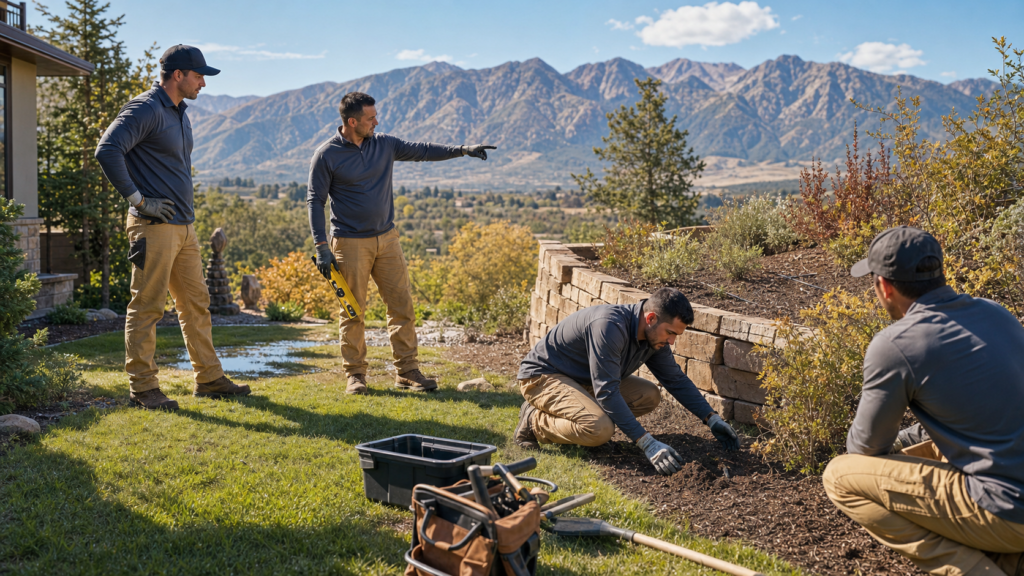
Avoid Costly Backyard Mistakes Before Summer Hits
Backyard landscaping in Colorado’s foothills looks simple from the outside: some grass, a patio, a few trees, and you are set. But foothills properties have their own rules, and small mistakes in late spring can turn into big headaches by the end of summer. Slopes, thin soils, strong sun, and quick weather swings all play a part.
We are Couture Landscaping, a luxury design-build landscaping company based in Northern Colorado. We create custom outdoor living spaces, hardscapes, and landscapes in the Front Range foothills. We design with local sun, soil, and slope in mind so yards stay beautiful and comfortable long after the first season.
In this article, we will walk through some of the most common backyard landscaping mistakes we see in foothills yards and how to avoid them. When you fix these now, before summer heat and storms hit, your space is safer, more relaxing, and ready to enjoy for years, not just a single season.
Ignoring Foothills Microclimates and Elevation
One foothills yard can feel like four different places. Higher elevation, steep slopes, and the way your home sits on the lot all create tiny climate zones. A south-facing slope warms up early and bakes in the sun. A north-facing corner stays cool, holds snow, and may stay wet long after a storm.
A common mistake is choosing plants and turf only by color or what is on sale at a big-box store. That often means planting the same grass or shrubs across the whole backyard without thinking about:
- Slope direction, like hot south-facing vs cool north-facing
- Wind patterns that dry out one side of the yard
- Snow drift areas that stay wet and heavy
- Shade pockets near the house or taller trees
By August, the results show up as stressed trees, crispy perennials, thin turf in one area and overgrown, soggy patches in another. You also see higher water use because you are trying to force one irrigation schedule to suit very different zones.
A professional design-build team studies where sun hits in the morning and afternoon, where wind funnels across the property, and how water drains. From there, we create planting zones and hardscape layouts that work with these microclimates. That can mean:
- Mixing turf types or plant palettes based on exposure
- Shifting patios and seating to the most comfortable spots
- Grouping plants by water needs so irrigation is more precise
When the plan fits the site, plants stay healthier, and the whole backyard works better with less effort.
Overlooking Drainage, Runoff, and Erosion Control
Foothills backyards often sit on sloped lots, which can look amazing but are tricky when water shows up. Intense rain or fast snowmelt can move a lot of water in a short time. If that water has no clear path, it will find its own, and that is rarely good for your yard or home.
Some frequent backyard landscaping mistakes here include:
- Patios built flat with no pitch for water to drain away
- Downspouts ending right at the edge of a patio or bed
- No swales or French drains to guide runoff through the yard
- Loose mulch or gravel spread on steep slopes where it will wash out
Over time, this leads to soil loss, muddy low spots, undermined retaining walls, and cracked hardscapes. In more serious cases, you might see water pushed toward the foundation, damp basement walls, or erosion around deck posts.
Smart drainage is built into the design from day one. A thoughtful foothills plan might include:
- Subtle grading that moves water away from the house and seating areas
- Hidden drainage systems beneath patios or walkways
- Rock-lined swales that look natural but carry runoff safely
- Deep-rooted plants and groundcovers that help hold slopes in place
- Retaining walls that are engineered to handle water, not fight it
When grading, drainage, and erosion control are done right, your yard holds its shape, your hardscapes last longer, and big storms become less stressful.
Choosing High-Maintenance Turf and Thirsty Plants
Traditional bluegrass lawns are what many people picture when they think of backyard landscaping. In a semi-arid foothills climate, that choice can be tough to keep up. High elevation sun, dry air, and possible watering rules all work against a wall-to-wall, water-hungry lawn.
Common issues we see include:
- Large, flat lawns that need heavy irrigation to stay green
- Plants that love moisture placed in hot, exposed locations
- Turf in narrow side yards or tight corners where mowers do not fit well
By late summer, those bright green May lawns can fade into patchy, stressed turf. Water bills go up. Homeowners spend weekends mowing, fertilizing, and chasing bare spots, while the rest of the yard still does not feel comfortable or interesting.
Better options for foothills backyards usually blend lower-water choices with thoughtful design, such as:
- Climate-appropriate turf blends that handle sun and need less water
- Native or adapted shrubs and perennials that like local conditions
- Drip irrigation that targets roots instead of spraying into the wind
- Hardscapes, boulders, and planting beds that break up big lawn areas
Instead of fighting the climate, we let it guide the design. The result is a yard that still feels lush and inviting, with less work and less waste.
Forgetting Fire-Wise Design in the Wildland, Urban Edge
Many foothills homes sit right where neighborhoods meet open space. The views are incredible, but wildfire risk is a real part of life here, especially in late summer and fall. Backyard landscaping close to the house can either add to that risk or help slow it down.
Some common fire-related mistakes include:
- Dense plantings pressed right up against the house
- Tall, resinous evergreens touching decks and siding
- Wood mulch piled deep along the foundation
- Open spaces under decks that can collect dry leaves and embers
Fire-wise design does not mean a bare, harsh yard. It means planning layers of defensible space and choosing smarter materials. A thoughtful foothills plan might include:
- Stone patios or gravel bands close to the house as soft fire breaks
- Steel or masonry planters instead of wood right against structures
- Plants placed with space between them, especially near the home
- Hardscape features that double as seating and fire separation
With this approach, you still get a rich, luxurious outdoor living space, but it also respects the fire risk that comes with foothills living.
Designing Outdoor Living Without Long-Term Functionality
Backyard landscaping is more than plants and grass. In foothills homes, patios, outdoor kitchens, paths, lighting, shade structures, and seating areas all work together as one outdoor living environment. When these parts are planned in pieces, function often suffers.
We often see issues like:
- Patios that are too small for how people actually gather
- Awkward traffic flow between indoor kitchen and outdoor grill
- No shade in the places people naturally want to sit
- Fire pits or seating placed where wind makes them uncomfortable
- Great views blocked by tall features or poorly placed trees
By mid-summer, homeowners may notice that guests stay inside, the fire pit never gets used, or the outdoor kitchen feels like a chore. The space looks finished but does not fit everyday life.
Master planning makes a big difference. A strong foothills-focused plan looks at:
- How many people usually gather and how they move through the space
- Where utilities and lighting should go, even for future features
- How to frame views while protecting privacy
- Flexible zones that can change as kids grow or needs shift
When structure, circulation, and comfort are planned from the start, the backyard feels natural to use in every season, from quiet weeknights to big celebrations.
Turning Backyard Missteps Into a Foothills Showpiece
If you see some of these mistakes in your own backyard, you are not alone. Many foothills properties start out as basic lawns, simple decks, or DIY projects that do not quite match the local conditions. The good news is that every one of these issues can be turned into an opportunity to create something better.
As a luxury design-build firm working in Northern Colorado’s Front Range foothills, we understand the soils, slopes, microclimates, and wildfire risks that shape real backyards here. With a clear plan, you can address drainage problems, rethink high-maintenance turf, add fire-wise features, and build outdoor living areas that match how you actually live. The result is a hand-crafted, Colorado-inspired backyard that looks beautiful, feels comfortable, and is ready for the real conditions of foothills life, season after season.
Get Started With Your Project Today
If you are ready to transform your outdoor space into a functional and beautiful retreat, our team can help you plan and build every detail. Explore our backyard landscaping services to see how Couture Landscaping can bring your ideas to life. When you are ready to talk through your goals, budget, and timeline, simply contact us and we will follow up with a clear, straightforward plan.