
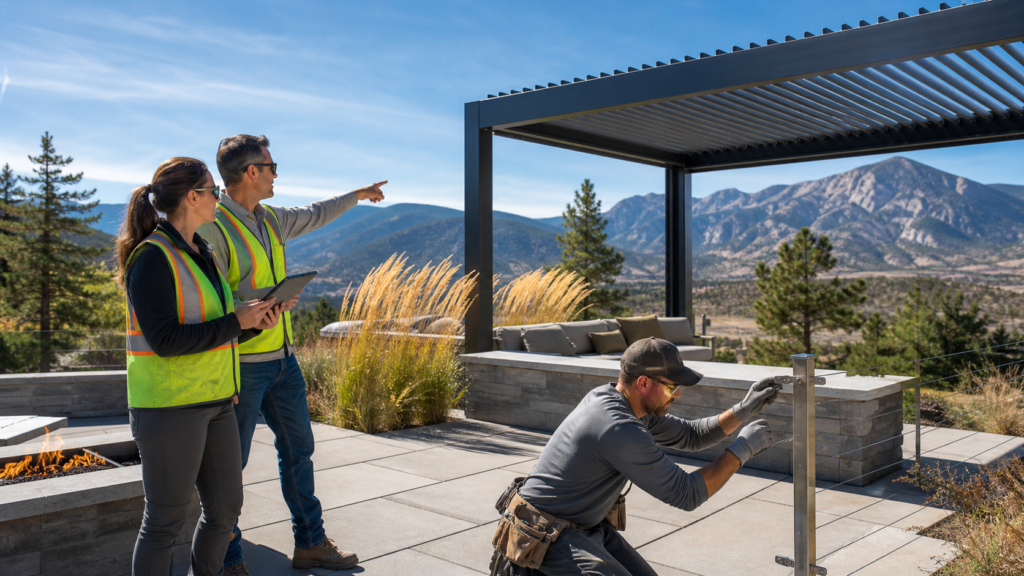
Harnessing Foothills Wind to Elevate Outdoor Living
Wind shapes daily life in Colorado’s foothills. Cushions flip, drinks collect dust, and a cool evening can turn downright cold the moment a gust sweeps across the deck. If you try to ignore it, you end up fighting your outdoor space instead of enjoying it.
Foothills wind is not a small annoyance; it is one of the main forces that should guide how outdoor living spaces are designed and built. When wind is treated as a design partner, not an afterthought, patios feel calmer, fire features work better, and you get more comfortable days outside. Our approach is to work with the way wind really moves across each property, using site-specific layouts, features, and plantings that make your yard feel like it fits the place you live.
In the sections below, we will look at how to read wind patterns on your lot, arrange spaces to soften gusts, choose materials that stand up to local conditions, use plants for shelter and sound, and care for your outdoor areas so they keep working year after year.
Reading Your Foothills Property’s Wind Patterns
No two foothills lots behave the same in the wind. A home tucked into a shallow draw feels very different from one on an exposed ridgeline. The direction your house faces, small changes in grade, and even nearby homes or tree lines all change how air moves and swirls.
A simple first step is to pay attention at different times of day and in different seasons. In many parts of Northern Colorado, spring and early summer bring stronger winds, while calmer pockets often show up in the early morning and later evening. Notice where you naturally avoid sitting and where you tend to linger outside.
It helps to keep a short list of wind notes, such as:
- Areas where gusts seem to funnel or accelerate
- Deck corners that always feel chilly or dusty
- Spots along the house that feel calm and warm
- Places where doors slam or screens rattle
You might also spot sheltered microclimates, like the sunny side yard that stays pleasant when the front lawn feels wild, or a natural rise that blocks wind at ground level. These calmer pockets are clues for future seating, dining, or spa zones.
When we walk a property, we pair these observations with hand sketches and the surrounding topography. We look at how wind likely flows over roofs, around garages, and through side yards. By mapping wind patterns before we ever place a patio or fire feature, we help homeowners avoid those “we should have thought about the wind” moments that lead to later changes.
Smart Layouts That Turn Wind Into an Asset
Good layout can take foothills wind from constant problem to quiet helper. The goal is not to build a fortress; it is to redirect, soften, and filter air so you stay comfortable while still feeling open to the sky and views.
We start by placing core outdoor living spaces where they naturally feel calmer:
- Outdoor kitchens and dining areas on the leeward side of the house or garage
- Main lounging zones tucked behind partial walls or grade changes
- Fire features and spas where wind moves smoke or steam away from people
For example, moving a grill just a few feet around a corner can keep gusts from blowing out burners or sending smoke into the cook’s face. Shifting a dining patio behind a garage wing can turn dusty dinners into relaxed evenings, without needing tall, view-blocking structures.
We also like to create secondary “shoulder-season” nooks. These are smaller spaces that:
- Catch low winter and cool-season sun
- Stay protected from dominant wind directions
- Feel cozy for mornings or cooler evenings
Layered landforms help a lot. Low seat walls, raised planters, and gentle terraces break up wind close to the ground, so you feel less blast at sitting height. Pergolas, partial roofs, and screens add another layer, reducing gusts overhead while leaving mountain views and open sky in sight. When all these pieces work together, you end up using your outdoor living spaces more days each year, especially on those borderline cool or breezy evenings.
Wind-Savvy Materials and Features That Last
Foothills weather shifts quickly. Strong sun, freeze-thaw cycles, and wind-driven dust all wear on outdoor materials. Building with this in mind keeps your space looking good and working well without constant fixes.
For structure and comfort, we often recommend:
- Heavier, wind-resistant furniture and built-in seating
- Patios of natural stone, quality pavers, or reinforced concrete
- Outdoor fabrics that are thicker, quick-drying, and easy to secure
Built-in benches, seat walls, and anchored tables do not tip or wander in a storm. Thoughtfully chosen pavers or stone, installed on a proper base, are less likely to loosen or rock when gusts drive moisture into joints, then cold snaps follow. For cushions, small details like ties, storage nooks, and covers with some weight make a big difference on those afternoons when gusts pick up without warning.
Wind-aware features also change how the space feels. Fire pits and fireplaces work best when:
- Burners and fire media are chosen with breezy conditions in mind
- Wind guards or surrounding walls keep flames stable
- Placement keeps smoke and heat moving away from seats
Railings, glass panels, and metal screens can act as both safety features and wind filters. When they are placed well, they take the sting out of gusts while framing foothills views. Shade structures that are designed for local wind loads, such as solid pergolas or carefully tensioned fabrics, hold up better than generic products that are not built for foothills conditions. The right materials from day one mean fewer repairs and a more dependable outdoor living area.
Planting for Beauty, Shelter, and Sound Control
Plants are one of the most graceful ways to work with wind. They soften both how it feels on your skin and how it sounds in your ears. Instead of sharp rattling and whistling, you hear rustling grasses and leaves.
In foothills conditions, plant choice matters. We often look to:
- Deep-rooted natives and well-adapted species for dry, windy spots
- Evergreen trees and shrubs for year-round structure and screening
- Grasses and flexible perennials that bend and sway instead of breaking
Evergreens can act as anchors, but we rarely aim for a solid green wall. Thick, solid plant walls tend to push wind up and over, then drop it in a messy, turbulent way. A staggered pattern slows and filters air more gently.
Living wind filters can be shaped in many ways:
- Berms with layered plantings around dining patios or fire pits
- Raised beds that protect seating while bringing color close
- Masses of shrubs and grasses that guide wind around a spa or lounge
Thoughtful planting keeps working across seasons. In summer, foliage can offer shade, color, and fragrance while still standing up to breezy days. During windy spring and dry winter periods, sturdy species hold their shape, protect soil, and reduce drying effects on more sensitive plants nearby.
Extending Your Foothills Season with Thoughtful Stewardship
Outdoor living spaces in the foothills are living systems. Wind patterns shift a bit as trees grow, as neighboring lots change, and as you learn which spots you use the most. Treating your yard as something to tune over time keeps it comfortable and inviting.
A simple seasonal rhythm helps:
- Early summer: secure umbrellas and shade, check fasteners, refresh fabrics, and adjust screens or furniture placement based on how wind has behaved in recent weeks
- Fall and winter: anchor or store loose items, protect exposed plants from drying winds, and inspect structures and hardscapes for any wind-related wear
- All year: notice drafts, bare spots in plantings, or areas that feel underused
We see the design-build phase as the start, not the end, of creating wind-wise outdoor living spaces. By returning to adjust plant masses, care for stone and concrete, and fine-tune seating zones as the property matures, it is possible to steadily increase the number of days your foothills yard feels like the best room of the house, instead of the gustiest.
Get Started With Your Project Today
If you are ready to turn your yard into a place you actually use and enjoy, we are here to help. Explore our custom-designed outdoor living spaces to see how Couture Landscaping can bring comfort, function, and style together in your landscape. Tell us about your vision, and we will guide you through clear next steps, from design to final walkthrough. Have questions or want to schedule a consultation now? Simply contact us and we will follow up promptly.