
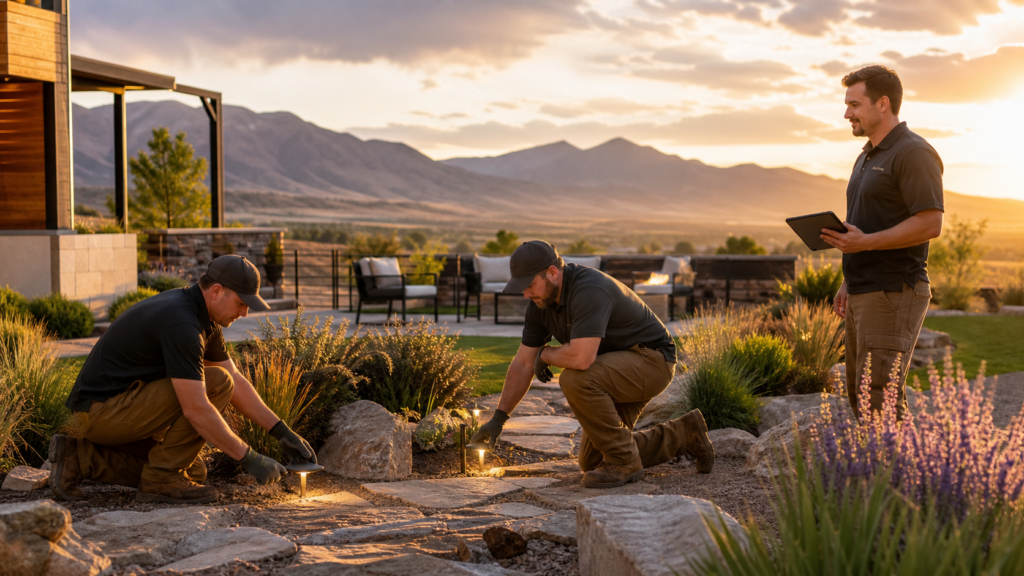
Landscape Lighting Installation That Extends Colorado Evenings
Good outdoor lighting lets you keep using your yard long after the sun drops behind the Rockies. Instead of heading inside when the light fades and the air cools, you can stay outside in comfort, see where you are going, and enjoy the view in a new way.
Northern Colorado evenings stretch on in summer, but the light changes fast. One minute your foothills patio is glowing, the next it is full of shadows. With thoughtful landscape lighting installation, your property does not just look good during the day, it works as an outdoor room at night too. In this article, we will talk about why nighttime design matters, how layered lighting works, and what makes a system last in our local climate, all through the lens of high-end, custom outdoor living spaces.
Why Colorado Homes Need Thoughtful Nighttime Design
Foothills properties are beautiful, but they can be tricky after dark. Many homes sit on sloped ground with:
- Stone steps and narrow paths
- Natural rock outcroppings
- Gravel walks and crushed stone patios
- Retaining walls and raised planting beds
Without the right light, these areas can turn into guessing games at night. A missed step on a dark stair or a hidden edge on a boulder wall is not just annoying, it can be unsafe for family and guests.
There is also the lifestyle side. A lot of Colorado living happens outdoors. Evenings often include:
- Grilling on the patio
- Backyard parties and music
- Hot tub time under the stars
- Long talks around a fire pit
When the lighting is harsh, uneven, or missing, people tend to huddle near the door or head back inside early. With good lighting design, the whole space feels softer and more relaxed. The grill area, bar seating, lounge chairs, and paths all feel connected and comfortable.
Thoughtful landscape lighting installation also lets your investment in stonework and planting shine after dark. That custom flagstone patio, the hand-laid seat wall, the layered perennial beds, and the outdoor kitchen can look even more dramatic at night when they are lit with care instead of disappearing once the sun goes down.
Layered Lighting That Extends Your Outdoor Living
Great outdoor lighting works in layers. We think about three main types:
- Ambient lighting, the general glow that sets the overall mood
- Task lighting, brighter light where you need to see clearly
- Accent lighting, focused beams that highlight special features
Ambient lighting might come from soft downlights mounted on pergolas or in nearby trees, or from low, warm fixtures around the edge of a patio. It should feel like a gentle wash, not a spotlight.
Task lighting is key for cooking, dining, and walking. At an outdoor kitchen, that could mean discreet fixtures under counters or along a backsplash. On paths and steps, it might be:
- Low, shielded path lights along walkways
- Step lights tucked into risers
- Small fixtures built into seat walls near grade changes
Accent lighting brings the drama. On luxury foothills properties, we often see:
- Uplighting on mature pines to show off their structure
- Grazing lights that skim across boulder walls to reveal texture
- Narrow beams on water features, sculptures, or unique stonework
- Soft light on architectural details like columns or gables
The goal is not a “stadium bright” yard. The goal is a series of comfortable pockets of light that connect your patio, deck, hot tub, fire area, and paths into one inviting nighttime living space.
Designing Landscape Lighting for Colorado’s Climate
Northern Colorado is tough on outdoor fixtures. We deal with:
- Freeze and thaw cycles that move soil and stone
- Intense high-altitude sun
- Sudden hail and strong winds
- Seasonal snow and ice buildup
That is why quality materials and professional installation make such a difference. Fixtures need to be built to handle UV exposure, temperature swings, and physical impact. Connections need to stay dry and secure even as the ground shifts and heaves.
When we plan lighting, we also think about how it will feel in both long summer days and early winter sunsets. Color temperature plays a big role. Warm white light usually feels more comfortable for outdoor living spaces and blends better with natural stone and wood. Beam spread matters too, so trees, walls, and gathering areas are lit evenly without hot spots.
For foothills settings, best practices often include:
- Using corrosion-resistant metals and high-quality seals
- Running wiring at the correct depth and in protected paths
- Positioning fixtures where they will not be buried by snow or hit by plows
- Keeping lights clear of direct irrigation spray to extend their life
All of this planning helps your lighting system keep working season after season instead of failing after the first rough winter.
Smart Controls and Energy-Wise Lighting Choices
Modern systems rely on LED fixtures for good reason. LED lighting offers:
- Low energy use compared to older bulbs
- Long life in tough weather conditions
- Stable color that does not shift quickly over time
- Compact fixture sizes for a cleaner look
Controls are just as important as the fixtures. Instead of walking around turning things on by hand, you can use:
- Timers that keep regular schedules
- Astronomical clocks that follow sunrise and sunset times automatically
- App-based smart controls that let you change scenes from your phone
You might have a bright “entertaining” scene for parties, a softer “relax” scene for late-night hot tub use, and a “security” scene that keeps key areas visible.
Dark sky friendly design also matters in Colorado, where clear, starry nights are a big part of the appeal. Good lighting design respects this by:
- Aiming fixtures only where light is needed
- Choosing warmer color temperatures to reduce glare
- Shielding lights so they do not shine into neighboring properties or the sky
- Avoiding over-lighting just for the sake of brightness
The result is a property that feels safe and welcoming without washing out the night.
Why Professional Installation Delivers the Best Results
Simple solar stakes and basic kits might sound easy, but they rarely give a polished result, especially on complex foothills properties. They often create:
- Uneven light levels
- Random fixture placement
- Glare in people’s eyes
- Short product life
A professionally designed system is built around your property. It considers the terrain, the architecture, the way you use each outdoor area, and how everything ties together. When lighting is planned along with stonework, planting beds, pergolas, and outdoor kitchens, fixtures can be tucked into walls, steps, and structures for a clean, built-in look.
Professional installation also supports long-term value. Safe, code-compliant wiring and quality connections reduce problems down the road. Thoughtful planning makes it easier to maintain and expand your system in future phases of your outdoor living projects.
When you treat lighting as a key part of design instead of an afterthought, your yard stops being a daytime-only space and becomes a place you can enjoy from late summer sunsets to cool, crisp fall evenings.
Get Started With Your Project Today
If you are ready to transform your property after dark, our team can design and handle every detail of your landscape lighting installation. At Couture Landscaping, we listen closely to your goals so your outdoor lighting looks beautiful and works the way you need it to. Reach out to contact us and we will help you plan the next steps and schedule your project.