
Build Your Outdoor Retreat in the Right Order
Luxury outdoor living spaces in the Colorado foothills do not come together by accident. Steep slopes, rock outcrops, thin soils, and wild weather all put pressure on your yard, your home, and every feature outside your back door. If the work happens in the wrong order, you can end up redoing patios, replanting beds, or chasing water problems for years.
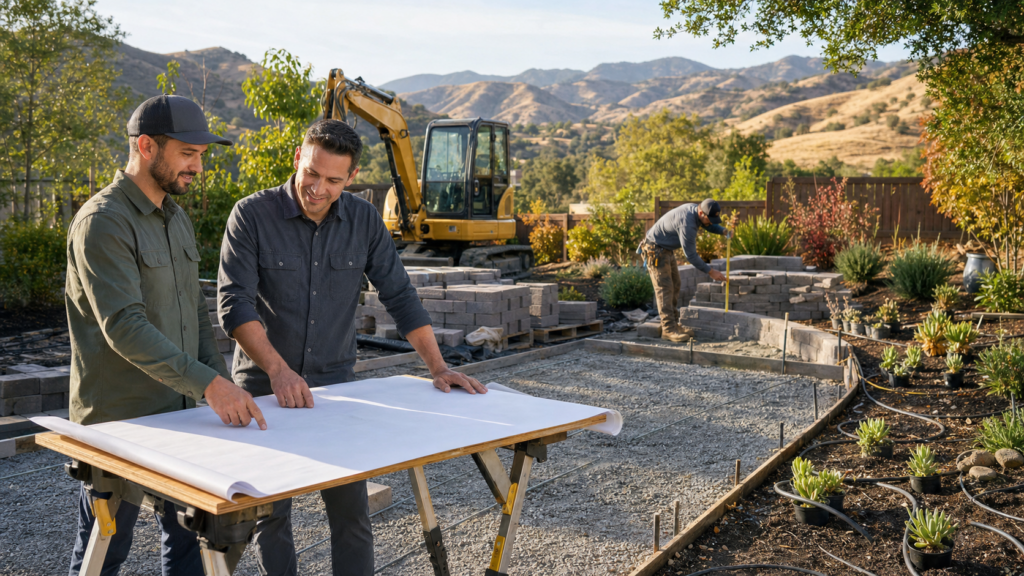
We like to think of each foothill property as a custom build that needs a clear master plan. The most reliable sequence is simple: grading, drainage, utilities, planting, then structures. When you follow that order, you protect your home, keep messy work up front, and move through the build faster and cleaner.
For many foothill homes, a full outdoor living project can stretch over several months. The best time to start planning for a June build is late summer through winter beforehand. Our design/build team maps out each phase, lines up engineering and permits where needed, and guides you from first concept to final walkthrough.
Start with the Land: Grading for Beauty and Safety
Grading is where your outdoor living space begins. It shapes how you move through the property and how the house sits on the land. With careful grading, we can create flat, comfortable areas for patios and lawns, build terraces that make steep yards feel inviting, frame key views while screening less attractive areas, and blend the house into existing slopes instead of fighting them.
In the foothills, grading is not as simple as pushing soil around. Rocky soils can slow equipment and limit how deep we can cut, and sudden elevation drops may require retaining walls or stable banks. We also account for existing native vegetation you may want to keep, along with areas prone to erosion if the surface is disturbed too much.
At this stage, we lock in big decisions that affect everything that follows, including finished heights for patios, steps, and walkways; driveway routes and service access for future work; locations and heights for retaining walls and boulder outcrops; and space for future pools, spas, or plunge pools, even if they come later. Good grading sets up a yard that feels natural, drains correctly, and is easier to care for over time.
Control the Water First: Drainage That Protects Your Home
Once the land is shaped, we turn to water. In foothill areas, water can arrive fast during summer storms, then linger as snowmelt in shady pockets. Poor drainage can create several expensive, ongoing issues:
- Push water toward foundations
- Heave and crack patios and walks
- Flood basements or lower levels
- Suffocate plant roots and cause dieback
We design drainage so it works quietly in the background, using a mix of solutions depending on the site:
- Swales that gently carry water around the house instead of toward it
- French drains that collect subsurface water in problem zones
- Dry creek beds that double as a design feature and drainage path
- Rain gardens in lower areas that like to stay moist
- Permeable paving in selected spots to let water soak in slowly
Drainage comes right after grading because we now know how the land moves and where water wants to go. It still comes before everything else so we can set downspout tie-ins and surface drains along hardscape edges, add sub-drains behind retaining walls and under sensitive areas, and establish outlets that send water to safe, stable discharge points. When this work is complete, the rest of the project stays drier and more stable, from irrigation to structures.
Place the Lifelines: Utilities, Irrigation, and Lighting
With the land and water set, we move into utilities. This is when we open trenches while the site is still rough, so finished areas do not get damaged later. Underground runs might include:
- Electrical lines for lighting, heaters, and pumps
- Gas lines for fire features, outdoor kitchens, and heaters
- Conduit and sleeves for future upgrades you might want later
Next comes irrigation, which is especially important in our semi-arid climate. A smart system for foothill outdoor living spaces often includes:
- Separate zones for trees, shrubs, lawns, and native areas
- Drip irrigation for planting beds to cut waste and keep foliage dry
- Rotors or high-efficiency sprays where lawn is needed
- Smart controllers that adjust run times based on weather
We also plan for low-voltage lighting and other systems at this stage. By tying them to the master layout, we can run wire and conduit where it needs to be, including path and step lighting for safe movement on sloped sites, accent lighting on trees, boulders, and architectural features, and lines for outdoor speakers, Wi-Fi access points, and basic security wiring. Doing this now means we are not cutting into new patios or planting beds down the road.
Bring It to Life: Planting for Four-Season Foothill Beauty
Once the ground is shaped and the messy trench work is finished, we bring in the plants. This timing guards your investment so root zones are not torn up later. Trees generally go in first, followed by shrubs, perennials, and groundcovers.
Foothill planting has its own needs. We pay close attention to drought-tolerant and regionally adapted plants that handle dry spells, fire-wise spacing and plant choice near structures, deer-resistant varieties (or areas that can be easily protected), and microclimates created by walls, boulders, and exposure.
Around a mid-June timeline, many plants establish well as long as they get proper water and care. We can also stagger certain pieces based on how you use the space and how much water you want to commit to:
- Lawns in high-use zones where you truly need soft ground
- Native meadows or low-water seed mixes in larger, sunny areas
- Evergreen structure for winter, with perennials and shrubs layered for:
- Spring blooms
- Summer shade and color
- Fall foliage and seed heads
- Winter form and texture
Planting last keeps the site neat and sets you up for long-term success with less rework.
Elevate the Experience: Patios, Kitchens, and Structures Last
The outdoor living features everyone notices most are actually the final layer. Once the earthwork, drainage, utilities, and plants are in place, we build the elements that define how you use the space. These might include:
- Stone or paver patios
- Pergolas or pavilions
- Outdoor kitchens and bars
- Spas, plunge pools, or soaking tubs
- Fire pits and outdoor fireplaces
Foothill conditions guide how we design and build these structures. We think through wind loads on roofs and pergolas, especially on exposed ridges; snow loads on overhead structures and how they shed; strong sun exposure (especially on south and west faces); and finish materials like natural stone, steel, and high-performance composites that hold up to freeze-thaw cycles.
The typical install flow at this point looks like:
- Final base prep and installation of patios, walkways, and walls
- Building vertical features like pergolas, kitchens, and fireplaces
- Adding details such as railings, built-in seating, and planters
- Installing and testing lighting, fire features, and water features
- A careful walk-through to confirm grading, drainage, and systems all perform as planned
When you follow this sequence from start to finish, your foothill outdoor living space feels intentional, works with the land, and is ready to withstand the conditions that come with calling Northern Colorado home.
Get Started With Your Outdoor Living Space Project Today
If you are ready to turn your yard into a place you truly enjoy, we are here to help design and build custom outdoor living spaces that fit your lifestyle. At Couture Landscaping, we listen to your ideas, provide expert guidance, and handle every detail from concept to completion. Share your vision with us and let’s create a space that feels like a natural extension of your home. To talk with our team or request a consultation, simply contact us today.