
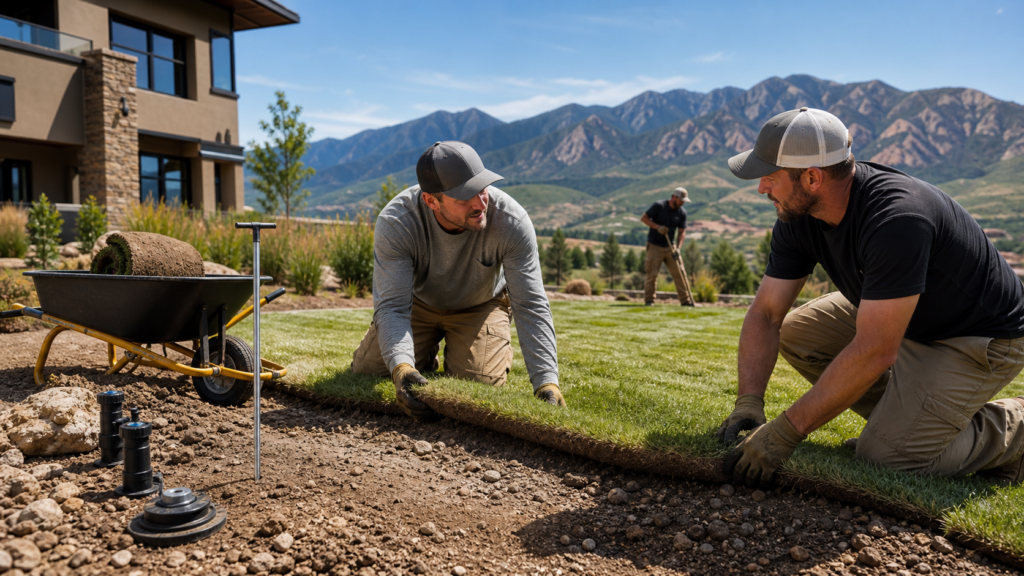
Rethinking Sod for Colorado Foothills Yards
Many homeowners in the Fort Collins foothills want the same things: a lush green yard for kids and pets, clean curb appeal, and something to help hold those sloped areas in place. Sod can feel like the fast answer. It rolls out, looks finished right away, and seems simple on the surface.
In the foothills, though, that quick “roll out sod and water” approach often struggles. Elevation, rocky soils, wind, and strong sun all work against a traditional lawn. In this article, we are looking at how sod really behaves in foothills yards, when it still makes sense, and which other options might give you a yard that looks good and actually lasts.
How Foothills Climate Challenges Traditional Sod
Foothills yards around Fort Collins are different from flat, in-town lots. Two homes only a few miles apart can have very different growing conditions.
Things that make sod struggle include:
- Higher elevation air that is drier and thinner
- Steep or uneven grades that shed water quickly
- Rocky or compacted native soils under a thin topsoil layer
- Strong winds that pull moisture from leaves and soil
South-facing slopes can bake in full sun, while north-facing spots stay cooler and take longer to dry out. Overnight temperatures often drop faster in foothills areas too. All of that puts stress on sod that was grown in easier, more controlled conditions.
On top of that, we live in a semi-arid climate with:
- Intense summer sun
- Low humidity for much of the year
- Regular watering rules and limits
Traditional, shallow-rooted sod has a hard time keeping up unless it gets very consistent water and care. If the soil under the sod is not deeply prepared, roots may only sit in the top inch or two. That thin layer dries quickly, so you see brown edges, thin spots, and stress anytime irrigation is off by a little.
Soil conditions are a big piece of the puzzle. Native foothills soils tend to be:
- Rocky, with lots of gravel or cobble
- Compacted from construction and grading
- Slope-heavy, which speeds up runoff
If sod is laid right over this without enough soil prep, water will run off instead of soaking in, roots will not grab deeply, and you may see patchy growth or sections that never really take.
The Real Costs of Sod Installation in Fort Collins Foothills
Sod installation in Fort Collins can seem like the fast, simple route to a finished yard. You see instant green, and that is appealing. But it helps to think about what it really costs to keep that sod healthy on a foothills site over time.
There are short-term and long-term costs, including:
- Site grading and soil amendments
- Irrigation design, installation, and ongoing tuning
- Regular water use to keep sod alive
- Fertilizer, weed control, and disease control products
- Repairing thin or dead areas and sometimes resodding
On a tough site, those follow-up costs can add up quickly. Even when you do all the “right” things, sod in harsh exposures can still fail and have to be replaced.
Maintenance is another hidden burden. For many foothills lawns, staying presentable means:
- Weekly mowing and edging through the growing season
- Seasonal aeration and overseeding
- Irrigation adjustments as sun and shade change
- Leaf cleanup and thatch management
Large, high-input lawns also have environmental tradeoffs. Our region is careful with water use, and turf that needs frequent, deep watering does not always align with local goals or guidelines. Runoff from fertilizers and pesticides can move downhill into streets and drainage ways, which is not ideal on a sloped property.
When Sod Still Makes Sense in the Foothills
Sod is not always a bad choice. In some foothills yards, it is the right tool in the right spot. The key is being selective and honest about how the space will be used.
Sod can work well for:
- Small, mostly flat play areas for kids
- Defined pet zones that need toughness and quick cleanup
- High-visibility front entries where green lawn frames the house
- Narrow lawn strips near patios or walkways for a soft edge
In those areas, it is important to match the sod to the site. That usually means:
- Choosing turf blends that handle sun, cold, and some drought
- Adding enough quality soil on top of native subgrade
- Building in good drainage so water does not sit or race off
Timing also matters. In our region, late spring and early fall usually give new sod a better shot. The soil is warm enough for roots, but daytime heat is not as intense as peak summer. No matter when you install, the first 6 to 8 weeks are critical. New sod needs:
- Consistent, carefully managed watering
- Limited heavy use from kids and pets
- Close watching for dry spots or settling seams
Without that commitment, even the best-prepped sod can fail.
Smarter Alternatives to a Full Sod Lawn
If a full carpet of sod across your entire foothills yard is not the best fit, there are plenty of other ways to get beauty, function, and erosion control.
Native and drought-tolerant plantings are a strong option. Xeric grasses, groundcovers, and regionally adapted perennials and shrubs can:
- Handle sun, wind, and lean soils better than typical turf
- Need less water once established
- Provide color, texture, and habitat for birds and pollinators
- Help anchor slopes with deeper, more fibrous root systems
We also like hybrid lawn concepts. Instead of covering everything in sod, you:
- Keep small, practical lawn pockets where you truly need them
- Use stone or gravel paths to move through the yard
- Add boulders and outcrops that fit the foothills character
- Fill beds with mulch and tough plants so weeds have less room
Hardscapes are another powerful tool. Patios, seat walls, fire features, and terraces can replace large patches of lawn and solve grading issues at the same time. On a sloped lot, well-planned stone or concrete elements can:
- Create flat, usable zones for seating and gathering
- Direct water safely through the site
- Cut down on mowing and trimming on steep areas
You end up with more living space and less work.
Designing a Foothills Landscape That Lasts
The best foothills yards start with a whole-property plan. Instead of asking “Where can we put sod?” it helps to ask:
- Where do we actually need soft, grassy surfaces?
- Which slopes need stronger erosion control solutions?
- How do we frame views, create privacy, and add shade?
- How much time and care do we truly want to spend outside each week?
When we design and build in the Northern Colorado foothills, we look at slopes, soil structure, sun and wind exposure, and drainage patterns before recommending anything. From there, we can suggest a mix of sod, native plantings, and hardscapes that work together rather than fight the site.
Before you order sod, it is worth taking a step back. A site consultation, soil analysis, and a simple master plan can prevent costly do-overs and frustration. With the right mix of materials and thoughtful design, your foothills yard can be green where it needs to be, low-maintenance where it counts, and ready to handle the Colorado climate for years to come.
Transform Your Lawn With Expert Sod Installation Today
If you are ready for a lush, green yard without the long wait, our team at Couture Landscaping is here to help. Learn how our professional sod installation in Fort Collins can give you a healthy, durable lawn tailored to your property. Tell us about your project goals, and we will recommend the best approach for your space and budget. Have questions or want to schedule a consultation now? Simply contact us to get started.