
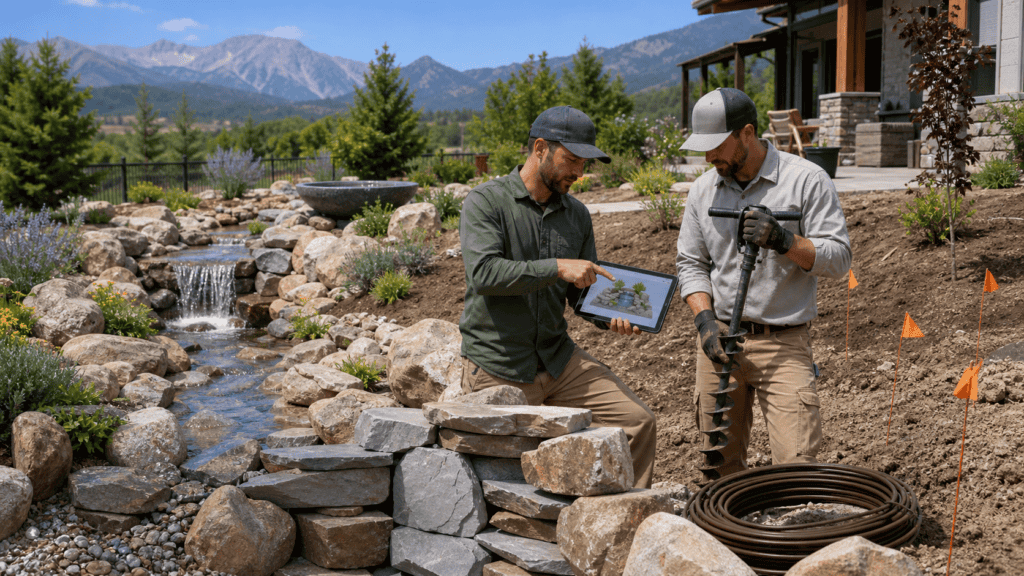
Backyard Water Features in Colorado’s Foothills Without Regrets
Backyard water features can turn a foothills property into a personal retreat. On hot July afternoons, moving water can feel cooler, soften road noise, and give birds and pollinators a safe place to land. A well-designed pond, stream, or fountain can make your outdoor space feel like a quiet mountain getaway, even when you are only a few steps from your back door.
But in Colorado’s Front Range foothills, water is not simple. Intense sun, quick temperature swings, freeze-thaw cycles, wildfire risk, and water law all affect what is realistic. Our goal here is to give a clear reality check so you can see when backyard water features make sense, what it really takes to own one long term, and when a high-end dry or fire-wise design is a smarter move.
How Colorado’s Climate Shapes Backyard Water Features
The foothills climate is beautiful and harsh at the same time. We sit high, with strong UV light, dry air, and big swings between daytime heat and cool nights. Winters bring low temperatures that can stress stone, concrete, liners, and buried plumbing.
Those conditions affect different types of backyard water features in different ways:
- Ponds: Higher evaporation, algae pressure in full sun, and a need for depth so water does not freeze solid
- Streams and waterfalls: More splash loss to wind, more wear on pumps and plumbing from constant flow
- Fountains: Exposed surfaces heat and cool fast, which can shorten the life of cheaper components
Evaporation can feel surprising. On a hot, windy week, you may need to top off your system more often than you expect. That is normal here, but it has to be planned for.
When people hear “low maintenance,” what counts as “low” in milder parts of the country is not the same in Northern Colorado. Here, lower maintenance usually means smarter design from the start, higher quality pumps, plumbing, and liners, and intentional seasonal care rather than a “set it and forget it” mindset. Done well, a backyard water feature can still fit into a busy life, but it will never be zero effort.
Designing for Freeze-Thaw Cycles Instead of Fighting Them
Freeze-thaw cycles are one of the biggest threats to backyard water features in the foothills. Water seeps into tiny gaps in stone, mortar, or concrete, then freezes and expands, creating cracks that grow over time. Buried plumbing can also split if water is allowed to sit inside and freeze.
Smart design focuses on working with winter, not pretending it is not coming:
- Burying water lines deep enough and, in some cases, adding insulation
- Using self-draining lines or valves that make blowout and winterization easier
- Choosing flexible liners where they make sense instead of rigid basins that can crack
- Selecting stone types and masonry techniques that stand up to Colorado winters
You also have to decide how you want to use your feature in winter. Some homeowners like to run a stream or waterfall year-round to enjoy ice formations. Others prefer to shut down fully and protect pumps and plumbing. Running through winter can be beautiful, but it also means:
- Higher power use to keep pumps going
- Close attention to ice buildup around walkways
- A greater need for backup plans if there is a power outage in extreme cold
Shut-down systems must be winterized with care so lines do not freeze and crack. This is usually not a DIY task in our climate.
Water Rights, Evaporation, and Being a Good Neighbor
Colorado water law is different from many other places. In simple terms, you may not always be allowed to collect and store water that would normally flow downstream to someone else. Backyard water features usually work off your existing water supply, and how that supply is regulated matters.
A few basic points:
- If you are on a municipal water tap, your feature typically uses treated water you already pay for
- If you are on a well, there may be strict rules on how that water can be used
- Building a feature that captures stormwater can be regulated and may require professional guidance
Evaporation is also a real factor. During hot, dry July and August days, open water will lose volume. That may raise your water bill as you top off, run into local watering rules during drought years, and call for automatic fill valves or careful manual checks.
Responsible design choices help protect both you and your neighbors:
- Recirculating systems instead of once-through flow
- Deeper basins with smaller surface area-to-volume ratios to slow evaporation
- Wind breaks and shade where they fit the design
- Checking with your municipality and, when needed, a water attorney before you break ground
Maintenance, Mosquitoes, and Year-Round Care
A beautiful backyard water feature in Northern Colorado runs on a yearly rhythm. It is helpful to think in seasons:
- Spring: Start up, cleaning, checking pumps and plumbing, adjusting flow, and balancing water quality
- Summer: Skimming debris, managing algae, checking water levels, and tuning pumps and filters
- Fall: Managing leaf drop, netting where needed, preparing for shut down or reduced flow
- Winter: Either active ice watching on running features or protection and monitoring on shut-down systems
Mosquitoes and algae are common worries, but they do not have to take over your yard. The key is good design and consistent care, not a shelf full of chemicals. Strong circulation helps ensure water does not sit still, and skimmers and pre-filters catch debris before it breaks down. Biological filtration, with bacteria and media that help keep water clear, can do much of the heavy lifting. Fish and aquatic plants can also play a role where they suit the design and site, and pumps should be correctly sized for the volume and style of the feature.
Many “no maintenance” promises ignore the real work involved. A handcrafted, built-to-last system will still need regular checkups, periodic cleanouts, and professional support for bigger service and repairs. Being realistic about this from the start leads to a much better long term experience.
Fire-Wise Water Features and When to Skip Water Altogether
Wildfire risk is a daily reality in the Front Range foothills. Water features, stone, and metal can be helpful parts of a defensible space plan when they are placed with care, but they are not stand-alone fire systems.
What water features can do for fire-wise design:
- Replace combustible ground covers near the home with rock, gravel, or open water
- Create ember-resistant zones between structures and planting beds
- Support hardscape patios that act as fuel breaks
Smart fire-wise design details include:
- Non-combustible patios or terraces around ponds and fountains
- Avoiding dense shrubs, tall grasses, and mulch at the water’s edge near structures
- Choosing materials that do not spark easily
- Planning pump access and backup ideas in case of power loss
Even with these benefits, sometimes the best choice is to skip standing water. Red flags that a backyard water feature might not fit include:
- Heavy tree litter, constant needles, or leaves that will fill a pond or stream
- Very steep slopes where water wants to run off or erode
- Limited water allocation or strict well rules
- A lifestyle with frequent travel away from home
- No interest in ongoing care or professional maintenance
The good news is that you can still have a high-end, resort-like backyard without water. Great alternatives that give movement, sound, and strong focal points include:
- Dry creek beds that handle stormwater and look natural year-round
- Sculptural boulder groupings tied into the local geology
- Wind features that respond to our foothills breezes
- Fire elements on non-combustible patios
- Native and water-wise planting designs that shift color and texture through the seasons
A thoughtful, custom outdoor space can feel calm and luxurious even when it is completely dry. The key is matching the design to your site, your water supply, and your appetite for maintenance and risk.
Get Started With Your Project Today
Transform your yard into a relaxing retreat with custom backyard water features designed and installed by Couture Landscaping. We take the time to understand how you use your outdoor space so your new feature looks beautiful and fits your lifestyle. Reach out to contact us and we will walk you through design options, materials, and a clear project timeline tailored to your property.