
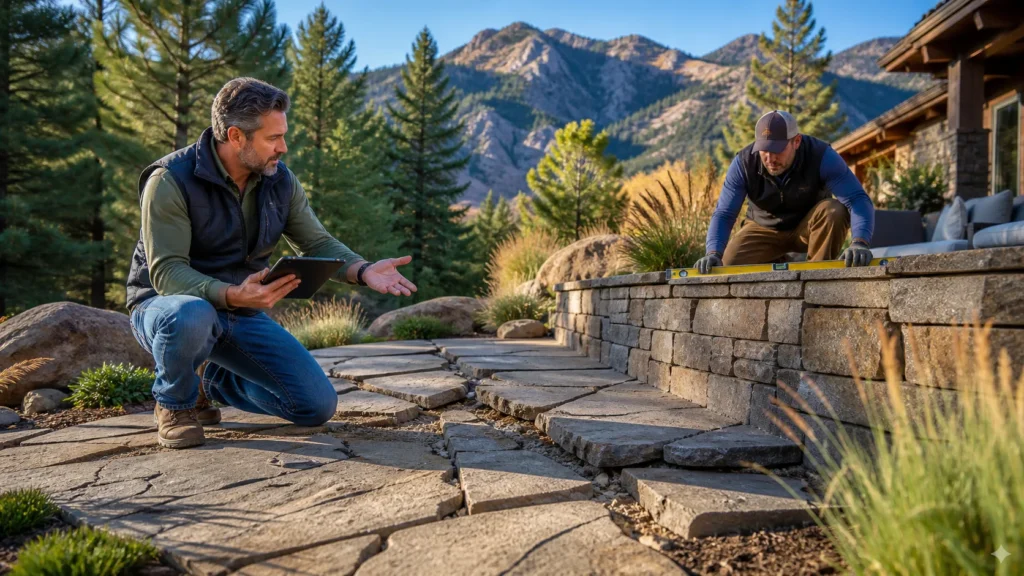
Spot Hidden Hardscape Risks Before You Invest
Hardscape in the Colorado foothills has to do more than look pretty. Patios, walls, and outdoor living spaces all have to deal with steep grades, clay-heavy soils, and fast-changing weather. If those forces are ignored, even a brand-new space can crack, tilt, or collect water in just a few seasons.
Catching red flags before design protects your home and your investment. Drainage issues, soil movement, and freeze-thaw damage all show up in small ways first. When we spot those early, we can plan around them instead of fighting them later.
At Couture Landscaping, we work in the Fort Collins foothills and along the Front Range, so we see what happens when hardscapes are built for first-year photos instead of long-term performance. We plan outdoor spaces that are crafted by hand to last, not just to pass an inspection. Early fall is a smart time to look closely at your yard, when summer storms have exposed weak spots and before winter freeze-thaw cycles return.
Drainage Clues Your Backyard Is Sending You
Water is usually the first sign that something is off. The way it moves, or refuses to move, sets the stage for every hardscape decision.
Puddles, soggy spots, and spongy turf often show up:
- Near the house or foundation
- Along existing patios and walkways
- At the bottom of slopes or grade changes
- Around downspout outlets or hose bibs
If an area stays wet for days after rain or irrigation, it often means poor grading, compacted soil, or blocked drainage paths. Over time, standing water near structures can lead to slab heaving, joint failure in pavers, mold growth, and even pressure against your foundation.
You might also see erosion channels and washed-out mulch where stormwater keeps cutting the same route through your yard. Signs include:
- Ruts, small gullies, or bare dirt strips running downhill
- Exposed roots on trees and shrubs
- Edging that has shifted or tipped
- Gravel or mulch that moves after every storm
When roof runoff or uphill properties send water through your yard without control, it can wash away base materials under patios and retaining walls. That slow loss of support is what leads to sinking corners and cracked surfaces.
Downspouts and gutters can also fight with your hardscape if they are not planned together. Downspouts that dump water straight onto patios, walkways, or compacted ground concentrate a lot of water into a small area. Hard surfaces then push that water sideways, often into places where the soil cannot handle it.
High-end hardscape contractors often solve this by designing:
- Subsurface drains and pipes that quietly move water away
- Dry creek beds that double as design features
- Intentional swales and channels that guide runoff safely through the yard
When water has a planned path, everything built around it has a better chance of staying stable.
How Foothills Soils Move Under Your Hardscape
Many Northern Colorado foothills properties sit on clay-heavy or mixed soils. These soils swell when wet and shrink when dry. On a flat lot that is a challenge. On a sloped lot, gravity adds even more movement over time.
That movement can show up as:
- Cracking and tilting in concrete pads
- Separation in paver fields and steps
- Gaps that open and close with the seasons
If you see concrete cracks that widen and narrow through the year, or one side of a slab higher than the other, that is the soil talking. In paver patios, look for low spots that hold water, rocking stones, and joints that open up or pinch tight. Uneven stairs or settling at the bottom step are also warning signs.
These issues often trace back to:
- Inadequate base depth
- Poor or rushed compaction
- Base materials that do not fit local soils
Retaining walls and boulders can give very clear signals when soils and water are not under control. Watch for:
- Walls that lean forward or bow out
- Stair-step cracks along the blocks
- Boulders that look like they are rotating or sliding
Water that builds up behind a wall creates hydrostatic pressure. If the wall was not designed with the right drainage and backfill for foothills conditions, that pressure will push until something moves. Before adding new terraces or tying new structures into old ones, high-end hardscape contractors should study these movement patterns and plan structural solutions, not just cosmetic fixes.
Recognizing Freeze-Thaw Damage Before Winter Returns
Cold nights and sunny days are part of life in the Colorado foothills. Those temperature swings mean constant freeze-thaw cycles in winter and early spring, and hardscape materials feel every one of them.
On concrete and natural stone, look for surface damage like:
- Spalling or flaking that exposes rough, sandy material
- Pitting that creates small hollows where water can sit
- Delamination, where thin layers peel or chip away
Chipped step edges or coping around raised areas can signal that water is getting inside the material, freezing, and expanding. Over time, this speeds up breakdown. Choosing the right materials, finishes, and sealers for our local climate is a design-stage decision, not a repair-stage decision.
Heaving, lifting, and tripping hazards are another sign of freeze-thaw trouble. Raised edges where part of a slab or paver field sits higher than the rest often come from trapped water in the base layer. When that water freezes, it expands, pushes the surface up, then sometimes drops it later in the season, but not always back where it started.
If you notice the same areas shifting every winter, that points to drainage and base design problems beneath the surface. Resurfacing alone will not fix it.
It helps to pay attention to seasonal patterns:
- Which areas get icy first after a storm
- Spots that stay frozen long after the rest has melted
- New cracks that appear in late winter or early spring
This rough “map” of problem zones helps a high-end hardscape team design surface slopes, textures, and snow management plans that make outdoor spaces safer and longer lasting.
When DIY Fixes Are Not Enough in the Foothills
It is tempting to throw quick fixes at small problems. A bag of gravel in a muddy spot, a little sand to relevel a few pavers, or some caulk in a crack can feel satisfying for a while. The problem is that these patches rarely address what is happening below.
Piecemeal repairs can:
- Trap more water where it should be draining
- Hide ongoing soil movement until it gets worse
- Create uneven elevations that fight future design work
- Shift runoff toward foundations, neighbors, or driveways
In foothills settings, small changes in grade or drainage can ripple far across a property. That is why some situations really do call for high-end hardscape contractors who are used to working on complex sites.
It is time for a professional evaluation when you see:
- Repeated erosion in the same locations
- Leaning or bowing retaining walls
- Chronic puddling close to the house
- Severe or growing cracks in hard surfaces
- Multi-level plans on steep or irregular lots
Experienced design-build teams look at soils, slopes, drainage, and existing structures as one connected system. At Couture Landscaping, we start with an on-site assessment, document the red flags, then build a grading and drainage strategy that supports the design, not the other way around. On challenging hillsides or for significant walls, we also collaborate with engineers to make sure the structure is ready for what the site will throw at it.
Taking time to solve these problems before design lets us create outdoor living spaces that are both beautiful and resilient.
Turn Red Flags Into a Resilient Outdoor Retreat
Early fall is a great moment to walk your yard with fresh eyes. The memory of spring melt and summer storms is still clear, and winter has not yet locked the ground in place. As you walk, note where water sits, where soil has moved, and where freeze-thaw has already left a mark.
A simple checklist with photos and notes can make any design conversation more focused. It helps everyone see the same issues and plan smart solutions. When those hidden problems are addressed up front, your future patios, walls, and outdoor living areas have a solid chance to thrive in the Colorado foothills climate year after year.
Get Started With Your Project Today
If you are ready to transform your outdoor space into a refined extension of your home, Couture Landscaping is here to help with every detail. Our team of high-end hardscape contractors will work closely with you to design and build a space that fits your vision, lifestyle, and property. Tell us about your project goals, timeline, and budget, and we will provide a tailored plan and clear next steps. To begin the conversation, simply contact us and we will follow up promptly.