
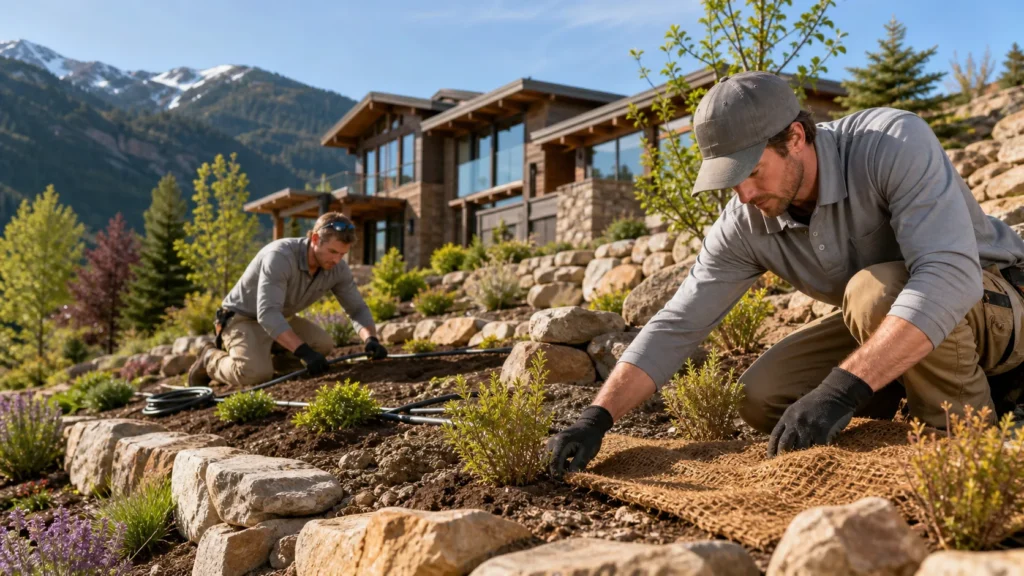
Smarter Water for Steep Colorado Landscapes
Irrigation system installation on a steep Colorado slope is not the same as watering a flat backyard. On hillsides along the Front Range and in the foothills, water can rush downhill, carve channels, and leave you with bare spots at the top and soggy messes at the bottom. That wastes water and slowly damages your property.
Here in Northern Colorado, elevation changes, rocky soils, and intense sun make every drop of water work harder. Traditional sprinkler layouts often spray too fast, too high, and in the wrong spots. We focus on custom, climate-responsive irrigation that keeps water on the slope long enough to soak in, supports healthy plants, and protects your hillside for the long run.
What Makes Colorado Slopes So Hard to Irrigate
Colorado slopes look tough, and they are. The ground under your feet can change every few steps. Many hillsides have:
- Decomposed granite that drains fast
- Clay pockets that stay wet and sticky
- Thin mountain soils that sit on rock and dry quickly
- Rocky chunks that make digging and trenching difficult
On one part of a slope, water may vanish almost as soon as it hits. A few feet away, moisture can pool around roots and cause stress or plant loss. When we design irrigation for these sites, we look at how each section of soil behaves, not just the overall area.
Sun exposure has a big impact too. Slope angle and direction change how fast water evaporates and how deep roots need to grow.
- South-facing slopes bake in the sun and wind, so they dry out faster.
- West-facing slopes can get intense afternoon heat that pushes plants to the limit.
- North-facing slopes often stay cooler and hold moisture longer.
- East-facing slopes warm slowly and may need a different schedule than the rest of the yard.
On top of this, our weather likes to swing. Late spring snows sit on top of the soil, then melt in a rush. Summer hail can compact the ground and strip foliage. Monsoon-style downpours can turn a bare slope into a muddy slide. Irrigation on these hillsides has to be sturdy, flexible, and ready for sudden changes.
Designing Irrigation Systems That Stay Put and Soak in Water
When we plan irrigation system installation on a slope, our first goal is simple: slow the water down. We want it to soak into the soil, not sprint to the bottom.
Thoughtful zoning and pressure control play a big role. Instead of running one large zone across an entire hillside, we often break slopes into smaller zones by:
- Slope position, such as top, middle, and bottom
- Sun exposure and wind patterns
- Soil type and plant groupings
We add pressure regulation so heads and drip lines do not mist or overspray. Lower pressure, shorter run times, and more cycles let the soil absorb water in layers.
For steep areas, hardware choice matters. We lean on:
- Drip lines and point-source emitters for shrubs and trees
- Low-trajectory nozzles that throw water close to the ground
- Multi-stream rotors that spin slow, steady streams instead of a fine spray
These options put water right where roots can use it, and they apply it slowly enough that gravity does not win.
Layout on a slope is not random. We pay attention to the natural shape of the land. That can mean:
- Staggering emitters so water paths overlap without pooling
- Running lines along contour lines so water stays level as it moves
- Combining irrigation with terraces, boulder placements, and plant groupings
Retaining walls, dry streambeds, and well-placed boulders can help break water flow and support irrigation hardware so it does not shift downhill over time.
Smart Controls That Match Colorado’s Climate Whiplash
On steep sites in Northern Colorado, set-and-forget controllers do not work well. Weather shifts too much, and slopes respond quickly to small changes. Smart controls help keep things stable.
We often recommend:
- Smart controllers that adjust run times based on local weather
- Soil moisture sensors that read what is happening below the surface
- Flow monitoring to spot leaks or broken lines early
Instead of watering the same amount every week, smart scheduling changes with sun, wind, and rain. Spring start-up usually means gentle, shorter cycles that wake up roots without washing soil away. As summer peaks, we may add more cycles and move some watering to early morning to cut evaporation.
As fall approaches, we taper run times so plants can harden off and slopes are not soaking wet before freezing nights. Winterization is a key step on hillsides. Blowing out lines correctly and protecting backflow devices helps prevent breaks that could show up as erosion problems next spring.
Smart systems can also line up with local watering rules and drought guidelines. That reduces wasted water, fines, and stress on both plants and property.
Building for Longevity on Rocky, Erosion-Prone Hillsides
A hillside irrigation system has to do more than water plants. It has to stay in place through freeze-thaw cycles, heavy rain, and shifting soils. Installation methods are just as important as design.
On rocky slopes, trenching calls for care. We look for stable paths where lines can be:
- Buried deep enough to avoid damage and freezing
- Anchored so they do not creep downhill over time
- Routed around large rocks rather than forced through them
We protect pipe with backfill that supports it from all sides, not just on top. In some cases, we add anchors or stakes to keep drip lines snug against the slope.
Plants and surface materials help lock the whole system together. We often pair irrigation with:
- Mulches that slow runoff and shield soil from direct sun
- Groundcovers that knit the surface and reduce bare patches
- Deep-rooted shrubs and trees that hold soil around emitters
Quality materials matter on exposed slopes. UV-resistant components, sturdy fittings, and freeze-aware installation details help systems ride out Northern Colorado winters and high-altitude sun without failing.
When to Install or Upgrade Before Winter Hits
Timing irrigation system installation on a slope can save a lot of headaches. Late summer and early fall are often ideal along the Front Range and foothills. The soil is warm, plants are still active, and there is time to test, adjust, and then winterize before deep cold.
If you already have a system on a hillside, it may be time to rethink it if you notice:
- Small rills and gullies forming after storms
- Exposed roots or soil slipping around plants
- Soggy low spots at the bottom of the hill
- Heads that lean, shift, or get buried after every heavy rain
- Constant repairs to lines or fittings on the slope
Planning ahead lets us walk the site, study slopes and soils, and build a schedule that fits your property and your goals. A well-planned project leaves enough room for design, careful installation, testing, and a proper winter shutdown so everything is ready for the next growing season.
Transforming Slopes with Thoughtful Irrigation Design
Steep hillsides can look like trouble zones, but with the right irrigation system, they turn into some of the most interesting parts of a property. Well-watered slopes can support mixed plantings, stone features, and outdoor living spaces that feel connected to the land around them.
At Couture Landscaping, we focus on irrigation design that fits Northern Colorado’s Front Range and foothill conditions. By pairing climate-responsive watering with strong hardscapes and well-chosen plants, we help protect slopes from erosion while keeping them green and inviting for years to come.
Get Started With Your Project Today
If you’re ready to keep your lawn healthy and consistent all season long, our team at Couture Landscaping is here to help design and install the right system for your property. Learn how our irrigation system installation can save you time, water, and money while delivering reliable results. To discuss your yard’s specific needs or request a quote, simply contact us and we’ll walk you through the next steps.