
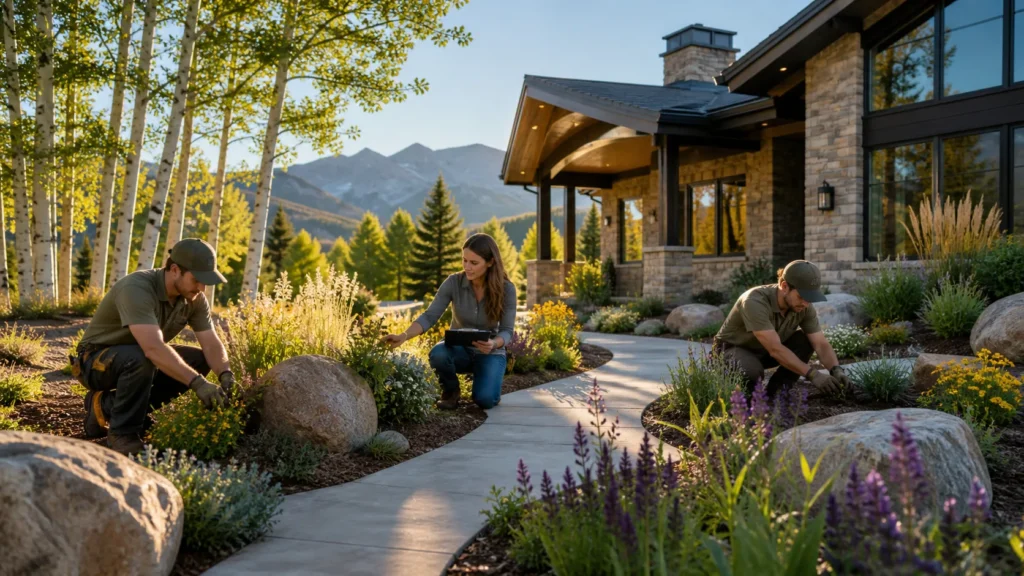
Frame Your Home Like a Colorado Landmark
Front yard landscaping is the frame around your home. It can pull your Colorado architecture into focus, or it can fight with it and make everything feel a little off. When the right plants, stone, and pathways all work together, your home looks more intentional, more welcoming, and easier to appreciate from the street.
In Northern Colorado foothills neighborhoods, we see everything from modern farmhouses to mountain contemporary homes. Each style has its own story. Thoughtful design helps that story stand out. We approach front yards as a way to highlight what is already strong about the house, support daily living, and quietly boost curb appeal and resale value at the same time. Fall is often a smart time to plan and plant, especially in our climate, but these ideas work year-round whenever you are ready to upgrade.
Start with Your Home’s Architectural Story
Before choosing a single plant or boulder, it helps to slow down and really look at the house. The architecture should lead the design. Pay attention to a few core details that influence everything else:
- Rooflines and entry height
- Exterior materials like stone, stucco, timber, or metal
- The color palette, from trim to garage doors
- Window style and shape
Mountain modern homes often have strong horizontal lines, large glass areas, and a mix of wood, metal, and stone. For these homes, we focus on restraint and repetition so the landscape supports the structure rather than competing with it. That usually means:
- Clean planting lines that echo the architecture
- Simple plant groupings with bold forms
- Grasses and evergreens that add movement without clutter
Rustic cabin or lodge-style homes, on the other hand, feel more relaxed and natural. Here, we lean into a foothills-native feel so the yard looks like it belongs to the setting, not like it was forced onto it:
- Curved beds that feel like they belong to the foothills
- Layered shrubs and perennials that soften timber and stone
- Boulders that look like they were uncovered, not dropped in
Contemporary stucco or Colorado craftsman homes do best when we respect their details. Repeating a trim color in foliage, or echoing the shape of a craftsman column with upright shrubs, can make everything feel tied together.
Scale is where many front yards go wrong. A low-slung ranch can disappear behind tall shrubs, while a two-story entry can look even taller if plants are small and scattered. To keep the yard in proportion to the house, we pay close attention to:
- Plant height at maturity, not just at planting
- How close greenery sits to windows and doors
- Sightlines from the street to the front door
The goal is to frame, not hide. Your eye should land on the front door and key features, not get stuck in a hedge.
Designing Front Yard Landscaping for the Foothills
Northern Colorado foothills lots come with their own set of challenges and opportunities. In many neighborhoods, we’re designing around a mix of exposure, grade change, and soil conditions that impact everything from plant selection to how guests approach the entry:
- Slopes that fall toward or away from the street
- Rocky, lean soils
- Strong sun and reflective heat
- Wind exposure and uneven moisture
Instead of fighting those conditions, we design with them. On sloped front yards, subtle grade work can make the entry feel calm and grounded. We often use a combination of structure and planting to make the walk up to the door feel natural and intentional:
- Low retaining walls that look like extensions of the foundation
- Stone or concrete steps that match or complement the home
- Terraced planting beds that break a steep slope into smaller moments
These elements do more than hold soil. They set a rhythm from the sidewalk to the front door, so guests feel guided rather than guessing where to walk.
Views are another big piece in the foothills. Many homes have mountain or city views in front, while still facing a road or nearby driveway. The goal is rarely to “block everything.” Instead, we plan screening so it feels filtered and comfortable while keeping the home connected to its surroundings:
- Soften road noise with layered plantings
- Block direct views into windows without feeling closed off
- Frame the best parts of the view with well-placed trees and boulders
We aim for a filtered feeling, where you sense privacy but the home still feels open and connected to its surroundings.
Plants, Colors, and Materials That Belong in Colorado
Front yard landscaping in our climate needs to be beautiful and tough. We look for native and climate-adapted plants that can handle freeze-thaw cycles, strong sun, and periods of lower moisture. In practice, we usually build plant palettes from a few dependable categories:
- Evergreen trees and shrubs for year-round structure
- Ornamental grasses for movement and fall interest
- Drought-tolerant perennials that bloom in waves
- Hardy shrubs with good form and seasonal color
Color choices should talk to the house. If your home has warm stone, golden grasses and plants with rusty or burgundy highlights can echo that warmth. Cool stucco colors often look best with blue-green foliage and silvery plants.
We also think in layers of texture and season, because a great Colorado front yard should look good beyond a short spring window. The strongest designs rely on structure, contrast, and plants that hold visual interest through frost and snow:
- Fine and coarse foliage mixed for contrast
- Sturdy evergreen shapes to carry winter
- Grasses that glow in lower fall light
- Bark, seed heads, and branch structure that stay interesting after frost
Hardscape materials, like local stone or steel edging, can repeat tones found in the roof or trim so nothing feels random.
Hardscapes That Complement, Not Compete
Hardscapes tie the front yard together and set the tone before anyone even reaches the front door. Because the house style drives the “right” geometry, we often think of hardscapes in terms of clean lines versus softer lines.
For modern and mountain contemporary homes, we typically keep forms crisp and direct so the hardscape mirrors the architecture:
- Straight, clean walkways that mirror the architecture
- Large-format pavers or concrete pads with crisp joints
- Minimal curves, used only where they serve a clear purpose
For rustic or traditional homes, softer transitions tend to look more natural and more consistent with the foothills landscape:
- Gently curved walks that follow natural grade
- Flagstone or textured pavers that pick up on stone foundations
- Edging that allows plants to spill slightly, softening the edges
Material choice matters in our climate. We look for surfaces that can handle snow shoveling, ice melt products, and temperature swings. Common options include:
- Poured concrete for simple, strong forms
- Concrete pavers for pattern and easy repair
- Natural stone for a foothills feel
- Steel edging and wood accents for structure and warmth
The details are what make the front elevation feel finished. These additions don’t need to be flashy to be effective, but they should be intentional and consistent with the rest of the design:
- Low-voltage or LED lighting that guides steps and highlights key features
- Clear, well-placed house numbers that are easy to see from the street
- Small seating spots or widened landings that invite people to linger
These elements do not shout for attention, but together they support the architecture and daily use of the space.
Smart Stewardship for a High-End, Low-Stress Front Yard
A beautiful front yard should not feel like a full-time job. In Northern Colorado, water-wise planning is a big part of that. We plan irrigation and soil work right along with the design so the yard can stay lush within local watering rules. Key tools include:
- Drip irrigation that gets water right to plant roots
- Hydrozones, so plants with similar needs share the same line
- Soil prep that adds structure and organic matter where needed
Fall is often a good season to plant and reset the front yard. Cooler air and warm soil help roots get established before winter. When we install front yard landscaping late in the year, we focus on:
- Proper mulching to protect roots and conserve moisture
- Careful first-season watering schedules
- Light pruning only where it supports plant health
We also design with the future in mind so the yard doesn’t feel tight, cluttered, or high-maintenance as it fills in. Long-term success usually comes down to planning for growth, durability, and the way sightlines will change over time:
- Giving plants room to reach mature size without crowding the walk or blocking windows
- Choosing materials that weather well rather than looking tired after a few seasons
- Maintaining clear views to the front door and architectural features as trees and shrubs grow
When the front yard is planned for long-term growth, it tends to feel calm and intentional instead of overgrown and patchy as years go by.
Bring Your Colorado Curb Appeal Vision to Life
A simple way to start is to stand at the curb and really study your home. Ask yourself: What parts of the architecture feel strongest? What is getting in the way of seeing those details? Are there bare areas that make the front feel flat? This quick check often makes it clear where new framing, better plant choices, or refined hardscape lines could help.
From there, planning with a design/build team that understands Northern Colorado foothills conditions can turn ideas into a clear, phased project. At Couture Landscaping, we blend hand-drawn concepts, detailed planning, construction, and ongoing care so front yard landscaping feels tailored to both the home and the setting. Thoughtful, Colorado-ready design can make your front yard feel less like a random collection of plants and more like a frame that finally does your architecture justice.
Get Started With Your Project Today
If you are ready to transform your curb appeal, our team at Couture Landscaping is here to design and build custom front yard landscaping that fits your home and lifestyle. We listen carefully to your ideas, then create a plan that balances beauty, function, and long-term maintenance. Tell us about your project and timeline, and we will provide clear recommendations and next steps. To schedule a consultation or ask a question, simply contact us.