
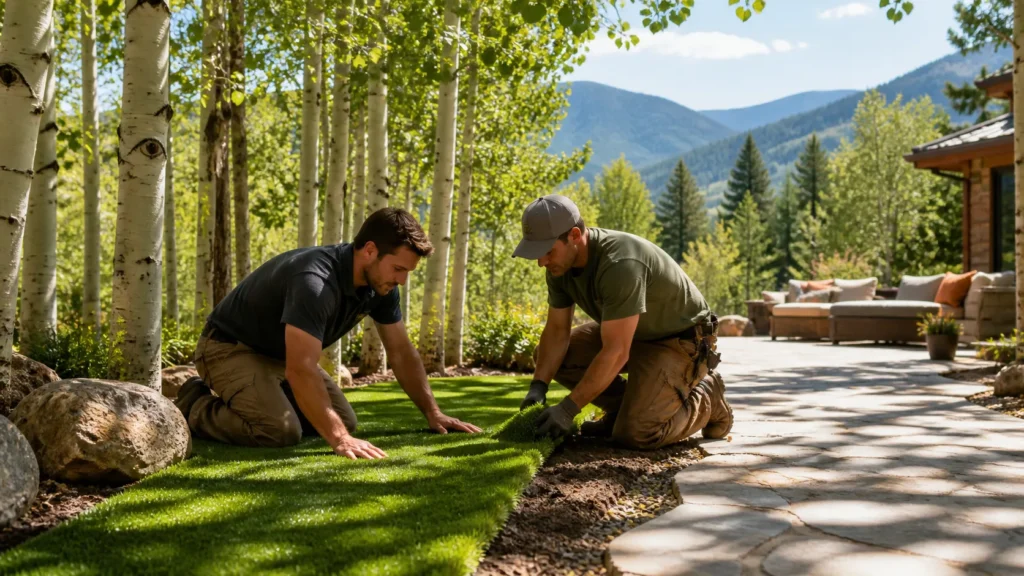
Rethinking Shady Colorado Yards for Year-Round Beauty
Shady yards along the Front Range can be tough. Mature trees, tall fences, and north-facing homes all block the sun that regular grass needs. The result is often mud, bare patches, and tired lawn areas that never really look the way you want.
Many homeowners start looking at artificial turf installation when they get tired of reseeding and watching grass fail over and over. Turf can look clean and green where real grass struggles, but it is not the right answer for every yard. In this article, we as a Northern Colorado design-build team will walk through how turf behaves in shade, what it costs in time and care, and where it makes sense, so you can decide what truly fits your own shady spaces.
Why Shady Yards Struggle Along the Front Range
Our Colorado climate is a bit of a puzzle for grass. We have strong, high-altitude sun, a thin atmosphere, and very low humidity. Turfgrass already works hard to handle that combination. When you add heavy shade on top of it, the plant simply does not get the light and airflow it needs to stay thick and healthy.
Common shade situations along the Front Range include:
- Yards under big cottonwoods, elms, or spruces
- Spaces tucked between houses, garages, or tall fences
- North-facing backyards that stay damp and cold in spring and fall
- Narrow side yards that never see full sun
In those spots, grass often reacts by thinning out, getting leggy, or disappearing completely. If irrigation is set for sunny areas, shaded ground may stay wet for too long, which can invite moss, fungus, and slippery areas that never quite dry.
Many homeowners end up frustrated by:
- Constant overseeding that never really takes
- Sod patches that look good for one season, then fade
- Mud tracked into the house from kids and pets
- An uneven, patchwork lawn that spoils an otherwise nice yard
Those frustrations are usually what push people to start asking about artificial turf installation, shade-loving plants, or a full outdoor living redesign.
Pros and Cons of Artificial Turf in Colorado Shade
Artificial turf can solve some big pain points, especially in problem shade areas. The main benefits most people notice are:
- Consistent green color, even under trees or beside buildings
- No mud or bare spots where grass has failed
- Less mowing, edging, and watering
- Better use of the space in shoulder seasons, when real grass can be soggy or dormant
At the same time, turf is still a manufactured surface. It does not cool the air, filter dust, or support living soil life the way a healthy lawn and planting bed can. Some common drawbacks include:
- Heat build-up on bright sunny days, especially in open areas
- Glare from certain products when the sun hits just right
- A different feel underfoot compared to real grass
- Upfront installation cost and the need for a good base
In shade, turf behaves a little differently. Lower sun can help it stay cooler, which is a plus for kids and pets, but shade yards also have extra challenges. Tree debris (like needles, leaves, and seeds) tends to collect on turf, shallow tree roots can push up the base over time if not planned for, and slow drying after storms or snowmelt can cause moisture problems if drainage is poor.
So the question is not just “Is artificial turf good?” but “Is turf right for this exact shady spot?”
Performance, Drainage, and Durability in Shaded Microclimates
Shady microclimates around Northern Colorado often stay cooler and hold moisture longer. That changes how turf needs to be designed and cared for, especially during snowmelt and fall leaf drop.
In these yards:
- Snow can linger, and meltwater may sit longer on flat or compacted ground
- Wet leaves and needles can get trapped in the fibers if they are not cleared
- Organic debris can slowly break down into fine material that works its way into the infill
This is why a professional base is more important than the turf itself. For shaded areas, we look closely at:
- Grading to move water away from the house and toward safe drainage points
- Proper compaction so the surface stays firm but still lets water pass through
- Subsurface drainage where snow, roof runoff, or overspray tends to collect
Without that planning, moisture can sit under the turf, which can create issues in tight, shady corners. In low-sun, low-airflow areas, durability also depends on the right materials and a realistic maintenance plan, including:
- Quality infill that does not break down quickly
- A good weed barrier under the base
- Regular maintenance, including cleaning and brushing
If pets use the area often, airflow and rinsing matter too. Poor ventilation and trapped moisture can lead to odors or mildew, so a thoughtful design helps avoid that, especially in small, fenced shade yards.
Comparing Costs and Maintenance Over the Long Term
When thinking about artificial turf installation, it helps to compare the ongoing work and stress of real grass to the long-term care of turf. Grass in deep shade often needs:
- Frequent overseeding or new sod just to keep some green
- Adjusted irrigation zones that still never feel “quite right”
- Possible treatments for fungus or moss in wet spots
- Regular aeration, mowing, and edging
Turf trades those tasks for a different kind of upkeep. Typical care in Colorado includes:
- Blowing or raking leaves and needles off the surface
- Brushing the fibers to keep them standing upright
- Checking and topping off infill when needed
- Occasional rinsing after storms or heavy pet use
Overall value comes down to how you use the space and what you want your yard to do for you day to day. Some questions to think through are:
- Is this a high-traffic area for kids or pets, or more of a visual corner?
- How much time and energy do you spend fighting grass here now?
- Do you want a low-work solution that stays consistent for many seasons?
For some homeowners, ending the cycle of failed grass is worth the switch. For others, a different design approach is a better fit.
Design Alternatives: Blending Turf with Natural Shade Solutions
You do not have to cover the entire yard in artificial turf to solve a shade problem. In many Northern Colorado yards, a blended design looks and works better, because it lets you solve the mud-and-wear areas while keeping the yard feeling alive and varied.
Good options include:
- Small turf play pads near a patio or under a playset
- A compact putting green in a tricky corner
- Mulched tree rings that protect roots and reduce leaf mess
- Flagstone or paver paths that guide movement through shade
- Plant beds with shade-tolerant shrubs, perennials, and groundcovers
At Couture Landscaping, we often re-envision shade yards as outdoor living spaces, not just lawn areas. That might mean:
- A patio or seating zone under mature trees
- An outdoor kitchen or grill space close to the house
- A fire feature with comfortable seating for evenings
- Layered plantings that bring color and texture, even with less sun
Mixing carefully chosen turf areas with living plants can give you:
- Better biodiversity and seasonal interest
- Less high-maintenance lawn to worry about
- A more custom, tailored feel that matches your home and lifestyle
How to Decide If Artificial Turf Fits Your Shade Yard
Choosing artificial turf for a Colorado shade yard is not a one-size decision. A simple way to think it through is:
- Walk your yard and mark the true problem areas. Where is the grass always thin or muddy?
- Decide how you want to use those spots. Are they for kids, pets, quiet seating, or mostly curb appeal?
- Be honest about your maintenance style. Do you want the lowest possible weekly work, or are you open to some light upkeep?
- Rank what matters more to you: comfort underfoot, natural plant life, or a clean, always-green look.
Before committing to any artificial turf installation, it helps to ask a professional questions like:
- What type of turf and infill do you recommend for shade and why?
- How will you handle drainage, grading, and nearby roof or downspout runoff?
- How will the design work around existing trees and shallow roots?
- What is the plan for heat on nearby sunny areas and for pet use?
- What kind of warranty and expected lifespan come with this product and installation?
A thoughtful plan can lead to a mix of turf, hardscape, and planting that works with your shade, not against it. As a design-build firm based here in Northern Colorado, we know how tricky these yards can be, and we enjoy turning them into outdoor spaces that feel intentional, comfortable, and long-lasting.
Get Started With Your Project Today
If you are ready to enjoy a low-maintenance, evergreen yard, our team at Couture Landscaping is here to help. Learn how our artificial turf installation can transform your outdoor space into a clean, functional area you can use year-round. Tell us about your project goals and we will recommend a custom solution that fits your property and budget. To schedule a consultation or ask questions, simply contact us today.