
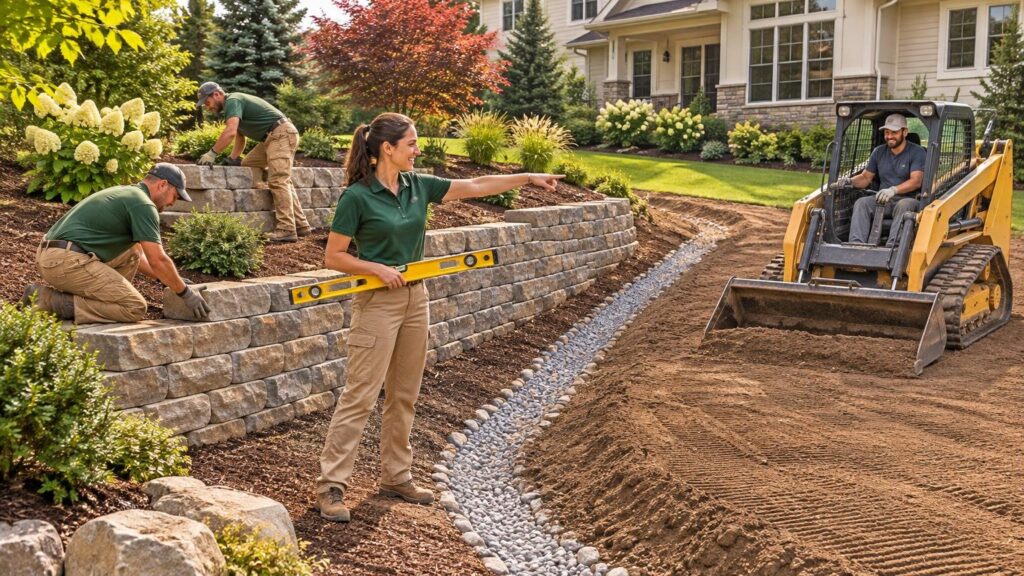
Protect Your Yard Before Winter Weather Arrives
Drainage trouble rarely stays hidden for long in Northern Colorado. Late fall moisture, winter freezes, and spring snowmelt can turn a small low spot into a muddy mess or send runoff where it does not belong. We help Fort Collins homeowners determine whether reshaping the yard or adding a structural wall will provide the right long-term answer.
The choice between retaining wall installation and regrading comes down to how water moves through your property. Regrading changes the surface slope so water can flow away naturally. A retaining wall holds soil at a change in elevation while directing water through planned drainage materials behind and below the wall.
Warning signs we often assess include:
- Water pooling near the foundation
- Soft, muddy areas that never seem to dry
- Soil washing down slopes or away from planting beds
- Runoff collecting beside patios or walkways
- Water moving toward the home instead of away from it
Find the Source Before Choosing a Solution
A puddle is usually the symptom, not the whole problem. Before we recommend excavation, wall construction, or soil movement, we look at where the water begins, the route it follows, and the place where it can safely exit the property.
Water may come from more than one source. A neighboring slope, roof runoff, downspouts, compacted soil, irrigation patterns, and a patio with the wrong pitch can all contribute. We encourage you to notice conditions during rainfall, irrigation cycles, snowmelt, and quick spring thaws, since each event may reveal a different flow pattern.
Freeze-thaw cycles deserve close attention. When water reaches cracks beside hardscape areas or enters an unsupported slope, it can freeze, expand, and worsen the opening. Over time, that movement may lead to erosion, shifted pavers, and trouble near the foundation.
A thoughtful drainage plan also accounts for details that are easy to overlook, including:
- Utility locations and access needs
- Property lines and local grading requirements
- Decks, fences, and existing garden areas
- Patios, outdoor kitchens, and fire features
- Safe outlets for runoff away from living areas
Our goal is not to simply move water out of sight. We plan a path that protects the home and avoids sending a new drainage problem somewhere else in the yard.
When Retaining Wall Installation Offers Better Control
Retaining wall installation is often the stronger option when a drainage issue involves steep ground, major elevation changes, or soil that needs support. Instead of trying to force a sharp slope into a gentler one, a properly built wall can hold the soil in place and create a controlled transition between levels.
We may recommend a wall when a backyard slope washes toward a patio, a hillside is eroding near a driveway, or a raised planting area sends water toward the house. In these situations, the wall does more than create a clean edge. It supports the soil while allowing drainage to move through the system in a planned way.
The visible stone or block is only one part of the work. Reliable retaining walls need a prepared base, drainage aggregate, perforated drain pipe, filter fabric, suitable backfill, and outlets that allow collected water to leave safely. Without those elements, water can build pressure behind the wall and cause avoidable movement over time.
A well-planned wall can also open up new design options. We can use level terraces to make room for seating, define planting areas, frame a fire feature, or support an outdoor kitchen or pergola. This approach can make a sloped yard more functional while keeping the finished space cohesive and durable.
When Regrading Restores Natural Water Flow
Regrading is often the right answer when the problem is a minor or moderate surface slope, rather than a structural soil-retention issue. The purpose is simple: reshape the ground so water follows a gentle, intended route away from the foundation and outdoor living areas.
Depending on the property, regrading may include adding or removing soil, smoothing low spots, adjusting the pitch near the house, or forming shallow swales that guide runoff toward a safe drainage area. Broad lawn sections and shallow depressions often respond well to this kind of correction.
We commonly consider regrading when water gathers near the foundation, a past project disrupted the natural flow of the yard, or downspout extensions are not working as intended. Proper surface grading can also improve how other drainage features perform, including surface drains and carefully planned runoff channels.
Still, regrading has limits. It may not be enough when the yard has a steep slope, a major grade change, failing soil, or water pressure building behind a patio or other hardscape feature. In those cases, we may pair grading work with drainage components, erosion-control materials, or a retaining wall for better support.
Compare Long-Term Performance and Outdoor Living Goals
Regrading is generally less involved when the issue is limited to surface slope and the yard is easy to access. The scope can become more involved if soil must be moved across a large area, sod needs replacement, irrigation requires adjustment, or underground drainage is part of the plan.
Retaining walls require more structural planning because they must manage both soil and water. That added construction can make sense when the project protects a patio, creates a level gathering area, or prevents erosion that could affect nearby features. The right choice is not always the simplest-looking option; it is the one that addresses why the water is moving as it is.
For a healthy lawn and better foundation protection, regrading may be the clear fit. For a slope that needs support or a yard that could benefit from usable terraces, retaining wall installation may deliver stronger control and more possibilities for the space.
Plan for Drainage That Works Year Round
Fall and spring often expose drainage weaknesses, but water management should work through every season. We assess slope, soil movement, runoff patterns, and the way your outdoor areas are used before recommending a solution. In some yards, regrading is enough. In others, the best plan combines grading, drainage features, and structural support.
A durable drainage solution starts with following water back to its source, then giving it a safe path away from your home and outdoor spaces. Addressing the real cause early can help preserve patios, protect soil, and keep your yard more usable through changing weather.
Get a Drainage Plan Built for Your Yard
Couture Landscaping can assess your site conditions and recommend a solution that fits your landscape goals. See how retaining wall installation can work alongside grading and hardscape features for lasting function. When you are ready to discuss your project, contact us for a consultation.