
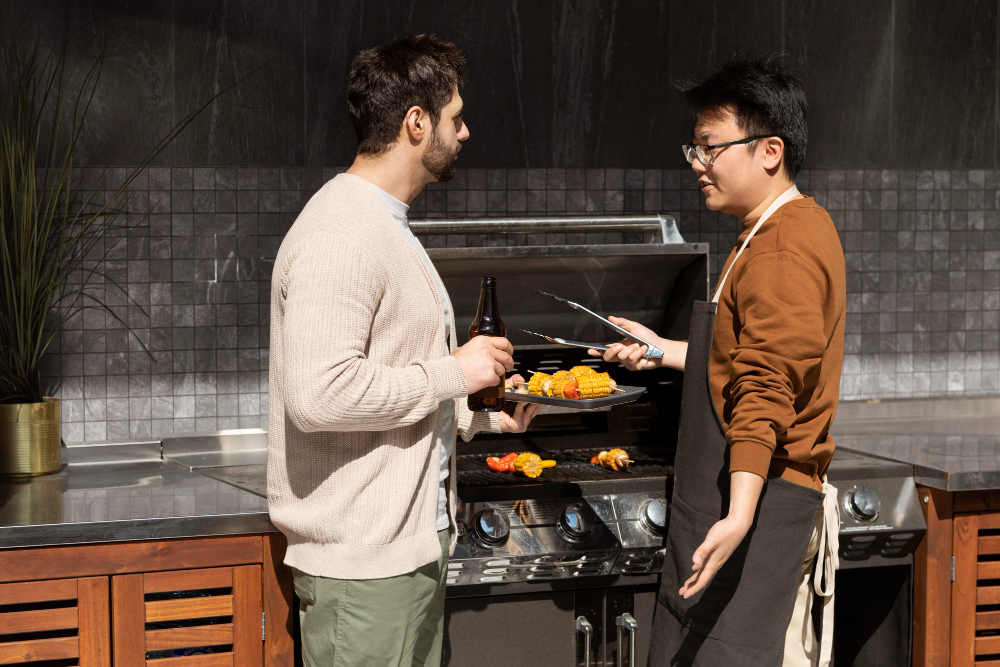
An outdoor kitchen is one of the most-used additions you can make to a property in Northern Colorado — when it’s designed and built for the way you actually live. When it’s not, it becomes an expensive eyesore that gets used twice a summer and starts showing wear within a few winters.
The difference between those two outcomes almost always comes down to planning. Homeowners who start with a clear picture of how they cook, how they entertain, what the site conditions are, and what materials hold up in Colorado’s climate end up with outdoor kitchens they use from April through October. Homeowners who start with a product catalog and pick what looks good end up retrofitting, repairing, or regretting.
This guide covers everything you need to think through before breaking ground on an outdoor kitchen in Fort Collins — from site selection and appliance configuration to materials, permits, and realistic cost expectations.
Start With the Site, Not the Appliances
The most common planning mistake in outdoor kitchen projects is starting with product selection — which grill, which countertop, which refrigerator — before figuring out where the kitchen should actually go. Location determines how useful and enjoyable the kitchen will be far more than any individual product decision.
Before any measuring or quoting, walk your property at different times of day and consider these factors:
- Sun exposure — where does afternoon shade fall? In Fort Collins, summers are hot and sunny. A cooking area with no shade that bakes in direct sun from 3 to 7 PM will be uncomfortable during peak grilling hours, regardless of how well it’s built.
- Wind direction — the prevailing wind on most Front Range properties comes from the west and southwest. Your outdoor kitchen should be oriented so that smoke from the grill blows away from your seating area and away from the house. This sounds obvious, but it’s frequently overlooked.
- Proximity to the indoor kitchen — the further your outdoor kitchen is from the indoor one, the less you’ll use it. Every extra trip inside for a forgotten ingredient or a serving dish is friction that accumulates over time. Ideally, the outdoor kitchen should be accessible directly from the indoor kitchen or dining area.
- Drainage — Colorado’s afternoon thunderstorms can dump significant rain in a short period. A cooking area built over poorly draining soil or in a low spot will collect standing water around the structure, which accelerates deterioration and creates an unpleasant user experience.
- Utility access — gas and electrical lines need to reach the kitchen. The further the kitchen is from the house’s utility connections, the more expensive and disruptive the rough-in work becomes.
A good contractor will do a thorough site assessment before proposing any layout or materials. If a contractor shows up with a product catalog before walking your property, that’s a signal to ask more questions.
What to Include — and What to Skip
Not every outdoor kitchen needs every component. The right configuration depends on how you cook, how often you entertain, and how many people you’re typically cooking for. Here’s a breakdown of the core options and how to think about each one.
The Built-In Grill
This is the anchor of almost every outdoor kitchen, and it’s worth spending real money on. A built-in grill that’s undersized, underpowered, or made from materials that can’t handle UV and freeze-thaw will frustrate you every time you use it and need replacement within a few years.
For most Fort Collins households that entertain regularly, look for a grill with at least 600 square inches of primary cooking surface. Natural gas is strongly preferable to propane for built-in applications — it doesn’t run out mid-cook, doesn’t require tank management, and is less expensive per BTU over time. If natural gas isn’t available at your property, a propane setup with an adequately sized buried tank is the next best option.
Stick with stainless steel construction rated for outdoor use — not all stainless steel is equivalent. 304-grade stainless resists corrosion significantly better than 430-grade, which is common in lower-priced units.
Side Burners, Pizza Ovens, and Specialty Appliances
A side burner is genuinely useful if you cook outdoors frequently — for sauces, for boiling pasta or corn, for keeping side dishes warm while the main protein finishes on the grill. If you use your outdoor kitchen primarily for weekend grilling with simple meals, a side burner may get used less than you’d expect.
Pizza ovens and kamado-style grills are increasingly popular additions for Colorado homeowners who entertain regularly and want versatility beyond traditional grilling. Both are legitimate investments if they match how you actually cook. A wood-fired pizza oven, in particular, becomes the centerpiece of an outdoor kitchen and tends to drive usage more than almost any other feature. Plan for adequate clearance and ventilation if you’re building under a covered structure.
Countertops and Work Surfaces
This is where many outdoor kitchens fail specifically in Colorado. Materials that perform well in a showroom or in a warmer climate break down quickly when subjected to UV exposure at 5,000 feet elevation, freeze-thaw cycling, and the temperature swings the Front Range delivers.
The most reliable countertop materials for outdoor kitchens in Northern Colorado are:
- Natural granite — handles UV, heat, freeze-thaw, and heavy use well. Needs to be sealed annually to prevent staining, but is otherwise low-maintenance and extremely durable.
- Soapstone — dense and non-porous, which means it doesn’t need sealing and doesn’t stain easily. Holds temperature well, which is useful near a grill. One of the best options for Colorado’s climate.
- Concrete — durable when properly reinforced and sealed. Concrete countertops allow for custom shapes and integrated features. They require more maintenance than granite or soapstone but perform well when the sealer is maintained.
Materials to avoid outdoors in Colorado: tile (the grout joints crack in freeze-thaw), laminate of any kind, thin marble (stains and chips easily), and manufactured quartz (most brands are not rated for outdoor UV exposure and will discolor and delaminate).
Storage and Cabinetry
Outdoor cabinetry needs to be built from materials that can handle moisture, temperature swings, and UV without warping, rotting, or corroding. In Colorado’s climate, the reliable choices are marine-grade stainless steel and aluminum. Powder-coated aluminum is a cost-effective option that holds up well. Marine-grade stainless is the most durable but comes at a higher price point.
Wood cabinetry — even treated or painted — deteriorates faster than most homeowners expect in an outdoor environment. Teak is the most weather-resistant wood option, but it still requires regular maintenance and is expensive. For most outdoor kitchens in Fort Collins, stainless or aluminum is the practical choice.
Refrigeration
An outdoor-rated refrigerator is one of those features that gets used far more than homeowners initially expect. Having cold drinks, marinades, and prepped ingredients accessible at the outdoor kitchen eliminates most of the trips back inside.
The critical point: use only refrigerators specifically rated for outdoor use. Standard indoor refrigerators are not sealed or insulated for outdoor temperature extremes and will fail quickly when exposed to Colorado’s summer heat and winter cold. Look for units with a temperature operating range that covers at least 0°F to 110°F.
Permits and Code Requirements in Fort Collins
Outdoor kitchens with gas lines and electrical connections require permits in Fort Collins — this is not optional, and skipping the permitting process creates real liability at resale. A licensed contractor will pull the necessary permits and ensure the installation meets current code requirements, which include gas line sizing and material specifications, shutoff valve placement within reach of the appliance, electrical GFCI protection for any outlets within 6 feet of a water source, and ventilation clearances for gas appliances installed under a covered structure.
Plan for 4–8 weeks of lead time for permitting and inspection scheduling in the Fort Collins area, particularly during the spring and summer busy season. Factor this into your project timeline if you have a target completion date.
The Case for Building the Cover at the Same Time
An outdoor kitchen without a patio cover is a fair-weather-only feature. Northern Colorado gets afternoon thunderstorms throughout July and August, cold snaps well into May and sometimes September, and intense afternoon sun that makes an uncovered cooking area genuinely uncomfortable for much of the summer. A properly designed pergola or solid patio cover extends the usable season significantly and makes the outdoor kitchen functional in conditions where you’d otherwise stay inside.
Beyond usability, there are practical reasons to build the cover at the same time as the kitchen rather than adding it later. Ventilation clearances for gas appliances under a covered structure need to be designed in from the beginning. The structural footings for a pergola or cover can be integrated with the kitchen’s hardscape base during initial construction. And adding a cover as a later phase almost always costs more per square foot than building it as part of the original project.
What It Realistically Costs in Fort Collins
A basic built-in grill station with countertop, storage, and utility connections typically runs $15,000–$25,000 installed in the Fort Collins market. A full outdoor kitchen — with refrigeration, side burners, specialty cooking appliances, premium countertops, and a patio cover — is typically $45,000–$85,000 or more depending on site complexity, materials, and the scope of hardscape work surrounding it.
These are not retail prices. They reflect site preparation, gas and electrical rough-in, permitting, finish work, and the kind of base preparation that makes a structure last in Colorado’s climate. Bids that come in significantly below these ranges are worth scrutinizing closely — the savings usually show up somewhere in base preparation, material quality, or installation detail.
A well-built outdoor kitchen in Northern Colorado consistently adds resale value and extends the functional living space of the home by three to four months per year. For families who entertain outdoors regularly, the return on the investment tends to show up quickly in quality of life — not just at resale.
Ready to Talk Through a Project?
Couture Custom Landscaping designs and builds outdoor kitchens, fire features, pergolas, patio covers, and complete outdoor living spaces across Fort Collins, Bellvue, Loveland, Horsetooth, and Wellington. We take on a limited number of projects each season and work one project at a time with our own crews — no subcontracted shortcuts.
If you’re thinking about an outdoor kitchen for this season or planning ahead for next year, the best first step is a conversation about your site and how you want to use the space.
Call or email to schedule a visit: 970-672-6393 | [email protected]