
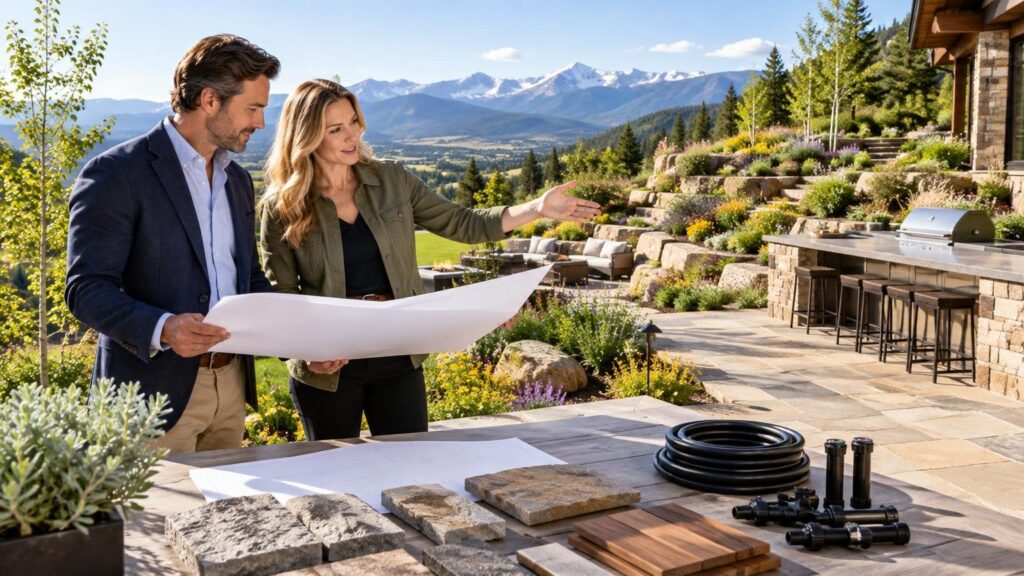
When you are staring at two or three thick landscaping proposals and winter is creeping in, it can feel stressful to choose the right team. The numbers rarely line up, the wording is confusing, and it is hard to know who is planning carefully and who is guessing. For luxury outdoor projects, that confusion can turn into real headaches once construction starts.
At Couture Landscaping, we want homeowners to feel calm and clear long before the first shovel hits Colorado soil. We put this guide together to explain how a high-end landscaping company builds a proposal, what the fine print really means, and how things like allowances, exclusions, change orders, and warranties affect your project in our foothills climate.
Read Your Landscaping Proposal Like a Pro
High-end bids usually look very different from basic install quotes. They often include design time, engineering, custom materials, and long, detailed descriptions. That is good, but it can also be hard to compare at a glance.
As late fall settles in along the Front Range, many homeowners are locking in designs for spring builds. This is actually the best time to slow down and decode those proposals. Snow on the ground outside gives you space to read, question, and plan, instead of rushing to catch a short summer window.
When you read a proposal from a true high-end landscaping company, you should expect it to account for design work, technical needs, scheduling realities, and the level of finish you are actually paying for. In practice, that often includes:
- Time for design and revisions
- Notes on engineering where needed
- Details about phasing and timing
- Clear descriptions of custom materials and finishes
Our goal here is to help you read those sections with confidence, especially in light of Colorado’s sun, clay soils, slopes, and freeze-thaw cycles.
The Big Picture: What a High-End Proposal Should Show
Before you worry about single line-items, check if the proposal actually covers the whole outdoor space. A complete, design-led proposal should spell out all main parts of the work, including:
- Site prep and grading
- Drainage planning and solutions
- Hardscapes like patios, walkways, and driveway entries
- Planting design and soil preparation
- Lighting and controls
- Irrigation systems
- Structures such as walls, pergolas, or outdoor rooms
You should also see drawings that match the written scope. For luxury projects, that usually means plan views, maybe some elevations, and clear material callouts. If all you see is vague notes like “patio area” or “planting” with no drawing or detail, that is a warning sign. It is very hard to build to a high standard from fuzzy descriptions.
Phasing and timing matter a lot in Colorado. Large projects often stretch over more than one season, especially in the foothills where snow, mud, and freeze-thaw can slow work. Your proposal should clearly spell out the expected timeline, what happens if weather causes delays, and how unfinished work will be protected. Specifically, it should address:
- Expected start and end windows
- What happens if weather shuts things down
- How the team will protect unfinished work in winter
- When each phase will be designed, submitted, and built
When that schedule is clear on paper, it is much easier to plan around access, noise, and use of your home.
Allowances That Quietly Blow Up Your Budget
Allowances are placeholders for items that are not fully picked yet. They show a guessed amount for things like:
- Plants and trees
- Stone or pavers
- Lighting fixtures
- Outdoor kitchen components
The tricky part is that an allowance is not a promised price. If the actual choices end up costing more than the allowance, you pay the difference. Some proposals look cheaper because the allowances are low or unrealistic for the level of finish you really want.
A few patterns tend to signal trouble. Keep an eye out for:
- Very small allowances for large planting areas
- Low per-square-foot numbers for high-end stone or pavers
- Lighting budgets that only cover a few basic fixtures
You can bring allowances back to reality by asking how the contractor arrived at those numbers and what they assumed you would choose. Smart questions to ask include:
- How did you calculate this allowance for plants or stone?
- What specific brands or quality level did you assume?
- Can you show a typical build from past work that used similar allowances?
When you lock in realistic allowances in late fall, you enter spring knowing your numbers are grounded in real choices, not wishful thinking.
Exclusions and Fine Print That Shift Risk to You
Exclusions are items the contractor is not including in the base price. These are often tucked into the fine print, but they have a big impact, especially on Colorado foothills sites where the ground can be rocky and sloped.
Common exclusions in luxury bids include:
- Extra rock removal or hauling
- Dealing with unsuitable or unstable soils
- Retaining wall engineering and stamped drawings
- City or county permits and inspections
- Utility upgrades or service changes
Vague language around drainage, concrete work, or access can become expensive once excavation starts. For example, a proposal might say “drainage as needed” without defining what is included or what counts as extra. On a sloped, clay-heavy lot, that wording can lead to many change orders.
To protect yourself, it helps to turn those vague areas into clear written commitments. Ask your landscaper to put in writing:
- How they will handle unexpected rock or soft spots in the soil
- Who is responsible for permits and engineering
- What kind of drainage systems are included, and where
- What conditions could trigger extra charges for equipment access
Written clarity up front is far better than tense talks in the middle of a muddy job site.
Change Orders and Warranty Traps to Avoid
Change orders are written changes to the contract after you sign it. They are fair and normal when:
- You add new features
- You upgrade materials beyond the original plan
- Site conditions are truly different from what anyone could see
They become a red flag when they show up for things that should have been planned from the start, like basic drainage or logical access to work areas. In winter and early spring, frozen ground or snow cover can hide some site details, so it is reasonable to ask how your contractor plans to adjust if conditions shift.
Warranties are the other key part of the fine print. For Colorado projects, a strong warranty should clearly address the realities of our climate and seasonal stress. It should be specific about coverage for:
- Hardscapes like patios, walls, and steps under freeze-thaw stress
- Plant material that faces sun, wind, and late frosts
- Irrigation systems that must be blown out and started up correctly
- Outdoor structures that see sun, snow, and temperature swings
Some warranty language sounds reassuring but does not hold up in real life. Be cautious about:
- Warranties that are voided by normal weather patterns
- Very short coverage windows that end before you see a full cycle of seasons
- Vague maintenance rules that are hard to follow
Ask for clear, simple language about what is covered, for how long, and what basic maintenance you need to perform or have performed professionally.
How to Confidently Choose a Colorado Landscape Partner
Once you understand how proposals work, you can compare them side by side with a calm eye. A simple checklist helps you evaluate whether the scope, pricing structure, and fine print are truly aligned with your site and your expectations:
- Is the scope complete and detailed?
- Are allowances realistic for the quality you want?
- Are exclusions clear and fair, especially for your soil and slope?
- Is the change-order process explained in writing?
- Is the warranty specific, plain, and suited to Colorado’s climate?
Beyond the paperwork, trust your gut about fit. A true high-end landscaping company will communicate clearly and plan deliberately, which usually shows up in how they interact with you early on. Look for a team that will:
- Ask thoughtful questions about how you live outdoors
- Talk openly about weather, soils, and access on your site
- Welcome your questions about fine print
- Focus on long-lasting, architecturally thoughtful work, not just a quick install
At Couture Landscaping here in Northern Colorado, we see late fall and early winter as design season. This is the ideal time to study your proposals, refine your plans, and align on scope so that when spring weather opens up, your custom outdoor space is ready to build with clarity and confidence.
Get Started With Your Project Today
Transform your outdoor space with Couture Landscaping and experience the difference of working with a true high-end landscaping company. We take the time to understand your vision, then design and build a landscape that elevates your property and fits your lifestyle. If you are ready to discuss ideas or schedule a consultation, simply contact us and we will follow up promptly.