
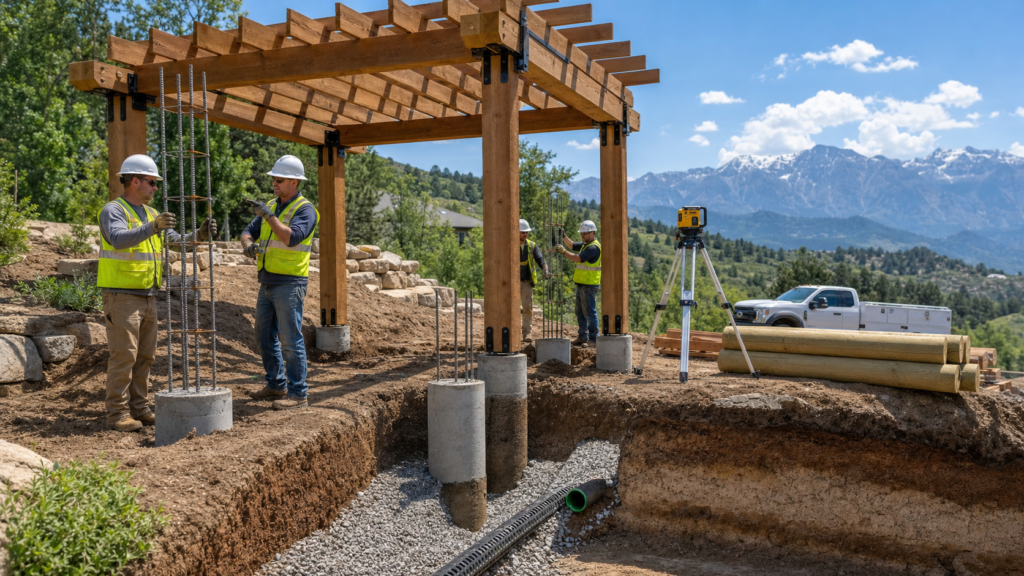
A luxury pergola installation on a Colorado hillside has to do more than look good. It has to stand up to steep grades, rocky soil, strong sun, wind, and winter snow, while still feeling like a calm, comfortable outdoor room you can use day after day.
In the Northern Colorado foothills, that means treating a pergola more like a small outdoor building than a simple backyard feature. The structure, footings, drainage, and permits all have to work together. We will walk through how we think about pergolas on sloped lots, from footing design and water control to codes, comfort features, and layout choices that protect your hillside and your investment.
Building a Pergola That Belongs on a Colorado Hillside
On a warm summer afternoon, a hillside yard can feel harsh: bright sun, hot stone, and no level place to sit. A carefully engineered pergola changes that, turning a steep corner of the property into a shaded, grounded outdoor room that feels connected to the views instead of exposed to them.
The challenge on a slope is simple to say but harder to solve: the ground drops away, wind is stronger, access is tighter, and water wants to move fast downhill. A pergola that works in a flat suburban yard is not ready for that kind of site. Everything from footing layout to beam size to where you place furniture has to respond to the grade.
We approach this by blending structural thinking, landscape design, and detailed building craft. The idea is to make the pergola feel light and relaxed, while the unseen structure below and around it quietly does the heavy lifting. In the next sections, we will look at smart footing design, drainage, permitting, and hillside-friendly features that help your pergola feel like it has always belonged there.
Why Sloped Lots Demand Smarter Pergola Design
Foothills properties live with big shifts in weather. Sun can be intense at midday, then a fast storm can roll in with wind and cold rain. Higher elevation and exposure change how you sit outside, how you use shade, and how long materials last.
On a hillside, we have to think differently about:
- Wind exposure on ridges and open slopes
- Snow that slides or drifts under and around the pergola
- Afternoon sun angles that hit from above or from the side
- Shade patterns as the sun tracks over a tilted site
Sloped lots also come with soil and access challenges. Many foothills properties have:
- Shallow soil over rock or very loose fill
- Different grades within the same pergola footprint
- Limited space for machines to drill, pour, or set materials
Views and privacy can be trickier too. Neighbors may sit higher above you or lower below you, and nearby homes can see your outdoor space from unusual angles. Pergola orientation, roof style, and column placement all help control what you see and who can see you, without blocking the views you love.
This is why catalog kits fall short on slopes. A luxury pergola installation on a hillside has to be drawn, detailed, and built for that exact spot, not adapted at the last minute.
Footings and Foundations That Hold on Colorado Hillsides
Under a hillside pergola, the footings do the quiet, important work. We start by learning what is under the surface. Soil tests, frost depth, and local load requirements guide footing depth, width, and spacing.
On Northern Colorado slopes, typical footing and foundation options include:
- Drilled piers that reach down into native rock
- Stepped concrete footings that follow the grade while supporting a level frame
- Helical piers that screw into the soil where access is tight
- Grade beams that link posts together for better lateral resistance
Choosing between these depends on access, soil, and how tall the structure sits above grade. On steeper sites, a pergola often pairs with one of these:
- Terraced platforms cut into the slope
- Retaining walls that hold soil and shape flat outdoor rooms
- Hybrid deck-pergola systems that float above the grade
The goal is always the same: a level, comfortable surface where you can walk, sit, and gather, even if the ground steps down sharply just beyond it. We hide as much structure as we can, tucking beams, hardware, and anchors into the design so the pergola looks crisp and handcrafted, not heavy or technical.
Managing Water and Drainage Under and Around Pergolas
On a hillside, water wants to race downhill. In a summer cloudburst or during spring melt, uncontrolled runoff can wash out soil around posts, undermine patios, and stain finishes.
Good drainage around a pergola often includes a mix of:
- French drains along or behind retaining walls
- Shallow swales that slow and steer surface water
- Permeable paving that lets water filter into the ground more gently
- Area drains that collect low spots and tie into a larger drainage plan
If your pergola has a solid roof or layered shade system, we plan for where that roof water goes. Gutters or scuppers can quietly move water to safe spots away from seating, steps, and structural elements.
We like to hide drainage features in the larger design, so the space reads as natural and calm. Boulder outfalls, dry creek beds, and dense planting can all disguise pipes or drains while breaking up flow and helping water sink into the soil in a controlled way.
Permits, Engineering, and Codes for Hillside Pergolas
On a sloped lot, a pergola often crosses into the world of structural work that needs engineering and permits. This is especially common when:
- The pergola is attached to the home
- The platform under it is tall above grade
- Retaining walls or guardrails are part of the plan
Local codes shape things like snow load on beams, wind exposure categories, and how far the structure must sit from property lines. On elevated platforms, guardrails and step details matter for safety. Hillside properties can also sit in areas with wildfire rules that affect materials and how close planting can be.
A coordinated design-build process pulls together surveys, engineering drawings, and permit documents before the build starts. On complex sites, that preparation can save time later, so construction can move forward during the best building months and you get to enjoy the space sooner. Strong paperwork now also supports future resale, insurance, and long-term peace of mind.
Designing Luxury Details for Year-Round Hillside Living
Once the structure, drainage, and permits are in place, the fun details tie everything together into a true outdoor room. For hillside pergolas, we often think about:
- Soft, layered lighting for evening: step lights, overhead fixtures, and accent lights in stone or planting
- Heat and shade control, like infrared heaters and retractable shades that respond to sudden weather shifts
- Outlets and gas lines planned from day one, so future upgrades are simple
Material choices need to respect Colorado sun, temperature swings, and wind. Many foothills pergolas use a mix of steel, heavy timber, and high-performance finishes, paired with outdoor-rated fabrics that hold up under strong UV and quick changes in temperature.
Finally, the pergola should feel stitched into the rest of the property. Stone stairs can step down the slope, terraced beds can soften edges, and built-in seating or a fire feature can make the structure the natural heart of your outdoor living space. From our design-build point of view at Couture Landscaping, the best hillside pergolas are never just stand-alone structures; they are carefully planned anchors that bring the whole foothills property together.
Transform Your Outdoor Space With a Custom Pergola Retreat
Bring shade, comfort, and refined style together with our tailored luxury pergola installation designed to complement your home and landscape. At Couture Landscaping, we collaborate with you to create a pergola that fits the way you actually live outdoors, from quiet mornings to lively gatherings. If you are ready to explore design ideas, materials, and timelines, reach out and let us walk you through the next steps. Contact our team today through our contact page to schedule a consultation.