
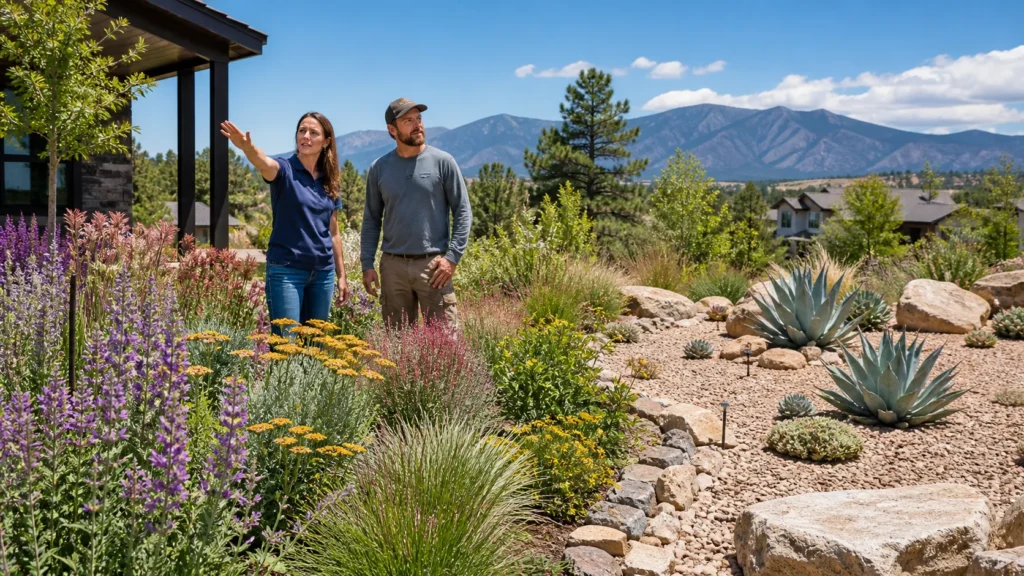
Rethinking the Colorado "Lawn" for Real-Life Living
Traditional bluegrass lawns fight our Northern Colorado climate at every step. Water limits, hot wind, heavy clay soil, and a short growing season all work against that perfect green carpet. Many yards end up with brown patches, mud, and weekend chores instead of a relaxing outdoor space.
There is a better way. Native plant landscaping and xeriscape can still give you places for kids and pets to play, room for a grill or a fire pit, and a calm green view. The difference is that these yards are built around how your property actually behaves in sun, wind, slope, and soil, not around one big sheet of thirsty turf.
Our favorite projects in Fort Collins, Loveland, Windsor, and nearby neighborhoods start with those microclimates first. When we match plant communities and hardscape to each small zone, we get outdoor rooms that look high-end, feel natural, and work in real life. You get clarity on where native plant landscaping shines, where xeriscape belongs, and how to trade in a high-maintenance lawn for a four-season space you actually use.
Native Plant Landscaping vs. Xeriscape: What’s the Real Difference?
Native plant landscaping in Colorado means building plant communities around species that are naturally suited to our Front Range climate. These plants are used to cold winters, big temperature swings, bright sun, and local soils. When we plant them in thoughtful groups, they support birds and pollinators, offer changing color through the seasons, and settle in with less stress.
Xeriscape is a water-wise design method. It focuses on planning, grouping plants by water needs, using efficient irrigation, and covering soil with mulch or gravel so water is not wasted. Xeriscape can use native plants, but it can also use other tough, drought-tolerant plants that are not native. It is not just rocks and a few yuccas. Done well, it can be very refined and modern.
Here is how they compare for a homeowner:
Native plant landscaping advantages:
- Strong habitat value for pollinators and birds
- Soft, layered texture and long bloom cycles
- Good resilience with local weather swings
- More of a garden feel, less harsh than all rock
Xeriscape advantages:
- Very low water potential when designed carefully
- Clean, architectural look that pairs well with stone and concrete
- Perfect for hot, exposed microclimates that fry typical plants
- Works well with modern, hardscape-focused designs
On many high-end residential properties, the best results come from blending both. We might design lush native plant “rooms” where there is some shade, shelter, or better soil, then use bold xeriscape zones in the most exposed corners or where water is tight.
Reading Your Yard’s Microclimates Like a Designer
Every yard is a patchwork of small zones. Some stay hot and dry. Some are cooler and hold moisture. Some are blasted by wind. These microclimates come from sun exposure, wind patterns, slope, nearby walls and fences, and soil changes. Each one deserves its own plant strategy.
Sun and shade:
- South and west sides get intense afternoon sun and heat, so we lean on drought-tolerant natives, xeric grasses, and low shrubs that love heat.
- North and east sides are cooler and gentler. These spots can host more delicate native mixes that feel like a woodland edge with layered height and texture.
Wind and shelter:
- Open, windy corners, which are common in new Northern Colorado developments, dry out very fast. Here, we favor tough xeric plants, gravel or stone mulch, and native grasses that can bend with the wind.
- Protected courtyards and beds near the house can hold richer native plantings, with more bloom variety and longer color.
Slope and drainage:
- Steep or south-facing slopes shed water fast and heat up quickly. Deep-rooted natives and xeric groundcovers help lock in soil and stay stable even in storms.
- Low spots and swales can be turned into native rain gardens that capture runoff from roofs and patios, using moisture-loving natives that still fit our climate.
Soil reality check:
Our Front Range soils are often heavy clay, compacted by construction, and on the alkaline side. In some microclimates, we lightly amend soil to support diverse native plant communities. In other areas, it is smarter to choose Colorado native and xeric plants that already like these tougher conditions and skip major soil work.
Designing "Lawn-Like" Use Areas Without Traditional Turf
When most families say they want “lawn,” they usually mean:
- A safe, soft place for kids to play
- Room to walk barefoot between spaces
- A surface for simple games and pets
- Open visual space to balance planting beds
We can create that function without a traditional bluegrass lawn.
Functional alternatives include:
- Native and drought-tolerant grass blends that grow low, need less water, and still read as a green field
- Low-growing groundcover mixes that knit together as a living carpet in the right microclimates
Microclimate-specific choices:
- In hot, full-sun zones, we may design compact areas of buffalo grass or xeric fescue framed by xeriscape beds and stonework, with efficient irrigation that targets roots.
- In lightly shaded or east-facing areas, we can lean into more diverse native plant landscaping, with tufted grasses, flowering perennials, and winding paths, which creates a soft “meadow lawn” feel.
Hardscape also plays a big role in lawn-like use. Finely finished flagstone, decomposed granite, or pavers can act as “social lawns” where furniture, dining, and gathering happen. Around those surfaces, native plantings soften edges, add color, and keep the space grounded in nature. With careful grading and layout, we connect living areas, play zones, and planting pockets so the whole yard feels like one cohesive outdoor room.
Seasonal Strategy: Planning, Planting, and Enjoying Year-Round
By late fall, many plants are going to sleep, but design work is just getting started. This is a smart time to:
- Walk the site and map sun, shade, slope, and wind exposure
- Plan native plant communities and xeriscape groupings for each microclimate
- Develop concepts for hardscape, fire, and water features that anchor the design
Winter and early spring are ideal for finalizing plans so that construction and planting can begin as soon as the ground allows. That timing gives new plants a full growing season to settle.
We think in four seasons with native plant landscaping and xeriscape:
- Winter structure from evergreens, stone, and ornamental grass seed heads
- Spring interest from early-blooming natives
- Summer color and shade where it is needed most
- Fall tones and textures that keep the yard interesting even as plants wind down
Stonework, fire features, and lighting help keep patios and paths inviting when plants are dormant. A gentle glow on ornamental grasses or the sound of water in a protected corner can make the yard feel alive all year.
Maintenance is different too. With native and xeric plantings, the rhythm is more about:
- Late-winter or early-spring cutbacks of grasses and perennials
- Spring irrigation checks and small touch-ups
- Occasional summer edits to thin or guide growth
That is a very different pattern from weekly mowing, frequent fertilizer, and heavy watering. Over time, a well-planned native and xeric yard usually asks for less hands-on work and gives more back in beauty and ecological value.
Turning Microclimates Into Custom Outdoor Rooms
We encourage you to look at your property as a set of outdoor rooms, each shaped by its own sun, wind, slope, and soil. The hot corner by the driveway might become a strong xeriscape composition of stone and sculptural plants. The calm side yard could turn into a native meadow path. The sheltered back patio could be your social lawn, framed by lush native plant landscaping.
At Couture Landscaping, we start with on-site microclimate assessment, then talk through how you want to live outside: where kids play, where pets roam, where you relax with friends, and how much “green” you really need. From there, we blend hardscape, fire, and water with curated plant communities so each zone works as part of one tailored outdoor room.
When you walk your yard, notice where the wind hits hardest, where snow lingers, which areas stay damp, and where you squint in afternoon sun. These clues are the start of a smarter, water-wise, low-maintenance design that fits our Northern Colorado conditions and supports local ecology while still giving you the lawn-like function you actually use.
Get Started With Your Project Today
If you are ready to turn your yard into a resilient, low-maintenance habitat, our team at Couture Landscaping is here to help. Explore how our native plant landscaping approach can bring year-round color, support pollinators, and fit your maintenance goals. We will work with you step by step, from careful plant selection to installation and ongoing care. To talk through your ideas or request a quote, simply contact us today.