
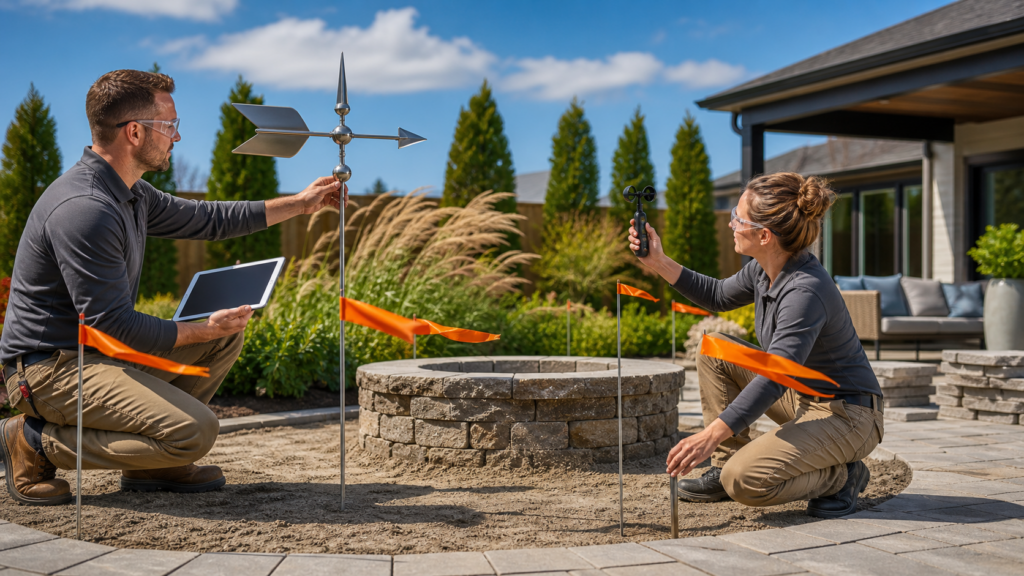
Start Your Fire Pit Design Where the Wind Blows
A great outdoor fire pit installation should feel easy. You light the flame, settle into a chair, and relax. But if the wind keeps blowing smoke into everyone’s faces, that cozy night ends quickly. Comfort disappears, and people head back inside.
Wind is one of the most often ignored parts of fire pit planning, yet it affects almost everything: where the smoke goes, how safe the area is, and how often you will actually use the space. In the Front Range foothills, wind is part of everyday life, so it needs to be the starting point, not an afterthought. When we design outdoor fire features, we look at wind first so the fire pit becomes a true retreat, not just a pretty feature that no one wants to sit around.
At Couture Landscaping, we work in the Northern Colorado foothills, where hillside lots, open views, and changing weather can make wind tricky. In this article, we will walk through how wind shapes placement, design, materials, and layout, and why planning for it early gives you an outdoor fire pit installation that feels comfortable in real life, not just in photos.
How Northern Colorado Wind Shapes Your Backyard
Along the Front Range, wind often comes from the west and northwest as it moves off the foothills. It can be calm one minute and gusty the next. On ridgelines and open lots, it can feel stronger and more direct. In more sheltered areas, it may swirl and change directions as it moves around houses and trees.
Two homes on the same street can feel completely different because of how they are placed on the land. Small details can change how wind behaves, such as:
- Grade changes and slopes
- Existing trees and shrubs
- Fences and privacy screens
- House orientation and rooflines
- Nearby greenbelts or open fields
All of these pieces affect where wind speeds up, slows down, or spins. A luxury outdoor fire pit installation should respond to those real conditions. That means looking for places where wind funnels between structures, where little eddies form in corners, and where natural shelter already exists from terrain or plantings.
There is also a seasonal side. The gentle breezes you feel on warm summer evenings may not be the same as the cool winds that arrive in fall. When you plan a fire pit now, it helps to think ahead to the evenings when you are most likely to use it. Many homeowners love gathering around a fire when the air is crisp, so planning with those windy, cooler days in mind is smart.
Placing Your Fire Pit with Comfort and Safety in Mind
Placement is where wind planning starts to turn into real-world comfort. The goal is simple: let smoke drift away from where people sit, and away from doors and windows.
Here are some basic placement ideas we think about on each site:
- Keep the fire pit upwind from main seating, so smoke travels past or behind guests
- Avoid placing the fire pit below bedroom or living room windows that are often left open
- Give safe setbacks from the house, sheds, fences, and roof overhangs
- Prevent tight corridors where wind can speed up and create a wind tunnel
Topography also plays a big role. In foothill yards, we often work with terraces, retaining walls, and gentle slopes. These features can be shaped to create pockets of calm air without blocking the views that people love.
For example, a low wall on the windward side of the fire pit can make a calmer zone where the flame burns more steadily. A slight shift in location, just a few feet one way or another, can move the fire pit out of a gusty path and into a more sheltered pocket.
Safety is just as important as comfort:
- Minimize the chance of embers traveling toward dry grass or mulch
- Avoid placing the fire pit under low branches or near flammable materials
- Keep clear pathways so guests can walk around the area without stepping through heavy smoke
When wind direction changes, people should still be able to move in and out easily without feeling like they have to dodge the flame or the smoke line.
Designing Fire Features That Work with the Wind
Not every fire feature behaves the same in the wind. The shape and structure of the fire pit can help keep flames stable and smoke controlled.
Common styles include:
- Bowl-style fire pits, which are open and can be more exposed to gusts
- Linear fire features, where long, narrow burners can pair well with seat walls
- Built-in fire pits with surrounding masonry that can help block low-level wind
We often use stone, concrete, or steel that can stand up to wind-driven sparks and changing weather. Surrounding elements such as seat walls, planters, or privacy screens can double as soft wind breaks. When placed thoughtfully, these pieces guide wind around the fire, rather than straight across it.
Fuel choice also matters in a windy climate. Many Northern Colorado homeowners choose gas fire features because:
- Flames are easier to control
- There is less smoke to chase guests around the seating area
- The fire can be turned on and off quickly based on weather
Wood-burning fire pits can still be part of a design, especially for people who love that classic crackle and smell. In those cases, we pay even closer attention to wind direction and shelter so smoke does not linger where people gather.
At Couture Landscaping, we like to “shape” the way wind moves using design such as:
- Curved seating that wraps just enough to block gusts
- Staggered walls that slow wind instead of stopping it suddenly
- Openings that face downwind so a breeze slips past the fire, not through it
All of this adds up to a fire feature that feels calmer and more inviting on breezy evenings.
Planning Seating, Shade, and Shelter Around the Flame
Once the fire feature itself is planned, the next step is arranging everything around it. Wind direction has a big say in how seating, shade, and shelter come together.
We often lean toward semicircle or horseshoe seating shapes, arranged so:
- The open side faces downwind
- Backs of chairs or walls protect from the upwind side
- People can shift a bit left or right as wind changes without losing comfort
Shade and overhead structures can also help, especially on sunny summer days. Pergolas, partial roofs, and other features need to be designed to handle local wind loads and to vent heat and smoke safely. The goal is to create a cozy “room” that still feels open to the sky and views.
Plants can be quiet helpers. Evergreen groupings, taller shrubs, and ornamental grasses can soften breezes and reduce gusts without blocking mountain or foothill views. When placed strategically, planting beds create a layered edge around the fire zone, turning harsh wind into a gentle flow.
We also think about how the fire pit connects to the rest of your outdoor living spaces. Dining areas, grills, and outdoor kitchens should link to the fire feature with paths that feel natural and easy. People should not need to walk through the main smoke path every time they move between the grill and the table. When the whole space works together with the wind, the fire pit becomes a natural gathering spot where guests linger longer.
Make the Wind Your Ally in Your Next Fire Pit Project
Outdoor fire pit installation in the Front Range foothills works best when wind is part of the first conversation, not the last. By looking at how air moves across your property, we can choose the right spot, shape the surrounding features, and select materials and fuel types that support comfort, safety, and beauty all at once.
When you plan ahead, those breezy summer evenings and crisp fall nights become something to look forward to, not something you avoid. At Couture Landscaping, we study your property’s unique wind patterns, from slopes and views to nearby structures and plantings, so your custom fire pit and outdoor living space feel welcoming in real weather, not just on a calm day.
Get Started With Your Project Today
If you are ready to bring more warmth and year-round use to your backyard, our team at Couture Landscaping is here to help you plan and complete your ideal outdoor fire pit installation. We will walk you through design options, materials, and safety considerations so your new feature fits your space and lifestyle. To discuss your ideas or request a quote, simply contact us and we will follow up with next steps.