
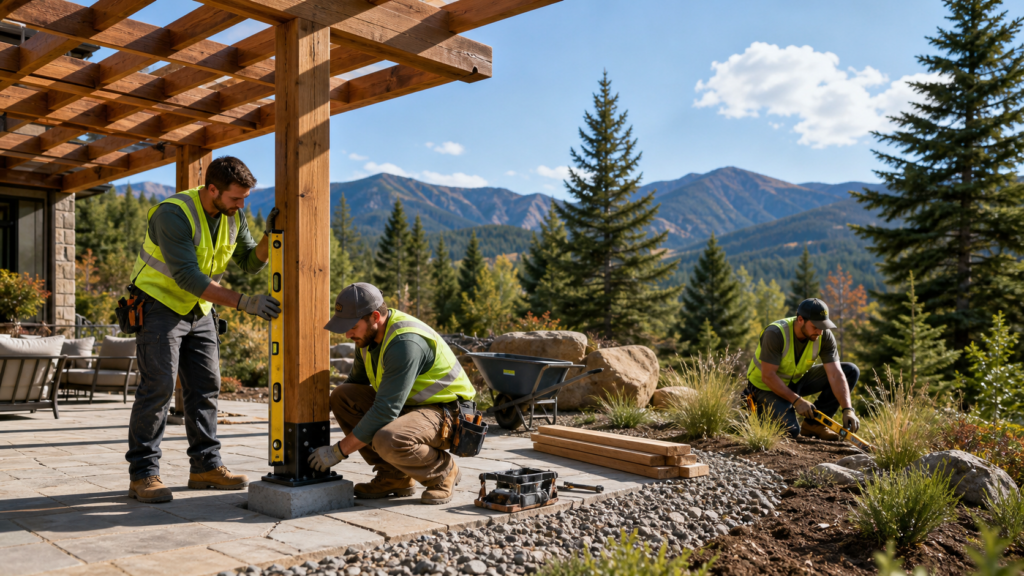
Build a Pergola That Actually Belongs in the Foothills
A pergola can be a beautiful way to frame your views and create shade, but a lot of pergolas in Colorado’s foothills look like they were dropped in from a catalog. They might sit on a tiny concrete pad, ignore the slope, and fight every storm that rolls off the mountains. For a season or two, they seem fine, then the problems start.
Most pergola installation services are set up for flat, suburban backyards. Foothills properties around Fort Collins, Loveland, Windsor, Longmont, and nearby communities are different. We have steep grades, thin or rocky soils, strong canyon winds, and big temperature swings. A pergola that feels custom has to respond to all of that, from design to construction to long-term care.
This article walks through the details many pergola installation services overlook in the foothills and how a thoughtful, site-specific approach can protect your view, your outdoor living space, and your investment.
Why Generic Pergola Plans Fail in Colorado’s Foothills
Many pergola plans start with a standard drawing and a tape measure, not with the land under your feet. That is where the trouble begins.
Common misses with topography and soil conditions include:
- Assuming the yard is flat
- Treating all soils like uniform topsoil
- Ignoring fill, decomposed granite, or clay
On foothill sites, that can lead to:
- Posts that slowly lean downhill
- Footings that crack or heave after freeze and thaw cycles
- Water running under patios and into seating areas
A proper site review looks at slope, soil type, and how water currently moves through the property. From there, footing depth, pier style, and layout can be sized for that exact spot, not for a generic backyard.
Weather is another big blind spot. Catalog pergolas rarely account for:
- Strong winds funneling down nearby canyons
- Snow drifting off roofs and piling on specific corners
- High UV that dries out low-grade lumber and cheap stains
To stand up to foothills weather, pergolas often need heavier timber or steel, quality finishes chosen for sun exposure, and, in some cases, input from structural pros. That kind of thinking is not built into most off-the-shelf kits.
Then there is footprint and orientation. A standard 10 by 12 rectangle may ignore:
- The best view line from the kitchen or living room
- The way you actually walk through the yard
- Where neighbors’ windows sit in relation to your space
Instead of starting with a catalog size, it works better to start with questions. Where should shade fall at dinner time? What do you want to see when you look out? Where does the wind usually come from? Those answers shape the size, height, and placement much better than a preset plan ever could.
The Microclimate Mistakes Most Installers Do Not Catch
In the foothills, microclimates can change in a few steps. Two decks on the same street in Fort Collins can have totally different sun, wind, and comfort.
A common mistake is designing only for peak summer shade. That can make the pergola too dark in spring and fall when the sun is lower and the air is cooler. Thoughtful shade design looks at:
- Sun angles in midsummer vs shoulder seasons
- Slat orientation relative to the midday sun
- Slat spacing and overhang depth for each side
On some properties, rock outcrops, water features, or large patios bounce light back under the pergola. Without planning, glare can make a “shaded” seating area feel harsh. Screens, vines, or a different slat pattern can soften that reflected light.
Wind, views, and privacy often work against each other if they are not balanced. Many pergolas are dropped in the best view line, even if that is also the windiest spot on the lot. This can lead to smoke from a fire feature blowing into seating or cold gusts chasing people back inside.
Pergola elements can help solve this if they are planned early:
- Vertical screens on one or two sides
- Column placement that breaks up gusts
- Integrated plantings that filter wind and views
A smart layout can still keep mountain views, but block sightlines from nearby roads or neighbors. With the right orientation, the pergola can catch winter sun and create a calm pocket that feels comfortable later into the year.
Foothills ecology is another area many installers ignore. Ripping out native shrubs, cutting roots of existing trees, or filling in drainage swales may seem easier in the moment, but it changes how water and wildlife move.
A more tailored approach will:
- Work around native boulders instead of removing them
- Respect root zones of existing trees and shrubs
- Keep natural drainage paths, sometimes highlighting them with dry creek beds
This keeps the property feeling like it belongs in the foothills, not like a flat suburb dropped onto a slope.
Materials and Details That Stand up to High Country Life
Material choices make a huge difference in how a pergola looks and ages. Big box kits are often built for mild climates and lower sun exposure. On foothill sites, they can fade, twist, and loosen faster than expected.
It helps to think about:
- Structural material, such as quality cedar, steel, or engineered options fit to site conditions
- Finish type and color, including back priming and sealing of hidden faces
- A maintenance plan for cleaning and resealing exposed wood
Hardware and fasteners are small details that matter. We see issues when installers use low grade or uncoated hardware that rusts and stains posts and beams or when visible brackets distract from views. Corrosion-resistant fasteners, concealed systems where appropriate, and proper flashing around connections help keep the structure tight and clean-looking.
Footings, drainage, and grading are another failure point. Common shortcuts include:
- Shallow post holes that do not reach stable soil
- Little or no gravel for drainage under footings
- No grading adjustments around the new patio or pergola
Better practice usually means deeper footings, and in some soils, piers or helical piles. Grading should move runoff away from the home and from the main sitting areas. Paired with swales, dry creek beds, or permeable surfaces, this protects the pergola and keeps the surrounding outdoor living area more comfortable after storms.
Utilities and lighting should never be an afterthought. When pergolas go in with no plan for power, gas, or irrigation, the result is often:
- Exposed conduit that distracts from the design
- Trip hazards from surface runs or hoses
- Extra work to cut and patch finished hardscape later
Planning early lets you tuck in:
- Low-voltage lighting in beams or steps
- Connections for heaters, fans, or sound
- Stub-outs for future hot tubs or outdoor kitchens
Everything feels more natural when the pergola, patio, and utilities were designed as a single space from the start.
Designing a Pergola as the Heart of Outdoor Living
A pergola should do more than throw some shade. In the foothills, it can anchor a complete outdoor room that feels like part of the home. When we think of pergolas as the center of outdoor living, we start to layer in:
- Dining zones with room to move chairs and serve food
- Lounge seating tied to fire features or views
- Outdoor cooking spaces designed for how people actually cook and gather
When the pergola is tied to seat walls, planters, and grading, it stops looking like a stand-alone kit and starts feeling like it grew with the property. That kind of cohesion often improves day-to-day use and supports long-term property value.
Matching the home’s architecture and the surrounding foothills style matters too. Many pergola installation services miss this and the result feels tacked on. We pay attention to:
- Beam size and proportion compared with the house
- Column style that echoes trim or structural details
- Color palettes that connect to stone, siding, and the natural site
Transitions are just as important as the pergola itself. Stairs, walkways, and gentle terracing turn a steep lot into a comfortable sequence of spaces. When the move from indoors to pergola to garden feels natural, people use the outdoor space more often and with less effort.
Foothills pergolas also benefit from true four-season thinking. With the right elements, the space can work in summer heat and on cool March afternoons. Design tools include:
- Heaters or fireplaces in the right locations
- Wind screens that still keep views
- Deciduous vines for summer shade and winter sun, and evergreens for privacy and wind buffering
At Couture Landscaping, our design-build approach always looks at how the space will feel in July sun, in crisp October evenings, and when there is snow on the ground but you still want a quiet place outdoors.
How Couture Landscaping Elevates Pergolas in the Foothills
For foothills properties, we start pergola projects with a site walk and a conversation. From there we move into conceptual design, often with 3D views, so you can see how the pergola aligns with the house, slope, and key views. Construction documents then detail structure, footings, drainage, and utilities so the build team is working from a complete plan.
Our team brings together design and construction so that pergola installation services are not separated from overall site planning. This helps prevent the common gap between a pretty sketch and what actually gets built on a rocky, sloped property.
After construction, we stay involved with stewardship. That can include:
- Finish care and recommended resealing timelines
- Plant health monitoring around and on the pergola
- Seasonal checks on lighting, drainage, and surfaces
Over time, soils settle, plants mature, and weather shows where small tweaks will help. Checking in on how the pergola and surrounding spaces respond allows us to adjust early, protect your investment, and keep the space feeling as good years from now as it does on day one.
Transform Your Outdoor Space With a Custom Pergola Today
Elevate your yard into a comfortable, shaded retreat with Couture Landscaping’s expert pergola design and construction. Explore our specialized pergola installation services to create a structure that fits your home, lifestyle, and budget. Ready to talk through ideas or get a quote? Reach out to our team through our contact page and we will help you plan the perfect pergola for your space.