
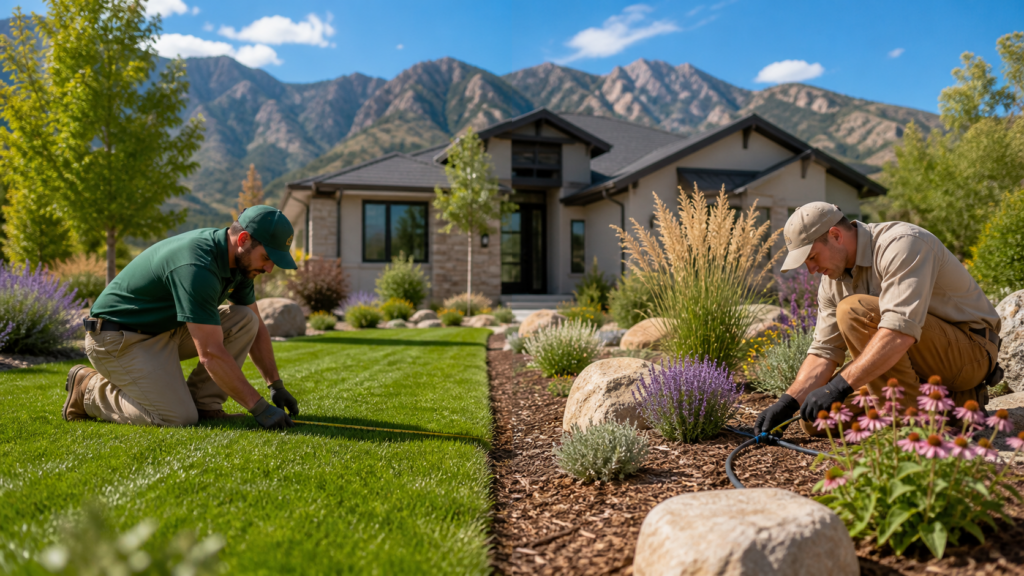
Why Colorado Homeowners Are Rethinking Sod
Rising water costs, drought rules, and changing HOA guidelines are causing many Colorado homeowners to look twice at full sod yards. What worked in wetter parts of the country often struggles here along the Front Range. Our semi-arid climate, clay-heavy soils, fast temperature swings, and powerful sun can make traditional bluegrass a constant battle.
For a long time, sod was the default new yard: fast green color, simple to understand, and familiar. But that green carpet usually needs a lot of water, frequent mowing, and careful care to stay healthy. At the same time, low-water landscaping in Colorado, often called xeric or drought-tolerant design, is becoming more common and accepted with HOAs. In this article, we compare sod and low-water yards side by side: installation, first-year upkeep, long-term performance in different sun and soil conditions, and what that means for your time and budget.
Upfront Installation Costs: Sod vs. Low-Water Landscapes
A standard sod yard is usually built around large lawn areas and a spray irrigation system. Typical pieces include:
- Grading and rough shaping of the yard
- Light soil prep and fertilizer
- Traditional sprinkler irrigation
- Sod delivery, laying, and rolling
- Edging along beds, walks, and drives
Low-water yards have a different mix. They often shift money from sheer square footage of lawn into design, plant variety, and durable materials:
- Site planning and planting design
- Deeper soil amendment in beds
- Drip irrigation for plantings
- Drought-tolerant trees, shrubs, and perennials
- Mulch or gravel, plus pathways or small patios
Many people find that a full sod yard may cost less at the start because the design is simpler and lawn covers most of the space. Low-water landscaping in Colorado tends to put more thought into where lawn is truly useful, then fills the rest with plant beds, stone, or outdoor living areas that age well.
Hidden or overlooked costs can change the picture for both choices:
- Irrigation complexity and long-term service
- Drainage corrections to handle stormwater
- Hauling and disposal of old turf and debris
- HOA approvals and required plan revisions
A well-planned design can also save money by right-sizing the lawn, instead of going all grass or all rock. Many properties do best with a mix.
First-Year Water Use and Maintenance Demands
The first year is the “training period” for any new yard. This is when roots form and plants learn how deep to reach for water.
For sod, that means:
- Heavy, frequent watering in the first several weeks
- Gradual shift to fewer, deeper waterings as roots grow
- Regular mowing to keep the grass healthy
- Edging, fertilizing, and watching for weeds
Low-water yards start differently. New plants still need regular moisture at first, but the pattern changes more quickly:
- Gentle, consistent watering at planting, often with drip
- A move toward deep, less frequent watering earlier in the season
- Occasional hand weeding in beds
- Light pruning and checks on the drip system
Timing your install matters. With an August installation, both sod and low-water yards face late summer heat, then a quick slide into fall. Sod laid in late summer needs careful watering until cooler nights help reduce stress. Low-water plants put in the same time of year usually focus on root growth, then rest over winter and take off the following spring. A spring installation for either option gives a longer growing season for roots to settle.
Long-Term Performance by Sun, Shade, and Soil Conditions
Along the Front Range, sun exposure can change completely from one side of a house to the other. Sod and low-water yards each handle that in different ways.
In full sun:
- Bluegrass often struggles with hot spots, browning, and stress along drives or south-facing walls
- Xeric and native-style plants can thrive in heat, reflected light, and dry air
- Thoughtful plant groupings can turn “baked” areas into some of the most interesting parts of the yard
In partial shade, sod can do fairly well, but it may thin over time as trees grow and light levels drop. Mixed planting beds with shrubs, perennials, and groundcovers often stay fuller and more colorful, and they do not need mowing. In heavy shade, neither sod nor typical xeric choices are perfect. This is where non-turf ideas shine, such as:
- Shade-tolerant groundcovers
- Flagstone or gravel paths
- Seating areas tucked under trees
Soils in Northern Colorado are often heavy clay or compacted fill, especially in new neighborhoods. For sod, poor drainage can lead to soggy spots, fungus, and thatch buildup. For low-water plants, heavy clay can slow drainage so much that roots sit wet for too long. To set low-water plantings up for success, we often look at:
- Soil amendment in key planting zones
- Raised beds and berms to improve drainage
- Matching plant choices to each soil pocket
Over five to ten years, the way each yard uses water also changes. Sod tends to keep a steady need for irrigation and regular renovation, such as aeration and overseeding. A well-designed low-water yard usually shifts toward lower water use as plants mature and shade the soil. Smart irrigation design and plant selection help both options handle drought limits and hotter summers with less stress.
Real Costs Over 5, 10 Years: Dollars, Time, and Lifestyle
When you look past the first year, the costs of each choice show up in day-to-day life as much as in bills.
Long-term costs for sod often include:
- Higher water use in peak summer
- Ongoing fertilizers and herbicides
- Regular aeration and occasional overseeding
- Repairs to sprinkler heads and valves
For low-water yards, long-term costs usually shift toward:
- Lower irrigation needs outside the establishment phase
- Occasional plant replacements as the garden matures
- Mulch refreshes every few years
- Drip line adjustments or small repairs
Time and lifestyle are just as important. Large sod areas mean weekly mowing, edging, and cleanup, plus noise, fuel, and equipment storage. It can be stressful to leave town in midsummer and hope the lawn does not scorch. Low-water designs usually focus on seasonal pruning, some weeding, and quick system checks, which can fit more easily into busy schedules.
There is also the feel of the space. Many homeowners want:
- Strong curb appeal from the street
- Useful outdoor rooms for dining, relaxing, or kids play
- Shade and color through more of the year
- A yard that supports birds and pollinators
A well-planned low-water yard can turn extra lawn into planting beds, paths, or patios that invite you outside instead of adding another chore.
Choosing the Right Mix with Couture Landscaping
For most Colorado homes, the smartest answer is not all sod or all xeric. A smaller, practical lawn for play or pets, paired with low-water plantings, paths, and gathering areas, often gives the best mix of beauty, comfort, and long-term ease.
At Couture Landscaping, we look at the whole property before we recommend a direction. That means mapping sun and shade, checking soil and drainage, reviewing HOA rules, and talking honestly about how much maintenance feels comfortable. From there, we design a custom blend of lawn, planting beds, and hardscape that fits your style and works with our Front Range climate instead of fighting it.
Transform Your Colorado Yard Into a Beautiful, Water-Smart Oasis
If you are ready to cut your water use while still enjoying a vibrant, inviting landscape, we are here to help. At Couture Landscaping, our team specializes in thoughtful design and installation for low water landscaping in Colorado that fits your property and lifestyle. Share your goals with us and we will create a custom plan that works with local conditions and your budget. To get started, simply contact us and schedule a consultation.