
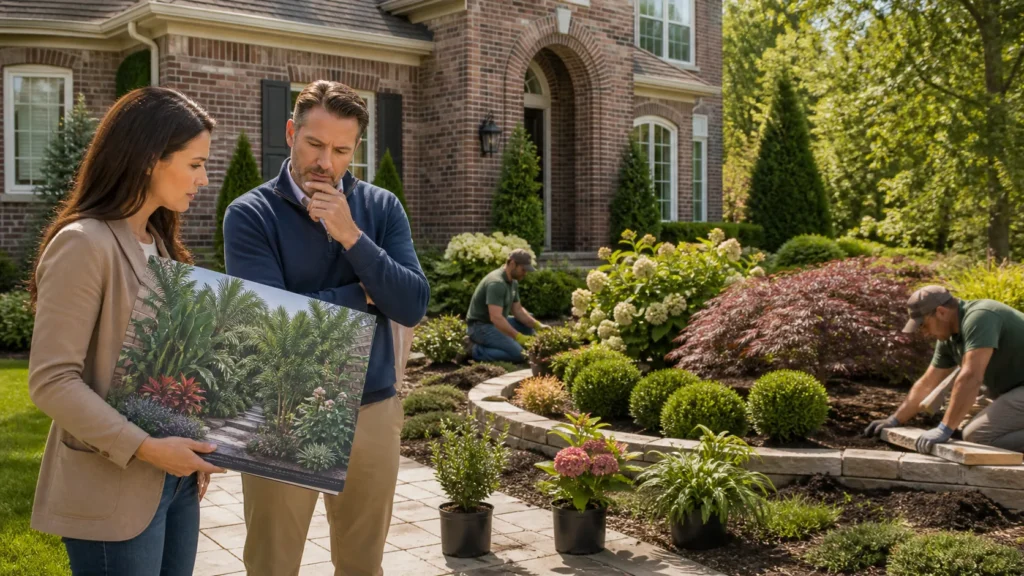
Rethinking Front Yards as Part of the Architecture
Front yard landscaping should not feel like you decorated a separate stage in front of your house. It should feel like part of the same story. When the front yard lines, shapes, and materials connect directly to the home, everything feels calmer, clearer, and more welcoming the moment you pull up.
A front yard that works with the architecture also tends to look better for longer. Trends change, but a strong relationship between the house and the outdoor space will always feel right. Along the Northern Colorado Front Range, from Fort Collins to Longmont, that kind of unity stands out, especially when homes hit the market in the fall and buyers are viewing from the street first.
In this article, we are questioning the usual habits that treat front yards like a decorating project. We will walk through a different way to think about front yard landscaping, one that starts with the house and builds out from there, step by step.
Why Front Yard Landscaping Should Start with the House
Before anyone talks plants or pavers, we think it is important to read the house. The shape of the roof, the height of the windows, the placement of the front door, and the materials all send clues about what the front yard wants to be.
A good front yard plan often begins with questions like:
- Where does the roofline naturally lead your eye?
- How does the sunlight hit the front of the house during the day?
- What views from inside the house are worth framing or blocking?
- Where does it feel natural to walk from the driveway or street to the door?
Proportion matters too. A tall two-story home usually needs deeper planting beds, larger-scale plants, and stronger vertical elements so the house does not feel like it is towering over a thin strip of lawn. A lower, spread-out home often looks better with long, layered beds and softer transitions, rather than tall plantings that fight the roofline.
Style should guide decisions as well. A modern home might call for:
- Clean lines in walks and walls
- Simple, repeated plant groupings
- Fewer materials, used in a consistent way
A farmhouse or mountain-modern home often feels more natural with:
- Warmer stone and wood accents
- Mixed textures like grasses and shrubs
- Curves that still respect the main geometry of the house
When the front yard speaks the same design language as the house, the whole property feels intentional, not patched together.
Common Front Yard Mistakes That Ignore the Home
Many front yards fall into the same patterns that have little to do with the house itself. These choices are common, but they often fight the architecture instead of supporting it.
One big one is the random island bed floating in a sea of turf. You see a small circle or kidney-shaped bed, maybe with a few boulders and a tree, sitting in the middle of the lawn. It does not line up with the driveway, the front door, or any major feature of the house. From the street, it can look like a leftover piece that never quite found its place.
Another habit is the default line of foundation shrubs. A row of identical evergreens hugging the base of the house might feel like the safe choice, but it often ignores:
- Window heights and views
- The vertical rhythm of columns and doors
- Changes in siding or stone on the facade
Instead of framing the architecture, the shrubs can end up hiding it or creating a heavy, flat band along the ground.
Then there is the front door problem. Entries are either buried under oversized evergreens that crowd the porch, or they are surrounded by tiny, low plantings that make the door feel unimportant. In darker fall and winter months along the Front Range, that can make the approach feel awkward or even a little unsafe. The front door should read clearly from the street and feel comfortable as you walk up, not squeezed or lost.
Designing a Front Yard That Leads You to the Door
We like to think of front yard landscaping as a gentle walk from the street or driveway to the threshold, not a single photo moment from across the road. The space should guide you, step by step, and build a sense of welcome as you go.
A strong entry sequence usually has:
- A clear starting point from street or driveway
- A path that lines up with the door or main feature
- One or two spots where you naturally slow down or pause
- A final threshold, like a step, landing, or gate
Drives and walks should work with the house geometry first. Curved walks can be great, but only when they truly clarify how people move and why. A random curve that wanders in front of a straight, modern facade often feels confusing.
Materials and steps can create little arrival moments. A change in paver size, a pair of low walls, or a simple landing can say, “You have arrived at the front door.” When these pieces echo the shapes and colors of the house, the entry feels effortless.
Lighting is another quiet but powerful tool. Subtle, low-glare lighting along paths, steps, and the entry helps a lot in the shorter fall and winter days in Northern Colorado. Done right, it connects the home and the front yard, highlights the architecture, and helps everyone feel safe coming and going after dark.
Making Front Yard Landscaping Work in Northern Colorado
Our climate along the Front Range asks a lot from a front yard. Strong western sun, wind, freeze-thaw cycles, and irrigation limits all play a part. The goal is to respect those conditions while still keeping the house itself as the main guide.
Plant choices should handle:
- Intense sun, especially on west-facing fronts
- Dry air and occasional strong winds
- Cold winters and changing snow levels
Hardscape materials also matter. Concrete, stone, steel, and wood can either echo what is already on the house or create a thoughtful contrast. If a home has warm stone and dark trim, the front walk, steps, and walls can pull from those tones so nothing feels random.
Year-round performance is key for front yard landscaping here. We like to think about:
- Evergreens for winter structure
- Ornamental grasses for movement and fall interest
- Hardscape features that still frame the house when leaves are gone
- Simple planting layers that look good with or without flowers
When snow arrives or trees drop their leaves, the front yard should still outline the architecture clearly. The house remains the star, and the outdoor space acts like a frame that works in every season.
Partnering with a Design-Build Team for a Cohesive Front Yard
Creating a front yard that truly belongs to your home often takes more than picking plants and edging. It takes one vision carried through from concept to completion. A design-build team keeps the big picture in view while solving all the details on site.
With design and construction under one roof, the people sketching the ideas are closely connected to the people building them. That makes it easier to keep:
- Architecture and grading in sync
- Drainage, irrigation, and lighting well planned
- Materials and details consistent from plan to reality
At Couture Landscaping, we focus on custom, high-end outdoor environments and take on a limited number of projects along the Northern Colorado Front Range each year. That smaller project load lets us give more attention to how each front yard relates to its specific house, site, and views.
Fall can be a smart time to step back and really look at your front yard. With leaves changing and light levels shifting, it is easier to see where the house feels disconnected from the space around it. It is also a good window to plan design work so construction can happen when conditions align.
Start Seeing Your Front Yard as an Extension of Your Home
When you stop treating the front yard as a separate decorating job and start seeing it as an extension of the house, decisions get clearer. The most compelling front yard landscaping is almost impossible to peel away from the architecture. It looks like it was always meant to be there.
A simple starting point is to walk your property from the street to the front door. Notice where the house and landscape feel out of sync. Are walks lined up with doors? Are plants blocking views or supporting them? Then gather a few photos of your home and inspiration images that respect its style, rather than fight it.
For homeowners along the Front Range who are ready for a custom, high-end transformation, this mindset shift is the first step. From there, a thoughtful, design-driven front yard can turn the space in front of your home into a true part of the architecture, not just lawn with extra pieces added on.
Get Started With Your Project Today
If you are ready to transform your curb appeal, our team at Couture Landscaping is here to plan and build a design that fits your home and lifestyle. Explore how our customized front yard landscaping solutions can create a welcoming, polished look from the street. Tell us about your vision and budget, and we will guide you through every step, from concept to installation. Have questions or want to schedule a consultation now? Simply contact us to get started.