
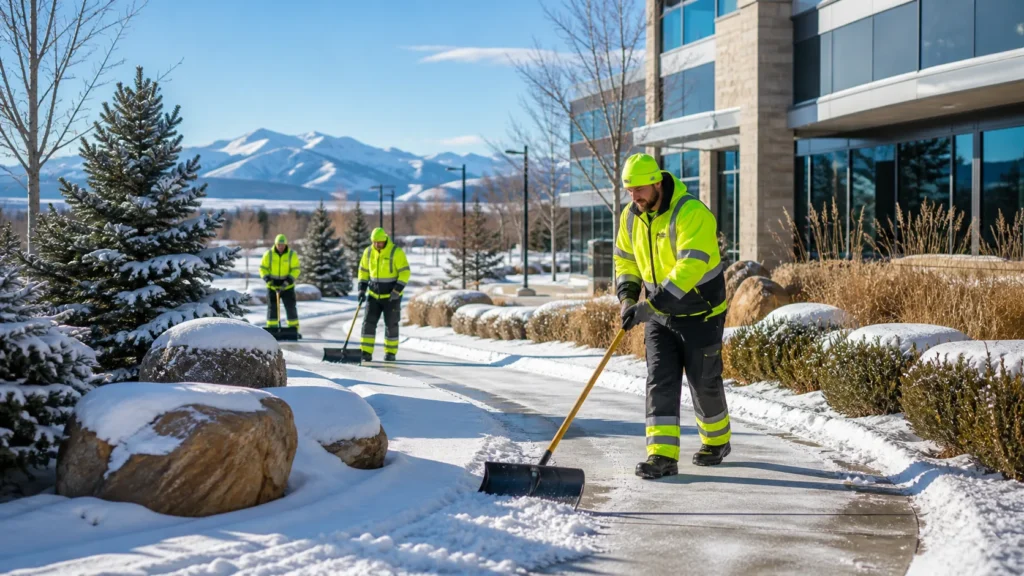
Turn Winter Weather Into a Commercial Asset
Fort Collins winters are hard on commercial properties. Snow stacks up on parking lots, meltwater runs across entries, then refreezes into sheets of ice. Those same freeze-thaw cycles can crack paving, chew up curbs, and turn simple walks into safety hazards for customers and staff.
When your site is not ready for snow, you feel it fast. Doors stay closed longer, crews rush to fix problem spots, and visitors see a property that feels risky instead of welcoming. With smart, snow-resilient design, winter can work for you instead of against you. Thoughtful grading, durable hard surfaces, and planting plans that like the cold keep your business open, safe, and looking cared for all season.
At Couture Landscaping, we focus on climate-responsive, hand-built outdoor spaces across Northern Colorado. What follows is practical guidance shaped by local conditions: how to shape grades for snow, pick materials that stand up to ice, choose plantings that stay sturdy, and plan operations so winter runs more smoothly on your commercial site.
How Fort Collins Winters Stress Commercial Landscapes
Fort Collins winters are not just about light flurries. Properties see:
- Periodic heavy snow events that load roofs, parking lots, and planting beds
- Rapid warmups that melt snow in hours, not days
- Cold nights that refreeze meltwater into black ice
- Wind that drifts snow into corners and along exposed drives
Large paved areas on commercial sites take the brunt of it. Melting snow flows across lots, collects at low spots, and can freeze into slick areas at entries and crosswalks. Icy conditions and blocked access do more than annoy tenants and customers, they raise:
- Liability risk for slips and falls
- Wear and tear on concrete, asphalt, and pavers
- Plow damage to curbs, beds, and irrigation
- Stress on operations when staff cannot safely reach doors
Many older or generic commercial landscapes struggle here. Common design problems we see include:
- Flat grades that leave meltwater with nowhere to go
- Tiny or poorly placed snow storage zones that quickly overflow
- Fragile plantings on the edge of drive aisles right where plows need room
- Low-grade hardscape materials that chip, spall, or heave after a few seasons
Planning for winter at the design stage changes the whole picture. When snow-resilient thinking is built in, you spend less on emergency fixes, keep more access points open during storms, and gain a clearer sense of what winter maintenance will require each year.
Designing Hardscapes That Outlast Snow and Ice
Hard surfaces carry your business through winter, so they need to be ready for our freeze-thaw rhythm. The material is only part of the story; the structure beneath matters just as much.
Durable options for commercial walks, plazas, and entries include:
- Properly installed concrete with the right base and control joints
- High-quality concrete pavers laid on a compacted base
- Natural stone set on a stable, well-drained foundation
In our climate, a solid base and careful compaction help resist heaving and cracking. Where people walk often, surface texture also matters, smoother is not always safer when snow and ice show up.
Grading and drainage are the quiet heroes of winter performance. Subtle slopes move meltwater away from:
- Main doors and customer entries
- ADA paths and ramps
- Loading zones and delivery doors
Trench drains, area drains, and correctly sized inlets can intercept runoff before it crosses walkways. This reduces those wide ice sheets that take so much labor and de-icer to manage.
Snow needs a home, too. Strategic snow storage zones work best when they:
- Are sized for repeated plow events
- Sit away from main sightlines and signage
- Have reinforced edges or curbs that stand up to blade pressure
- Use surface materials that tolerate heavy, wet piles and slow melt
Safety-focused details round things out. Textured surfaces at slopes, minimal level changes, and clear edges help people keep their footing. Well-placed site lighting makes icy spots visible to both visitors and maintenance crews working in the dark early hours.
Planting Strategies That Handle Heavy Snow Loads
Plants on commercial sites do more than look nice in summer. In winter, they interact with snow loads, drifting patterns, and plow routes. Choosing the right species and layouts helps them survive and keeps your site working.
Good candidates for snow-resilient plantings usually have:
- Strong branch structure and flexible wood that bends, not snaps
- Tolerance for salt and de-icer spray along drives and walks
- Lower, compact forms that are less likely to catch heavy drifts
- Root systems that can handle periodic saturation from meltwater
Where you place those plants matters as much as what you pick. Around drive aisles and walks, smart layouts:
- Keep sightlines clear at corners and crosswalks
- Leave space for plows to push snow without scraping through beds
- Set taller shrubs and trees back from curb edges
Protecting root zones and soil from winter stress makes a big difference over time. Helpful tactics include:
- Berms or raised beds that lift roots above salt-heavy runoff
- Boulders or curbing that stop plow blades before they reach trunks
- Hardy groundcovers that hold soil when plow piles sit on top
Even when lawns and many perennials are asleep, your property can still look intentional. Evergreens, structural shrubs, and ornamental grasses provide shape and color against snow. This kind of four-season curb appeal signals care to tenants and visitors, even in the toughest months.
Operational Planning for Snow-Ready Commercial Sites
Design and operations should work together, especially where winter is concerned. When we think about how snow crews will move around a site, we can reduce damage and speed up storm response.
Circulation routes, access points, and storage zones can be laid out with plow paths in mind so that:
- Trucks have wide, clean passes without tight, risky turns
- Snow can be pushed to storage areas without crossing main walks
- Curbs, medians, and islands are shaped to guide equipment safely
Access and safety priorities should be clear from the start. On most commercial properties, that means protecting:
- Primary public entrances
- ADA-compliant routes and ramps
- Emergency and fire access lanes
- Main staff and delivery paths
When these key routes are direct, well-graded, and drained, they are easier to keep clear and dry between storms.
Infrastructure choices also affect winter performance. For high-load spots, such as dumpster pads and delivery bays, reinforced pavement stands up better to heavy trucks and freeze-thaw stress. Irrigation components benefit from protection and easy access for winterization. Exterior power, lighting, and hose bibs placed in thoughtful locations make snow management and cleanup more efficient.
All of this feeds into more predictable maintenance budgets. A snow-resilient site is still exposed to the same storms as everyone else, but fewer things go wrong unexpectedly. You are not constantly patching broken curbs, replanting damaged beds, or rushing to fix drainage that fails every time the snow melts.
Partnering with a Local Expert for Snow-Resilient Design
Local knowledge matters when you are planning commercial landscaping in Fort Collins. Wind patterns, sun angles, and drainage quirks shift from property to property, especially near the foothills. A team that works in this region day in and day out reads those patterns and designs with them in mind.
A design-build approach brings grading, hardscape, planting, and winter operations planning under one roof. With one team guiding both design and construction, details like slope, base depth, and plant placement line up better. Weak spots are less likely to show up during that first big snow season, because winter was part of the plan from the first sketch.
Different commercial properties also have different winter needs. For example:
- Retail centers often prioritize front-door access and high-visibility entries
- Medical offices may focus on covered drop-offs and ADA routes
- Corporate campuses might need internal paths and courtyards safe for staff
- Mixed-use developments blend public, residential, and service access
There is no single template that fits all of these. Tailored solutions protect your specific capital improvements, keep tenants satisfied, and support safer, more welcoming properties through many winters to come.
Get Started With Your Project Today
If you are ready to refresh your property with professional commercial landscaping in Fort Collins, our team at Couture Landscaping is here to help. We will walk your site, listen to your goals, and design a maintenance or installation plan that fits your timeline and budget. Tell us about your project and we will follow up with clear next steps and transparent pricing. Have questions or need a quote quickly? Simply contact us to get started.