
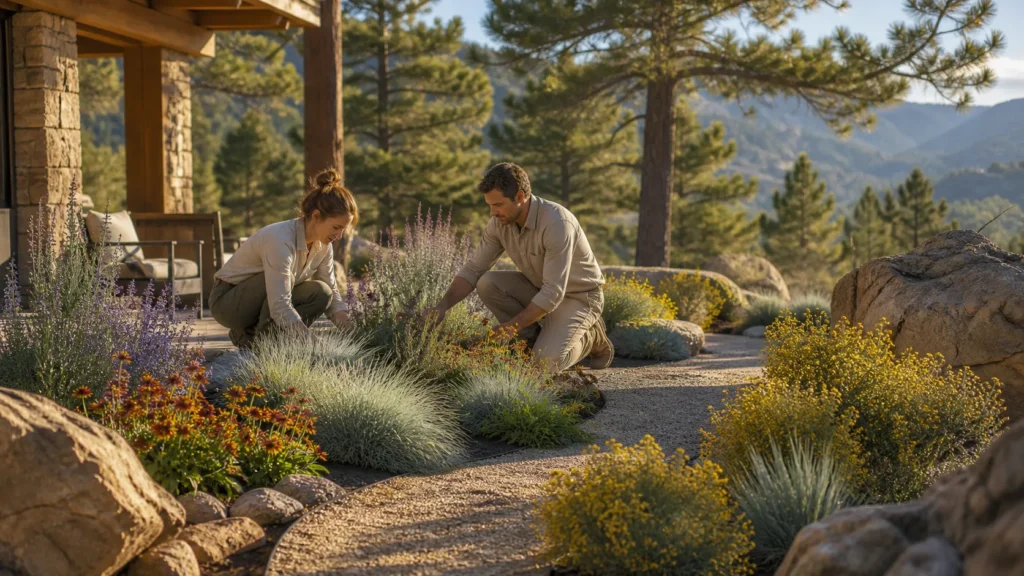
Create a Quiet Refuge with Native Plant Landscaping
A quiet patio is not just about furniture and a grill. The plants around your space play a huge role in how calm it feels, how much noise you hear, and how private you are from neighbors and the street. Native plant landscaping can turn a simple slab of concrete into a soft, sheltered outdoor room that feels grounded in the Colorado foothills.
Think of a cool October evening. The sun is low, grasses whisper in the breeze, and gold and amber tones glow against stone and wood. Native shrubs hold clusters of berries that draw birds, and you hear wings and rustling leaves instead of traffic echoing off bare rock mulch. That is the kind of patio setting we design every day at Couture Landscaping, tying hardscape and plantings together so they feel like they belong to the land around them. In this article, we will walk through how to choose native plants, plan for our climate, and create a peaceful, low-care patio that feels good in fall and every season that follows.
Why Native Plants Are Ideal for Colorado Patios
The Colorado foothills are beautiful, but they are not always gentle on plants. Native species are used to our thin air, wide temperature swings, and semi-arid conditions, which makes them a smart choice around patios.
Here is why native plant landscaping fits so well:
- Climate fit and resilience
- Quiet comfort and privacy
- Ecological benefits around your patio
Native plants are adapted to our freeze-thaw cycles, drying winds, and intense sun. Many non-native ornamentals struggle in these conditions, especially in exposed backyard patios. When you choose plants that know this climate, they are less fussy once established and better able to handle periods of low rainfall or sudden cold snaps.
They also help with comfort. Layered native plantings create a living sound filter. Tall shrubs and small trees catch and break up sound waves, while grasses and perennials along the ground absorb echoes from hard surfaces. Instead of sound bouncing off concrete, the plants soak it up and soften it. This makes a small patio feel more tucked in and private without building tall solid walls.
On top of that, native plant beds support pollinators, birds, and beneficial insects. A healthy mix of life around your patio feels calming. You see butterflies, hear bees humming on flowers, and watch birds forage in seed heads. That balance often helps keep problem pests in check and gives you a stronger connection to the land just outside your door.
Designing for Sound, Shade, and Seasonal Calm
Thoughtful layout is what turns a random group of plants into a quiet retreat. We look at sound, shade, and how the space feels through all four seasons.
For sound buffering, focus on the noisiest edges. That might be a road, a nearby driveway, or a neighbor’s yard. On those sides, we often:
- Use taller native shrubs or small trees near the property line
- Place denser plantings where sound enters the space
- Pair plants with fences, privacy screens, or pergolas
The structure and the plants work together. A wood or metal screen blocks line of sight, while leaves and branches break up noise and movement, creating a softer boundary.
Shade is next. In Northern Colorado, afternoon sun can turn a patio into a hot plate. We like to set small native trees or multi-stem shrubs so they cast dappled shade over seating, without blocking mountain views. On south-facing patios, we pay attention to winter sun too. Deciduous trees can give summer shade, then drop leaves and allow low winter light to warm stone and concrete.
Seasonal calm means the patio looks good and feels settled even when flowers fade. For fall and winter interest, we use:
- Native grasses that turn gold and sway in the wind
- Shrubs with red, orange, or burgundy fall color
- Evergreen forms that hold structure after frost
- Sturdy seed heads that catch snow and feed birds
When these elements are in place, your patio still feels alive and inviting during colder months, just in a quieter, more reflective way.
Choosing Native Plants That Thrive in Foothills Settings
Not every native plant fits every patio. The foothills have strong microclimates, and we always start by reading the site.
Slope, wind, and sun exposures shape what will thrive. A south-facing patio with reflected heat off stone needs tougher, more drought-tolerant species than a north-facing nook tucked against the house. Windy ridge sites may call for low, flexible plants that can bend without breaking. Sheltered pockets can support a bit more lush growth.
Near the patio edge, plant form and roots really matter. We keep close-in plantings low and friendly:
- Mounding perennials near seating and walkways
- Aromatic plants at hand level where you can brush them
- Shallow-rooted species near pavers
Farther from the hardscape, we switch to deeper-rooted grasses and shrubs that anchor slopes, handle runoff, and stay clear of paver bases and buried lines.
To keep things simple, we think in groups instead of long plant lists:
- Native ornamental grasses for movement and sound absorption
- Flowering perennials for seasonal color and pollinators
- Shrubs for structure, screening, and fall color
- Small native trees for filtered shade and vertical interest
Combined with the right layout, these groups create a layered, natural look that still feels tidy around your patio.
Blending Hardscapes and Native Plantings for a Cohesive Look
A quiet patio is not just plants tucked against a fence. It is the way stone, concrete, wood, and planting come together in one flowing space.
We often break up large hardscape slabs by:
- Adding border beds to soften edges
- Carving inset planting pockets between pavers
- Using grouped containers with native plants near seating zones
This takes the scale down so the patio feels more human, not like a parking lot. Soft, textured plants help transition from hard surface to open yard, so your eye moves gently across the space.
Materials matter too. When hardscape colors echo nearby rock outcrops and soils, everything feels like it belongs. Local-feeling stone, boulders placed at grade, and gravel that matches surrounding tones let native plants look like they naturally grew into the space, instead of being set beside an unrelated slab.
We also think about how people move. Clear paths between dining, lounge, and fire areas can be marked by:
- Low native plantings that guide movement
- Stepping stone paths surrounded by groundcovers or gravel
- Subtle elevation shifts that define zones without tall barriers
The result is a patio that functions well for daily life and gatherings while keeping that calm, grounded mood.
Low-Maintenance Stewardship Through Colorado Seasons
Native plant landscaping around a patio does not mean no care at all, but it can mean simple, seasonal routines that fit our climate.
Smart water management is a big piece. We usually recommend:
- Drip irrigation lines that deliver water to the root zone
- Grouping plants with similar water needs in the same area
- Mulch at the right depth to hold moisture and protect soil
This support is especially helpful during dry falls and before winter freeze, when roots still need water even if the top growth is going quiet.
Fall is also a good time for light care. On many patios, we:
- Cut back only the flopping or diseased perennials
- Leave sturdy stems and seed heads for birds and winter interest
- Protect new plantings with extra mulch
- Winterize irrigation so lines are safe from freezing
Over the years, the patio garden will shift. Some plants will outgrow their spots, others will thin. Periodic editing, basic soil checks, and thoughtful replacements keep the design steady while the planting matures. That way, the space stays low-maintenance, balanced, and true to the original vision.
At Couture Landscaping, we design and build these kinds of foothills-friendly, native-focused patios from concept through construction, then support long-term care so they stay beautiful. When native plants and well-planned hardscapes come together, your patio becomes more than a sitting area. It becomes a quiet, rooted place to breathe, listen, and enjoy the Colorado light in every season.
Get Started With Your Project Today
If you are ready to transform your yard into a resilient, low-maintenance habitat, our team at Couture Landscaping is here to help design and install thoughtful native plant landscaping tailored to your property. We listen closely to your goals, from attracting pollinators to reducing water use, and create a plan that fits your space and budget. To schedule a consultation or ask questions about your project, simply contact us and we will follow up to discuss next steps.