
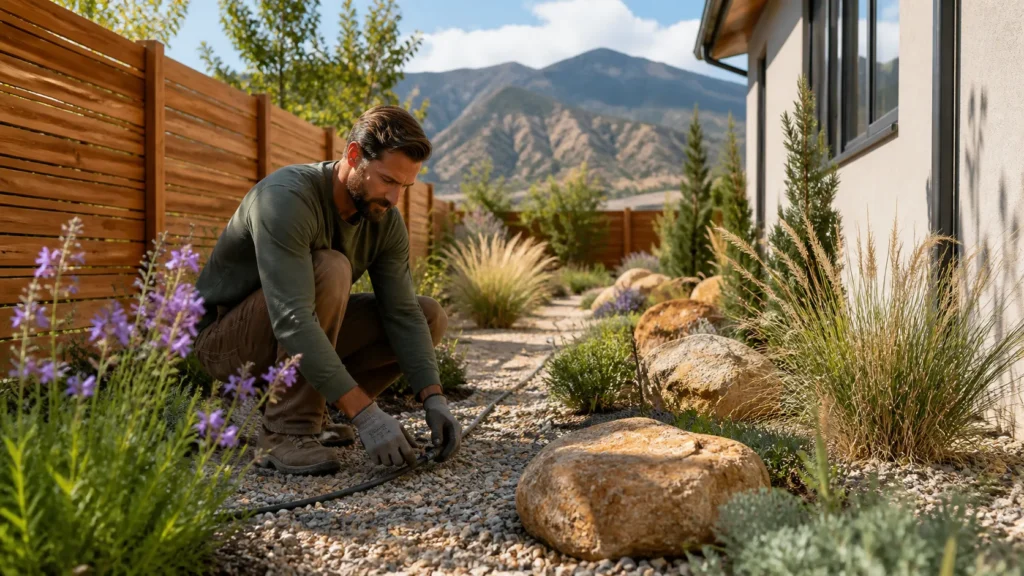
Transform Forgotten Side Yards Into Water-Wise Retreats
Side yards in Colorado often turn into narrow strips of grass, mud, or rock that no one really loves, yet they quietly soak up more water than they deserve. When you add in our arid climate, watering rules, and rising utility costs, that wasted water starts to matter a lot. The good news is that these slim spaces can become some of the hardest working, most beautiful areas on your property.
At Couture Landscaping, we see side yards in Northern Colorado as hidden opportunities. With smart design, they can be water-wise, easy to care for, and still feel high-end and intentional. In this article, we will walk through why side yards waste so much water, simple design rules that change everything, plant choices that actually thrive here, and smart hardscape and irrigation ideas you can plan for now and enjoy for years.
Why Colorado Side Yards Waste so much Water
Most builder-grade side yards are not really designed; they are just filled. A thin band of turf, a few heads on the main sprinkler line, and a straight concrete walk to the gate are common. It checks a box, but it does not work well for our climate.
Here is where the waste happens in many Colorado side yards:
- Narrow turf strips that are hard to water without overspray
- Generic spray heads that overlap onto fences, siding, and walkways
- Poor grading that sends water running down the side instead of soaking in
- No plan for sun, shade, or wind, so plants struggle and need extra water
Local conditions make this worse. Our clay soils can hold water around roots, while sandy spots drain too fast. South and west sides bake in direct sun and reflected heat from siding and stone. North sides stay shaded, damp, and icy for long stretches. Add HOA expectations for uniform turf, and many homeowners leave sprinklers on auto-pilot for years, never really looking at how much water that forgotten strip takes.
Because we tend to focus on front curb appeal and back patios, the side yard becomes out of sight and out of mind. Water runs, the bill goes up, and the area still does not look like a finished part of the property.
Design Principles for Water-Wise Side Yard Landscapes
To turn a side yard into a water-wise space, the layout has to be intentional. Three design ideas drive most of our side yard plans: hydrozoning, right plant in the right place, and smart circulation.
Hydrozoning simply means grouping plants with similar water needs. In a side yard, that might look like a dense planting bed of low-water natives on the hot side, and a slightly higher water zone near the hose spigot or a small tree on the cooler side. When zones match plant needs, irrigation can be dialed in without waste.
Circulation is just as important. Instead of walking randomly over soil and plants, we define clear paths that protect planting areas and keep maintenance simple. Common options include:
- Flagstone steppers set in gravel
- Paver ribbons running from front yard to back
- Crushed stone or fines paths with steel or stone edging
These paths reduce compaction in planting beds and give service access to AC units, meters, and gates without trampling plants. They also instantly make a narrow space feel like a designed passage, not an afterthought.
Every side yard also has microclimates. One wall might reflect intense heat, while the fence side stays cool. Wind can funnel between houses, drying out soil, or a corner can feel calm and protected. We match plants and materials to these microclimates and shape the soil to support them. That often means:
- Amending poor soils with organic matter where plants will live
- Creating gentle berms and shallow swales to slow and capture water
- Making sure grading moves moisture away from the foundation, then into planting areas
Good soil prep and contouring let you water less, because more of the water you apply actually stays where roots can reach it.
Drought-Tolerant Plants That Thrive in Tight Colorado Spaces
Side yard plants have to do a lot of work in a small footprint. They need to stay compact, handle low to moderate water, and keep their shape through the year without dropping messy fruit or leaves into walkways and along fences.
For sunny, hot side yards, especially south or west-facing, we often lean into:
- Ornamental grasses for movement and winter structure
- Penstemon and yarrow for long-lasting color and pollinator value
- Russian sage for airy blooms and strong drought tolerance
- Dwarf conifers for evergreen structure without overpowering the space
- Hardy groundcovers to cover soil and cut evaporation
On shaded or north-facing side yards, the plant list shifts. These areas are cooler and can be slower to dry out, so we look for plants that accept shade and uneven moisture:
- Serviceberry and chokecherry for seasonal interest and fall color
- Shade-tolerant native perennials with textured foliage
- Carefully chosen evergreens that handle shade without thinning out
- Groundcovers that knit together bare soil but do not climb fences or walls
Layering matters even in narrow beds. Tall vertical elements like columnar trees, espaliered shrubs against a fence, or upright ornamental grasses can create privacy and structure. Mid-sized shrubs fill the middle, while low groundcovers and creeping plants cover any bare soil. This layered look is not only beautiful, it shades the soil, holds snow in winter, and slows evaporation.
For an autumn perspective, side yards can shine with fall color and seed heads. Many grasses and perennials hold their shape under light snow, catching frost and adding texture when the rest of the yard is quiet.
Hardscapes and Irrigation That Cut Water Use Dramatically
Thoughtful hardscape design in a side yard does two big things at once: it reduces the amount of area you need to irrigate, and it raises the overall look to match the rest of a high-end property.
Some effective side yard hardscape ideas include:
- Gravel bands along the foundation, paired with plants farther out
- Stepping-stone paths that break up planting zones and define entries
- Raised planters where soil is too poor or roots need extra depth
- Decorative boulders and low walls that create interest without extra water
Near the house, a non-organic border such as gravel or rock is often smart. It keeps mulch and plant roots away from the foundation, supports healthy drainage, and still allows water to infiltrate if the grading is correct. Permeable materials underfoot let snowmelt and rain soak in, feeding nearby plants instead of running to the street.
Upgrading irrigation is one of the biggest water savers in these tight spaces. Traditional spray heads are rarely accurate along fences and house walls. Better options for side yards often include:
- Drip or subsurface lines that deliver water right to the root zone
- Pressure regulation so emitters apply water at an even rate
- Matched precipitation nozzles where sprays are still needed
- Smart controllers that let side yards run as their own micro-zones
By rethinking the basic structure of the side yard in the cooler months, you are ready to turn on an efficient system when spring watering starts, instead of scrambling to fix problems in summer heat.
Seasonal Strategies to Prep Side Yards for a Water-Wise Spring
Fall is a smart time to take stock of your side yard and plan changes. Sprinklers are still fresh in your mind, plants are showing how they handled the past season, and the soil is often easier to work.
Helpful steps for Northern Colorado homeowners in late fall include:
- Walk the side yard while irrigation is running and flag overspray
- Note any drainage issues, soggy spots, or bare, dry patches
- Mark turf areas that are thin, shaded, or hard to mow for future removal
- Arrange for soil testing or a professional site evaluation over the off-season
Winter can be used to protect what you already have. Adding mulch to existing beds helps hold moisture and insulate roots. Some perennials and ornamental grasses can be left standing for winter interest and to catch snow that slowly melts into the soil. Young or newly installed plants often need extra protection with mulch rings and simple wind barriers.
While the yard rests, design work can move forward. This is a great time to:
- Refine side yard goals and functions
- Work with a designer on layout, paths, and plant lists
- Line up materials and installation timelines for early season work
Planning ahead means you are not fighting full contractor schedules later. When warmer weather arrives, the new side yard can go in before peak heat and watering rules are in full swing.
Elevate Your Side Yard with Couture-Level Water Wisdom
When homeowners stop treating the side yard as a leftover strip and start seeing it as part of the whole property, water-wise landscaping in Colorado becomes much more effective. These long, narrow spaces touch both the front and back of the home, so improvements here quietly lift curb appeal from every angle.
Thoughtful side yard design can bring lower water use, less maintenance, and more beauty day to day. The right plants, smart hardscapes, and efficient irrigation all work together to support a space that feels finished, modern, and aligned with the rest of your outdoor living areas. At Couture Landscaping, we enjoy turning these often ignored areas into custom side yard retreats that look good in every season and work hard in our Northern Colorado climate.
Get Started With Your Project Today
If you are ready to transform your yard into a beautiful, resilient space, our team at Couture Landscaping is here to help. Explore how our approach to water-wise landscaping in Colorado can lower maintenance needs while keeping your outdoor areas vibrant all year. Tell us about your property goals and budget, and we will design a plan tailored to your home and lifestyle. To start the conversation, simply contact us and schedule a consultation.