
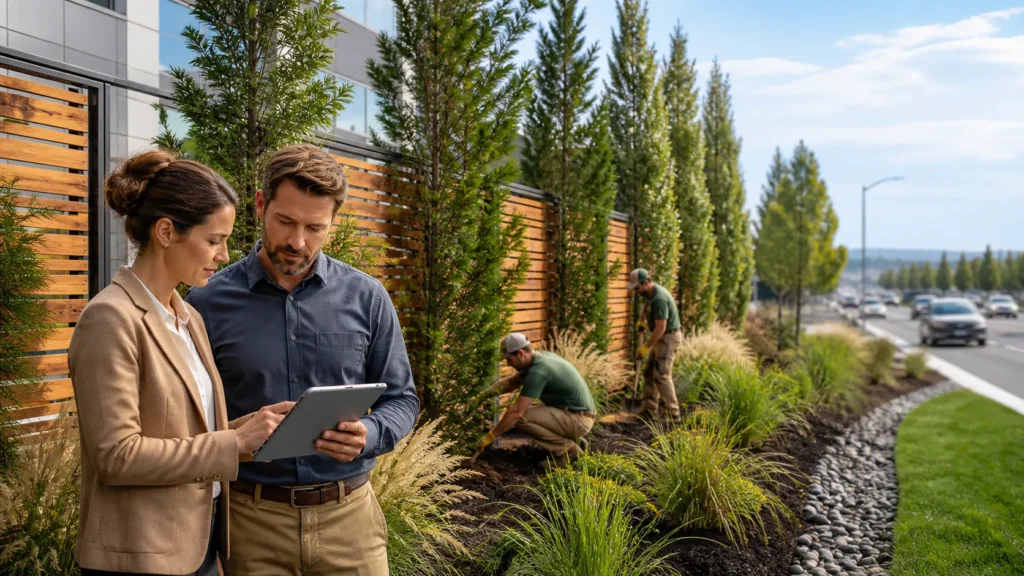
Quieter Properties, Happier Tenants
Noise is one of the biggest complaints on commercial and multi-family properties. Busy roads, delivery trucks, and constant parking lot activity create a steady hum that never really stops. Over time, that sound wears on tenants, visitors, and employees.
Thoughtful noise-buffer landscaping can soften that impact in a big way. With the right mix of plants and hardscape, you can:
- Cut how loud traffic and parking areas feel
- Create a stronger sense of privacy and separation
- Give your property a more calm, high-end look
Compared to bare walls or fences, planted buffers feel welcoming and natural. They add shade, texture, and color while working quietly in the background to screen noise. Done well, they become part of the brand image of an office park, retail center, or apartment community and add long-term value instead of just being a quick fix.
How Sound Moves Across Commercial Sites
Sound does not move the same across every surface. On a typical commercial property, pavement and hard surfaces tend to carry and bounce noise, while softer areas help absorb and break it up.
Here is what often happens on commercial sites in Fort Collins:
- Long, straight streets like major arterials push road noise deeper into properties
- Open parking lots act like echo chambers for engines, doors, and alarms
- Large built surfaces like building walls and retaining walls reflect noise instead of softening it
Common noise sources around commercial landscaping in Fort Collins include:
- Arterial roads such as busy east-west and north-south routes
- Loading and delivery zones behind or beside buildings
- HVAC equipment near ground level or on low roofs
- Shared parking lots serving mixed-use buildings
Every property is different, which is why a site-specific assessment is so important. Things that affect where and how a noise buffer should be designed include:
- Topography and existing grades
- Building placement and height
- Wind patterns across the site
- Existing trees, shrubs, and fences
By studying these factors, we can place acoustic screens in locations where they actually intercept and scatter sound instead of just looking good on a plan.
Designing Effective Acoustic Screens with Plants and Hardscape
Strong noise buffers almost never come from a single straight row of plants. A layered, three-dimensional design works better. We like to think in bands of material from tall to low.
A typical planting strategy might use:
- Tall evergreen trees as a backdrop to block higher sound paths
- Dense shrubs at mid-level to fill visual gaps and thicken the barrier
- Ornamental grasses and perennials at the front edge to add softness and motion
Those plantings can be paired with hardscape elements that help redirect and break up sound:
- Earth berms that raise the planting height along roads or parking edges
- Low seat walls that double as both seating and partial sound reflectors
- Masonry screens or modern fencing that back the planting and close solid gaps
In Fort Collins, we also have to plan for local conditions and rules. Thoughtful noise-buffer design will account for:
- Drought-tolerant plant choices that work with local irrigation restrictions
- Space for snow storage so plows are not dumping piles onto fragile plants
- Clear vehicle and pedestrian sightlines for safety at drives and walks
- City of Fort Collins standards for visibility at corners and maximum heights
The goal is to create a screen that works acoustically, looks intentional, and still respects the way people and cars move through the site.
Plant Selection for Year-Round Noise and Visual Screening
Noise does not stop when leaves fall, so four-season structure matters. We want a buffer that keeps working even in the middle of winter.
A strong year-round mix usually includes:
- Evergreen trees or large shrubs as the backbone for winter screening
- Dense deciduous shrubs that leaf out thick in spring and summer
- Multi-stem trees that break up vertical sound paths with lots of branching
In Northern Colorado conditions, we look for plants with:
- Dense branching habits and foliage that knit together over time
- Good adaptation to local soils and irrigation systems
- Reasonably quick establishment so the screen begins working sooner
For many commercial sites, fall is a smart time to install these buffers. Cooler air temperatures and typically better soil moisture help new plants root in before the ground freezes. That early root growth sets them up to push strong top growth in spring, so by the next busy outdoor season the buffer is already making a noticeable difference.
Integrating Noise Buffers Into Attractive Commercial Design
The best acoustic screens do more than block sound; they shape how people move and gather on the property. Instead of a random line of shrubs along a fence, a well-designed buffer feels like part of the overall guest and tenant experience.
We often connect noise-buffer plantings to:
- Pedestrian routes from parking to entries
- Main entry drives and arrival courts
- Outdoor seating for cafes, office break areas, or waiting zones
In multi-family settings, these same buffers can become amenities:
- Quieter outdoor workspaces screened from parking lots
- Dog areas pulled to the perimeter but wrapped in planting for comfort
- Resident gathering spots that feel enclosed without seeming walled off
Long-term care is part of the design conversation from the start. Good noise buffers:
- Use plant groupings that grow into each other without constant shearing
- Rely on durable hardscape materials that hold up in freeze-thaw cycles
- Provide access for pruning, snow removal, and irrigation checks
When we plan for growth and maintenance from day one, the buffer keeps its shape, stays healthy, and continues to perform instead of turning into an overgrown or patchy line of plants.
Partnering with a Design-Build Team for Lasting Quiet
Effective noise-buffer landscaping is not just about picking the right trees. It ties into grading, drainage, utilities, and circulation. A design-build approach helps keep all those moving parts coordinated so the final result works both on paper and on the ground.
On commercial and multi-family sites, our process at Couture Landscaping typically includes:
- Walking the site to understand existing noise sources and how people use the space
- Clarifying sound and privacy priorities with property managers, HOAs, or developers
- Creating conceptual designs that show planting layers, berms, and walls in context
- Planning phasing so improvements can be built around ongoing business operations
- Providing ongoing stewardship so the buffer matures into its full screening potential
When planning starts in the colder months, there is time for design and any needed approvals before the construction season ramps up. That timing allows installation to kick off as soon as conditions are right, which means tenants, staff, and visitors can enjoy a noticeably quieter property by the next peak season outdoors.
Get Started With Your Project Today
If your property is ready for a landscape refresh, our team at Couture Landscaping is here to help you plan and execute every detail. Explore how our tailored commercial landscaping in Fort Collins solutions can improve curb appeal, usability, and long-term value for your site. We will work with your budget, timeline, and maintenance needs to create a practical plan that fits your business. To talk through ideas or request a quote, simply contact us today.