
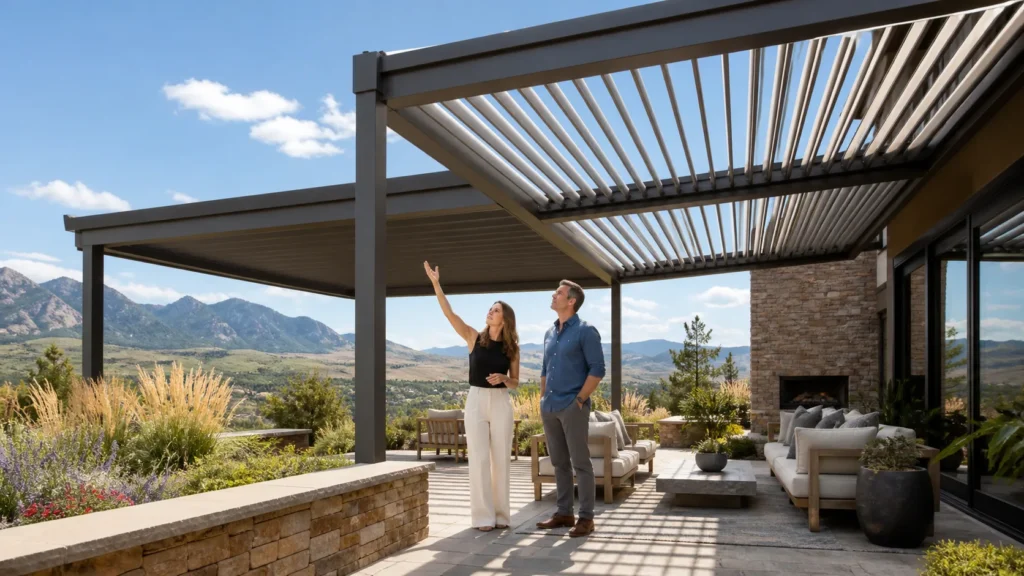
Create Year-Round Comfort on Your Colorado Patio
A west-facing patio in the Colorado foothills can be both your favorite and least favorite spot. The sunset is stunning, but the late-day heat and glare can chase you back inside just when you want to unwind. With the right pergola installation and shade strategy, that same hour can become the most comfortable time of day.
Colorado’s high elevation brings stronger sun, quicker burns, and faster temperature swings. Shade is not just about blocking light, it is about controlling heat, glare, wind, and even winter snow. That is why a luxury pergola needs more thought than simply setting posts and beams.
Pergola orientation, roof type, and layered shade all work together. When they are planned as a whole system, your patio can stay bright, breezy, and comfortable from early afternoon to sunset, and into cooler seasons as well. Plan it well in the cooler months, and you step into spring with a patio that finally works the way you want it to.
Colorado Sun, Wind, and Views: Designing for the Foothills
Northern Colorado brings a unique set of conditions. The afternoon sun from the west can feel harsh, and low angles in late day can shine right under shallow covers. Snow and pale stone can bounce that light back into your eyes, and wind can whip through gaps in a way that makes some seating areas uncomfortable.
When we design a pergola for the foothills, we look beyond the patio edge. Lot orientation, slope, and view corridors all matter. Many homes want to protect seating from the low west sun, but still keep long views of the mountains and sky.
Key design questions we ask include:
- Where does the sun sit in late afternoon in summer and in spring or fall
- Which views do you love, and which directions bring in strong glare
- How does wind move between your house, neighboring homes, and slopes
- Where does water naturally flow and collect during storms or snowmelt
Sight lines from inside the home are just as important. Pergola posts, beams, and openings can be aligned with window and door views so interior rooms still feel open and bright. A design-build approach also means we can tie the pergola into grading, drainage, and planting, so we avoid wind tunnels, water pooling at posts, or awkward “dead zones” of shade that nobody wants to use.
Smart Pergola Orientation for West-Facing Patios
For a west-facing patio, the late-day sun is the main driver of comfort. The goal is to block low, hot afternoon light without turning the space into a cave the rest of the day. Orientation of rafters, slats, or louvers plays a big role here.
A few common layouts and how they help:
- North-south rafters or louvers can block low west sun more effectively when angled correctly
- East-west layouts can soften midday light but may let more low sun under the structure
- Mixed or custom orientations help when patios are at an angle to the house or to the views
We also pay attention to airflow. A pergola that blocks sun but traps heat will feel like an oven by 4 p.m. Strategic gaps, venting at the top, and open sides can let hot air rise and escape. In some homes, we connect a custom pergola to existing roof overhangs so the transition from indoors to outdoors feels natural and the shade zone is continuous across the dining area, lounge space, and paths.
The result is a patio that feels shaded but bright, cool but not windy, and still very connected to foothills views.
Louvered Vs Fixed Roofs: Which Pergola Is Right for You
When you think about pergola installation, the big question is usually louvered roof or fixed roof. Both can feel high-end when they are well designed and well built, but they offer different kinds of control.
Louvered roofs give you adjustability. You can:
- Tilt louvers to block strong west sun without losing all sky views
- Open them on cool days to let in more natural light and warmth
- Angle them to manage light snow and help melt and shed it more evenly
- Pair them with heaters, fans, and lighting to stretch your outdoor season
Fixed roofs are about steady, predictable shade. You might choose:
- Solid roof panels for strong protection from sun and rain
- Slatted pergolas with open beams for dappled light that feels more natural
- Hybrid designs that combine a solid core zone with more open edges
In Colorado, both styles need to stand up to UV and freeze-thaw cycles, so materials and construction quality matter. Louvered systems have moving parts and drainage details that need expert planning. Fixed structures still need careful thought about guttering, snow shedding paths, and how the roof aligns with existing house forms so everything feels intentional and long lasting.
Heat, Glare, and Snow: Layered Shade Solutions That Work
For a west-facing patio, the best approach is usually layered shade, not a single hard cover. We look at how overhead, side, and ground elements work together.
Effective layers can include:
- Overhead pergola shade, fixed or louvered
- Operable side screens or panels at the hottest angles
- Trees, shrubs, and planters that soften light and wind over time
- Lighter hardscape materials that do not hold as much heat
Glare control is just as important as heat control. Strong reflections can bounce off glass doors, light-colored concrete, and winter snow. Angle-tuned louvers, extended pergola overhangs, and integrated shade fabrics can cut harsh reflections without blocking every bit of light. Thoughtful plant placement helps too, breaking up bright surfaces so the space feels calmer on your eyes.
Colorado patios also need a shoulder-season plan. Many homeowners want to enjoy their pergola from early spring through late fall, plus those blue-sky winter days that feel too nice to waste. Heaters, fire features, and wind-blocking elements can make the pergola usable in cooler weather, while good drainage and smart snow shedding areas keep paths clear and safe. When these pieces are designed as a single system, the space feels elegant and low stress instead of like a patchwork of separate fixes.
Bring Your West-Facing Patio Vision to Life
A good starting point is to simply watch how you use your west-facing patio. Notice what time it becomes too hot or too bright to sit outside. Pay attention to which views always make you pause, and which angles leave you squinting. Think about how often you would use the space if the heat and glare were under control.
Many homeowners find that planning a pergola in the cooler months works well. There is time for site evaluation, design concepts, and fine-tuning details like orientation, louver positions, and how the pergola ties into planting and hardscape. By the time warm weather returns, the structure feels like it has always belonged there.
At Couture Landscaping, we focus on custom, high-end outdoor living spaces for foothills homes in Northern Colorado. Our design-build approach lets us treat your pergola as one part of a complete shade and comfort strategy, from grading and drainage to fire features and outdoor kitchens. When pergola installation is done with your climate, views, and daily habits in mind, a harsh west-facing patio can turn into a calm, resort-like retreat you actually want to use every day.
Get Started With Your Project Today
Transform your outdoor space into a beautiful and functional retreat with our expert pergola installation services. At Couture Landscaping, we work closely with you to design and build a pergola that fits your home, lifestyle, and budget. If you are ready to take the next step, reach out so we can discuss your ideas, answer your questions, and provide a clear plan. You can also contact us to schedule a consultation at a time that works for you.