
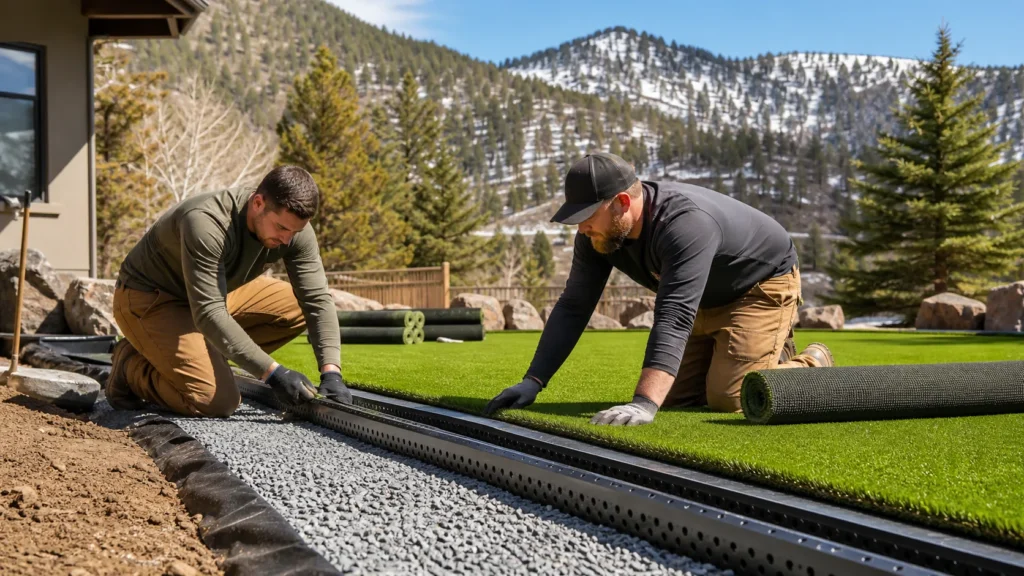
Beat Colorado’s Climate with Smarter Turf Design
A green, clean yard that still looks good after August heat, October storms, and mid-winter thaw is possible in the Northern Colorado foothills. The catch is that long-lasting artificial turf installation here depends far more on what is under the turf than on the turf product itself. When the base, drainage, and winter strategy are wrong, problems show up fast and keep getting worse.
We focus on three things every time we design a turf area in the foothills: how water moves, how the base is built, and how the system will handle years of freeze/thaw. When those three pieces work together, the turf looks more natural, stays tight and even, and feels solid underfoot. As a design-build firm that takes on a limited number of detailed projects each year, we put a lot of attention into that hidden structure so the visible surface keeps performing long after the first season.
Why Foothills Yards Are Tough on Artificial Turf
Northern Colorado foothills yards are beautiful, but they are hard on turf systems. We see intense sun, wide temperature swings in a single day, and heavy, wet spring snow that can sit for days. From early fall through spring, turf and base layers deal with constant freeze/thaw as nighttime temperatures drop and daytime temps bounce back above freezing.
The sites themselves add even more pressure. Many foothills properties have:
- Slopes that speed up runoff and erosion
- Native soils that range from decomposed granite to clay-heavy pockets
- Wind exposure that dries out top layers while trapping debris in low spots
- Snowmelt and mountain runoff that look minor on the surface but push water under turf
When artificial turf installation is rushed, these conditions tend to show flaws after a few seasons. Common issues include heaving seams, ripples that never quite flatten, soggy or spongy zones, and trapped odors, especially in pet areas. The good news is that those problems are rarely about the turf roll itself. They almost always trace back to shortcuts in drainage planning and base work.
Smart Drainage Design Before You Ever Roll Out Turf
Good turf design starts long before the first cut of turf. It starts with water. We ask where water comes from, where it wants to go, and how we can guide it safely away from the house and outdoor spaces.
Key water sources we look for include:
- Roofs and downspouts that concentrate water in one area
- Slopes above the yard that feed runoff during storms or snowmelt
- Patio edges, walkways, and walls that change flow patterns
- Existing low spots that hold moisture after storms
Once we understand that, we build a layered drainage strategy. That often includes grading the subbase so water moves in a planned direction, using perforated drain lines in problem areas, and tying that system into existing drainage, dry wells, or daylight outlets. The goal is simple: no standing water under the turf.
In foothills settings, small grading moves can make a big difference. We use swales, subtle slopes, and sometimes retaining elements to move water around patios, steps, and sitting areas, not through them. When drainage is handled correctly, you get less frost heave, fewer pet odors, less ice buildup in winter, and a turf surface that feels firm and consistent instead of soft and unstable.
Base Preparation That Survives Freeze and Thaw
Drainage is only half the story. The base is what decides if your turf will stay smooth after years of freeze/thaw. In our climate, base material choice matters a lot.
We prefer washed, angular aggregates and properly graded road base that lock together and shed water instead of holding it. Cheaper, fine materials can soak up moisture and shift when they freeze, which leads to ripples and dips. For foothills artificial turf installation, we usually build deeper bases than people expect and compact in multiple lifts instead of trying to pack it all at once.
A thoughtful base approach often includes:
- Choosing clean, angular stone over dusty fines
- Using multi-layer compaction for strength and stability
- Building base depths suited to the site, not just a generic number
- Testing firmness and smoothing between each lift
Native soils in Northern Colorado can be stubborn. Expansive clays like to swell and shrink, while loose decomposed granite can ravel and wash out. In some areas, we remove more native material and rebuild with better base. In others, we stabilize what is there before adding new layers. At the finish, we take time to fine-tune elevations so there are no small bowls where snowmelt or irrigation runoff can settle under the turf and cause long-term trouble.
Winter Performance, Snow Removal, and Seasonal Care
Winter is when you find out how good the prep work really was. Turf backing, infill, and base layers all react to repeated freeze/thaw. A properly built system allows minor movement without creating wrinkles or gaps. Water drains instead of freezing in place, so there is less heaving under high-traffic spots, putting greens, or pet runs.
Snow and ice handling also matters. Light to medium snow can often stay in place and melt naturally. When removal is needed, we recommend plastic shovels, soft-edged tools, and gentle work so you do not cut fibers or pull at seams. Chemical de-icers can damage turf fibers and backing over time, and they often are not needed if drainage is right and traffic patterns are planned smartly.
Late summer and early fall are good times to get turf ready for winter by:
- Brushing fibers upright to reduce matting under snow
- Checking seams and edges for small gaps before they grow
- Clearing debris from drains, swales, and surface inlets
- Deep cleaning pet areas so odors are not locked in by ice
In spring, a well-built turf system will shed snow and dry out fairly quickly. The surface may look flat at first but will usually relax and rebound once it warms. Signs that the base or drainage system is failing include new low spots that stay wet long after surrounding areas dry, seams that lift or separate, and a soft or squishy feel underfoot that does not improve as things warm up.
Building Turf That Looks New Ten Years From Now
If you are planning artificial turf installation for a foothills property, a simple checklist can help you sort through options. Ask any contractor:
- How do you design drainage for this specific yard?
- What base materials do you use and why?
- How deep will the base be in different parts of the yard?
- How do you handle expansive clays or decomposed granite?
- What is your plan for freeze/thaw movement?
Craftsmanship and planning matter even more in foothills settings with complex grades and long views. A fast, low-detail install may look fine on day one, but small flaws in drainage or base prep are much harder to fix later. Taking time to engineer the structure under the turf means the surface still feels solid, drains cleanly, and looks natural years down the road.
At Couture Landscaping, we design artificial turf as part of a complete outdoor environment, tying it into patios, walls, planting, and lighting so everything works together. By focusing on fewer, highly detailed projects, we can give each yard the careful grading, base work, and drainage planning it needs to stand up to Northern Colorado’s sun, snow, and freeze/thaw cycles for the long term.
Get Started With Your Project Today
Transform your outdoor space with Couture Landscaping’s expert artificial turf installation tailored to your property and lifestyle. We take care of every detail so you can enjoy a low-maintenance, beautiful lawn all year long. To discuss your ideas, materials, and timeline, simply contact us. Let’s create a clean, green landscape you will be proud of.