
Stop Wasting Summer Water and Still Get a Green Yard
Sprinklers that run the same way all summer waste water, stress your plants, and drive up your bill. Colorado’s hot, dry late summers, especially in August, make that old “set it and forget it” approach fall apart fast.
Here in Northern Colorado, we see yards that look tired and patchy by late summer, even though the owner feels like they are watering plenty. The problem usually is not how much water goes through the meter; it is how that water is delivered. This guide is a practical playbook for making your irrigation work smarter, not harder, so you can keep a greener yard while using less water.
We are focusing on irrigation efficiency, not on plant selection or yard layout. This is for homeowners with existing yards who want lower water use, healthier turf and plants, and outdoor spaces that stand up better to heat and drought. If you care about low-water landscaping in Colorado, this is where the real gains start.
Start with an Irrigation Reality Check
Before changing schedules, it helps to know what your system is actually doing. A quick check in late spring or early summer can reveal a lot.
Spend about 30 minutes walking your yard while the system runs:
- Leaks around valves, heads, and along visible pipe
- Overspray hitting fences, patios, sidewalks, and the street
- Clogged or mismatched nozzles that throw odd patterns
- Tilted or sunken heads that spray into the ground or over plants
- Pooling water in low spots after a cycle finishes
If you see misting instead of steady streams, pressure might be too high, which wastes water through evaporation and wind drift.
Northern Colorado soils add another twist. Along the Front Range and into the foothills, you often see:
- Heavy clay and clay-loam that absorb water slowly and run off fast
- Compacted subsoil in newer neighborhoods that sheds water instead of soaking it in
- Sandy pockets that drain quickly and dry out between cycles
Clay likes shorter, repeated run times with pauses in between. Sandy areas need deeper but slightly more frequent watering. If you do not work with your soil, you are basically paying for runoff or paying to water the air.
You can get a simple picture of system output with a “catch-can” test. Spread small, straight-sided cups or tuna cans across a zone, run that zone for a set time, then compare how much water each cup collected. This shows:
- How even the spray coverage really is
- How many minutes it takes to reach a target depth
- Which zones might be badly out of balance
Also glance at your water bill before making changes. It gives you a baseline so you can see if your adjustments and upgrades are actually saving water over time.
Smarter Controllers for Colorado Summers
Old controllers run the same schedule unless you change them by hand. Smart irrigation controllers adjust for weather, temperature, and even soil moisture, which fits our swingy Colorado conditions much better.
There are a few main types:
- Wi-Fi-enabled controllers that let you manage zones from a phone
- Weather-based controllers that use local data to adjust runtime
- Soil-moisture-based systems that respond to how wet the root zone really is
For Northern Colorado yards, certain features make the biggest difference:
- Cycle-and-soak programming to handle clay soils and slopes
- Zone-by-zone customization for turf, shrub beds, and low-water areas
- Flow monitoring that can flag leaks or broken heads
- Freeze and rain skip features so your system stays off when nature helps out
- Clear mobile app controls so you actually use the smart features
Sometimes you can retrofit a smart controller onto existing valves and wiring. In other cases, especially on older or pieced-together systems, it is smarter to rewire and clean up the layout so the controller can do what it is designed to do.
When a smart controller is paired with thoughtful scheduling and better hardware, many homeowners see noticeable water savings, especially on yards aiming for low-water landscaping in Colorado. The improvement comes from fewer wasted cycles, more precise runtimes, and better response to heat waves and cool spells.
Drip Conversion for Beds, Trees, and Slopes
Spray heads are fine for well-designed turf zones, but they tend to waste water in plant beds, around trees, and on slopes. Wind pushes the spray away, hot air speeds evaporation, and water runs off compacted or sloped soil before roots can use it.
A focused conversion plan usually starts here:
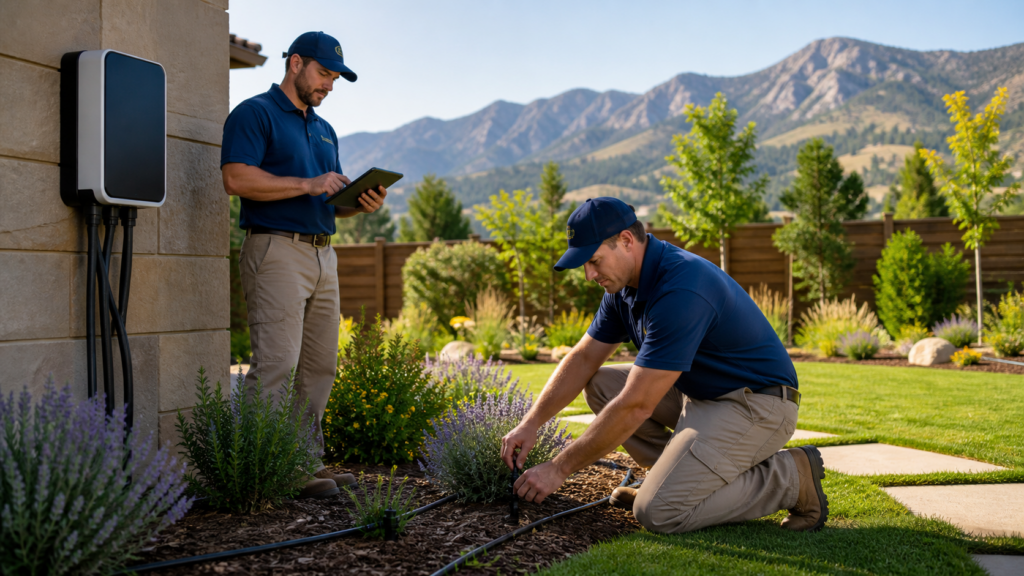
- Convert shrub and perennial beds from sprays to drip lines or point-source emitters
- Add deep-root drip lines or bubblers around trees
- Upgrade those new drip zones with pressure regulators and filters
Drip puts water right at the soil surface where plants can use it, at a slow enough rate that clay soils can absorb it. For Colorado yards, design details matter:
- Space emitters based on plant size and soil type, closer together in sandy pockets
- Use multiple emitters placed away from the trunk on trees to avoid root girdling
- Run drip longer but less often so water goes deeper into the root zone
- Keep lines and emitters slightly away from hard edges where heat can build
Over time, well-designed drip supports stronger, deeper roots and fits perfectly with low-water landscaping in Colorado. Your plants get more consistent moisture with less waste, and you avoid the overspray that can damage siding or stain concrete.
Hydrozoning and Seasonal Schedules That Actually Work
Hydrozoning is simply grouping plants by water needs and sun exposure, then watering each group on its own terms. It is the opposite of one big zone that hits sun-baked turf, shady beds, and native shrubs all at once.
Think of your yard in a few water use groups:
- High: cool-season turf in full sun, annual flower beds
- Medium: many perennials and shrubs, part-sun turf
- Low: xeric or native plantings, established trees and shrubs
If your system was installed mostly for convenience, you might have mixed needs in the same zone. A good long-term goal is to realign zones so high, medium, and low areas are separate.
For summer schedules in Northern Colorado, most yards benefit from:
- Early June: Gradual ramp-up, longer cycles as nights warm
- Mid-July heat: Deeper, less frequent watering for turf to push roots down, along with thoughtful drip cycles for beds and trees
- Late August: Slight step-down to reduce disease, thatch, and shallow root regrowth
Within that, turf, shrub beds, and low-water zones each behave differently:
- Turf: Several short cycles in the early morning on watering days, using cycle-and-soak to avoid runoff on clay
- Shrub beds: Fewer days per week with longer drip runs, keeping root zones evenly moist
- Low-water zones: Infrequent but deep watering, especially for newer plantings, then tapering as plants establish
Always match your watering windows to local rules and cooler times of day. Pre-dawn and early morning usually mean less wind and evaporation, so more of what you pay for actually reaches the roots.
Make This the Summer Your System Pays You Back
If you want fast, real-world results, focus first on the highest-impact steps:
- Fix leaks and overspray so water reaches plants instead of pavement
- Straighten and adjust nozzles for even coverage
- Upgrade to a smart controller with true cycle-and-soak and zone-level control
- Convert at least one bed or tree zone to drip with proper regulation and filtration
- Start sorting your yard into simple hydrozones and adjust schedules around them
When you treat irrigation as an investment instead of a headache, everything in your yard responds. Bills go down, turf thickens, and plants ride out heat waves with less stress. That is the foundation of low-water landscaping in Colorado that still looks lush and inviting.
At Couture Landscaping, we work with foothills homes and custom outdoor living spaces where irrigation has to be as thoughtful as the rest of the design. A well-planned system, tuned to your soil, slopes, and sun, will quietly work in the background so you can enjoy your yard instead of fighting it every summer.
Transform Your Colorado Yard Into A Low-Maintenance Oasis
If you are ready to cut your water use while keeping a beautiful, functional outdoor space, we can help you design and install thoughtful low water landscaping in Colorado. At Couture Landscaping, we tailor every plan to your property, your aesthetic, and our unique Front Range climate. Reach out to contact us and schedule a consultation so we can start planning a landscape that looks great and works smarter all year.