
Match Your Site to the Outdoor Living You Want
Outdoor living spaces in the Northern Colorado foothills can feel like an extra room with better views. Long evenings, cooler air, and open sky all invite you outside, especially when the space fits the way you actually live. The trick is that foothills properties do not all behave the same. Wind, slope, sun, wildfire risk, and drainage all shape how comfortable and safe your yard really is.
Instead of fighting those conditions, it pays to match them with the right features. A steep, breezy lot might call for sheltered terraces and stone walls. A sunny, south-facing yard might be perfect for a covered kitchen and lounging deck. Our goal here is to help you read your site, understand its personality, and see how smart design can turn every “problem” into a standout feature for outdoor living that feels great from midsummer through fall.
Reading Your Foothills Microclimate Like a Pro
Your “microclimate” is the way your specific property behaves, even compared to houses just down the road. In the Front Range foothills, a small change in elevation or the way your home faces can mean big differences in wind, temperature, and sun. Learning how your lot acts over a normal day is the first step to planning any outdoor living space.
Here are simple things to watch for over a few days:
- Morning: Where does the first light hit? Is there a calm, sunny spot that would feel good for coffee or quiet time?
- Afternoon: Which areas get blasted by sun and wind? Do any corners stay surprisingly cool?
- Evening: Where does the wind come from as air moves downslope? Which spots hold heat after sunset?
- Spring: Where does snow linger longest, and where does it melt and run?
Northern Colorado foothills often see strong west or northwest winds, intense sun that feels hotter at elevation, and quick swings from hot to cool once the sun drops. Those patterns affect where you place:
- Seating and dining areas
- Shade structures and pergolas
- Planting beds and lawn panels
- Hardscape materials, like pavers or stone
Once you understand your microclimate, you can start choosing layouts, structures, and materials that keep you comfortable instead of chasing portable umbrellas and patio heaters around the yard.
Wind-Smart and Sun-Savvy Outdoor Living Zones
Wind is one of the biggest complaints we hear from foothills homeowners. It tends to funnel around building corners, race through narrow side yards, and drop straight off ridgelines. A classic “wind tunnel” is a straight path between two vertical surfaces, like a house and a fence, where air gets squeezed and speeds up. Tall fences on their own often fail, because wind simply spills over the top and swirls down.
Instead, we like to break up and soften wind with layout and structures:
- Tuck main seating and dining behind low masonry walls or tall planters that block wind at sitting height.
- Create L-shaped outdoor rooms using walls, built-in benches, and outdoor kitchens that double as windbreaks.
- Use pergolas with partial side screens or slatted panels to diffuse gusts while keeping the space open.
Sun is the next big factor. High-elevation sun on west and southwest exposures can make a patio almost unusable at certain times of day. Shade needs to be built in, not added as an afterthought.
Good sun-smart moves for foothills outdoor living spaces include:
- Pergolas or covered structures placed where afternoon sun hits hardest.
- Shade sails layered over dining or lounge areas, especially on west sides of the home
- Light-colored pavers that stay cooler to walk on
- UV-resistant fabrics on cushions and shade panels
Thoughtful planting can help too. Trees or tall shrubs on the low western edge of a patio can filter low-angle evening sun while keeping long mountain views open above.
Slopes, Drainage, and Building on Your Land
Slope shapes almost every decision on a foothills property. A gentle grade may work well for a ground-level patio that flows straight out from the main floor. A steeper lot might be better suited for an elevated deck, a series of stepped terraces, or a mix of the two to keep you close to the view line and create level areas for different activities.
Terracing is one of the most effective ways to create outdoor living spaces in the foothills. With careful design, you can:
- Use retaining walls and stone outcroppings to carve flat “rooms” into a hillside
- Stagger patios at different heights so each level has its own purpose and feeling
- Blend new work into existing rock and native vegetation so the yard still feels like part of the foothills
Drainage is just as important as structure. Short, intense summer storms can turn gentle slopes into fast-moving water paths. If that flow is not managed, it can cause erosion, wash out plantings, or send water toward the house and hardscapes.
Water-management tools that can be integrated into outdoor living spaces include:
- French drains hidden beneath or beside patios to carry water away
- Swales (shallow, graded channels) that guide runoff between outdoor rooms instead of through them
- Permeable pavers that let water pass through joints and soak into the ground
- Dry creek beds that look like natural features but quietly direct and slow water
Handled well, drainage features do not look like “drainage” at all. They read as part of the overall design, and they protect your investment long term.
Designing for Wildfire Zones Without Losing Luxury
Many foothills homes sit in wildfire-prone areas, especially after long dry stretches. Safety should shape the outdoor living plan right from the start. The idea of “defensible space” often focuses on the area closest to the home, but it also applies to where you eat, lounge, and gather outdoors.
A fire-conscious outdoor living area near the house often includes:
- A lean, clean zone of non-combustible materials like stone, concrete, or steel close to the structure
- Strategic storage so wood piles, cushions, and decor are not stacked right against walls
- Clear separation between outdoor rooms and unmanaged grasses or brush
Material choices matter. Non-combustible patios near the house generally make more sense than continuous wood decking. Fire features can still be a big part of the experience when they are planned with care, for example:
- Masonry fire pits or fireplaces with ember screens
- Gas lines and burners placed with proper clearances
- Outdoor kitchens and grills positioned away from native grass edges and upslope wind paths
Planting design can respect code requirements and still feel lush. We often group irrigated, fire-resistant plants closer to outdoor living spaces, then shift to more natural, lower-water plantings as you move away from the home. That graded approach keeps the area where you spend the most time safer, while still letting the property blend into the foothills around it.
From Site Reality to Dream Outdoor Living Space
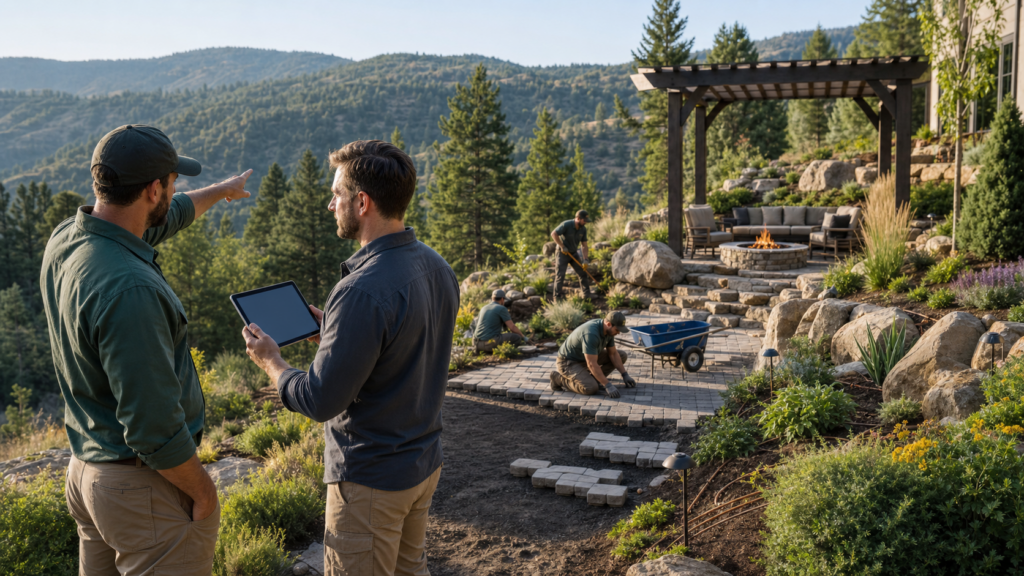
Before choosing a single paver color or grill style, it helps to walk your property with fresh eyes. Notice where the wind hits, where the ground drops away, how the sun moves across your yard, and where water naturally wants to flow. Note how close your outdoor areas are to native vegetation and open space. Those simple observations are the foundation for outdoor living spaces that truly work in the foothills, not just on paper.
The most successful foothills outdoor living spaces come from embracing the land you have. Steep grades can become dramatic terraces. Windy exposures can turn into tucked courtyards. Natural drainage paths can be shaped into artful dry creek beds or water features. With a thoughtful design-build team guiding the process, your site conditions stop being obstacles and start becoming the reason your outdoor space feels unique, comfortable, and made for the way you live.
Get Started With Your Project Today
Transform your yard into a functional extension of your home with Couture Landscaping’s custom-designed outdoor living spaces tailored to your lifestyle. We listen carefully to how you want to relax, entertain, and enjoy your time outside so every detail works beautifully for you. If you are ready to talk through ideas or schedule a consultation, simply contact us and we will help bring your vision to life.