
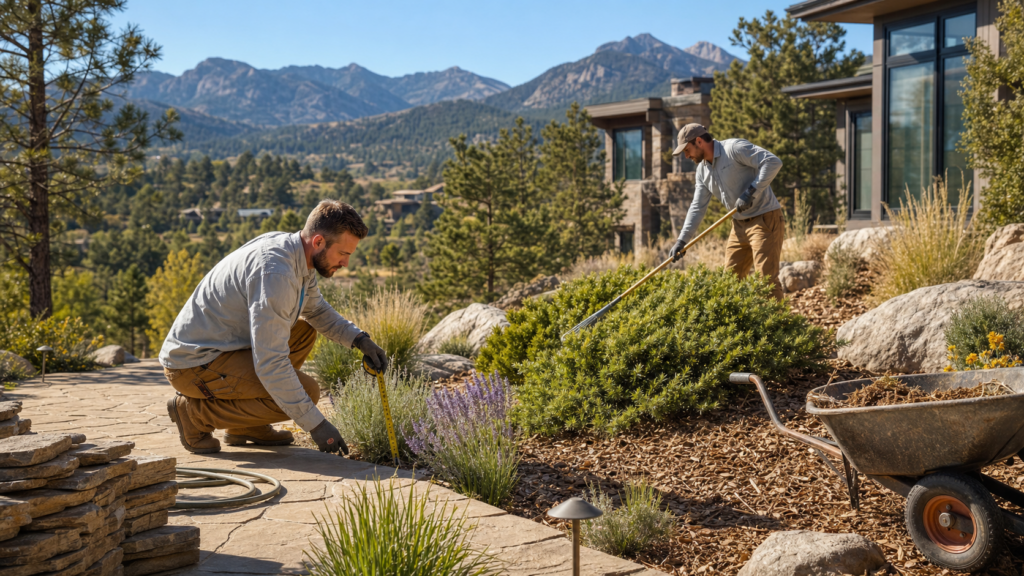
Backyard landscaping along the Colorado foothills has to do more than look good. It needs to work with our dry climate, steep slopes, and real wildfire risk, especially when hot, windy days line up with dry grass and brush.
In this guide, we will walk through how to plan a backyard that feels like a true retreat while still respecting fire behavior in the Front Range. We will look at layout, hardscape materials, plants, and maintenance, so your space can feel luxurious, livable, and safer over the long term.
Design a Backyard Retreat That Respects Wildfire Reality
Living along the foothills means sweeping views, big skies, and outdoor living almost year-round. Many homeowners want a backyard that holds its own next to those views, with spaces for relaxing, cooking, and gathering with friends.
At the same time, our hot, dry conditions and foothill winds can push small fires into fast-moving events. Late summer is often when this pressure shows up, but fire risk can hang around any time vegetation is dry.
When we design backyard landscaping in this setting, we look for that sweet spot where:
- The outdoor living areas feel custom and high-end
- The design works with your slope, sun, and existing trees
- The layout and materials help slow fire and reduce home exposure
The goal is not to strip your yard bare. The goal is to make smart choices so beauty and resilience work together.
Understanding Wildfire Risk Around Your Home
Wildfires in the Colorado foothills can threaten homes in three main ways:
- Embers carried on the wind
- Radiant heat from nearby burning vegetation or structures
- Direct flame contact when fire reaches plants or items right by the house
Embers are often the biggest issue in neighborhoods with mature backyard landscaping. They can land in dry mulch, leaves, wood piles, or furniture and start spot fires that spread toward the home.
Defensible space is a helpful way to think about this, using loose zones:
- Closest zone: 0 to about 5 feet from the house
- Middle zone: the main backyard living and planting areas
- Outer zone: where your developed yard shifts into more native ground
Common backyard choices that raise risk include:
- Dense shrubs touching the house or deck
- Resinous plants, like some conifers, packed close together
- Wood mulch pressed right against foundations or posts
- Cluttered nooks under decks or stairways
Fire-wise design does not mean giving up green space or character. It means putting the right materials and plants in the right places, with enough breaks so fire has a harder time moving.
Creating a Beautiful, Fire-Wise Backyard Layout
We like to organize a backyard plan into clear, practical zones. This helps you understand where stone, plants, and structures should go for both comfort and safety.
Closest to the house, we aim for mostly non-combustible surfaces. That might look like:
- A broad patio in stone, pavers, or concrete right off the back door
- Walkways that wrap the home like a ribbon of hardscape
- Narrow bands of gravel or rock directly against the foundation
The main living and entertaining zone can feel lush while still being smart. We often use:
- Curving gravel or stone paths between planting beds
- Open lawn pockets or low plantings between taller shrubs
- Well-spaced trees that frame views instead of forming a wall of foliage
Circulation and furniture layout matter too. We pay close attention to:
- Keeping furniture and outdoor cushions away from siding and vents
- Designing storage for cushions, heaters, and decor so they are not left as fuel
- Avoiding clutter under decks or stairs by planning closed storage or solid skirting
On sloped properties, terracing is especially helpful. Stone or concrete seat walls, retaining walls, and short level changes can:
- Break up fuel as fire moves uphill
- Create comfortable, flat hangout zones
- Add structure and rhythm to the overall backyard landscaping plan
Choosing Fire-Resistant Materials for Hardscapes and Features
Your hardscape is one of your strongest tools for both style and fire safety. Non-combustible surfaces add everyday function and also help protect the home.
For patios, paths, and gathering spaces, we often recommend:
- Natural stone or stone-look pavers
- Concrete patios and steps
- Steel accents like planters, edging, or screens
These materials create handsome, durable spaces that act like built-in firebreaks. In contrast, large runs of untreated wood decks or fences can add fuel, especially when combined with dry plants. Wood is still possible, but it should be used with care, such as:
- Raising wood decks off the ground and keeping the under-space clear
- Breaking long fence lines with stone or metal sections
- Using fire-resistant posts or caps at key connection points
Outdoor living features in the foothills also need special thought:
- Gas fire features are usually safer than open wood-burning pits
- Non-combustible surrounds like stone, concrete, or steel are important
- Clearances from plants, furniture, and structures should be generous
Quality construction matters just as much as material choice. Tight masonry joints, proper drainage, and solid bases help hardscapes hold up to our freeze-thaw cycles and stay safe and functional over time.
Planting Strategies for Lush yet Fire-Wise Backyards
A fire-wise yard does not have to feel sparse. With the right structure and plant spacing, you can still enjoy color, texture, and seasonal interest.
We focus on breaking up continuous fuel while keeping the planting scheme rich and intentional:
- Group plants in clusters separated by stone, gravel, or low groundcover
- Use staggered heights instead of tall walls of plants
- Leave some open pockets between mass plantings so fire has fewer paths
When choosing plants, it helps to look at traits, not just lists. Plants that tend to be more fire-resistant often:
- Hold more moisture in their leaves
- Have low resin or sap
- Do not drop a lot of dry, messy debris
Placement is just as important as plant type:
- Closest to the home, favor low, well-watered groundcovers and perennials
- Move taller shrubs and small trees out into the middle or outer zones
- Prune branches away from roofs, gutters, and deck railings
Mulch can be tricky in foothill settings. We often suggest:
- Using gravel or decorative rock near structures and wood features
- Reserving organic mulches for beds farther from the house
- Keeping any organic mulch in clean bands with visible breaks to slow fire spread
The result is a backyard that still feels green and welcoming, but with hidden logic that works hard in a fire event.
Seasonal Maintenance to Keep Your Backyard Fire-Wise
Even the best design needs seasonal care, especially as plants grow, drop leaves, and weather shifts. Late summer through early fall is often a higher-risk window along the Front Range, so mid-season checks are helpful.
Key tasks to keep up with include:
- Clearing pine needles and leaves from roofs, gutters, and patios
- Thinning out dense shrubs and cutting back dead stems
- Mowing or trimming dry grasses near living areas
- Refreshing gravel or rock bands right next to structures
Irrigation and plant health are also part of fire resilience. Deep, occasional watering helps roots grow strong and keeps plants less stressed and less likely to ignite. Smart controllers and drip lines can support this while respecting water rules.
It also pays to review outdoor storage on a regular basis. Move firewood, scrap lumber, combustible yard tools, and leftover materials away from the home and main living zones before the hottest, driest part of the season.
Partner with Experts to Elevate Beauty and Safety
Fire-wise backyard landscaping is not a limit on what your yard can be. It is a chance to rethink how your outdoor spaces look, feel, and function so they match the reality of foothill living. With the right plan, your backyard can be more beautiful, more usable, and better prepared for dry, windy days.
A specialized design-build team that knows Northern Colorado foothill conditions can blend site analysis, local guidelines, and your personal style into one clear plan. At Couture Landscaping, we focus on a limited number of custom projects so we can give attention to every stone, plant grouping, and detail. The result is an outdoor living space that feels tailored to you, fits the land, and respects both everyday enjoyment and long-term safety.
Get Started With Your Project Today
Transform your outdoor space into a place you truly enjoy with our custom backyard landscaping designs tailored to how you live. At Couture Landscaping, we listen to your ideas, assess your property, and create a plan that balances beauty, function, and long-term value. If you are ready to move forward, reach out so we can talk through options, timing, and budget together. You can easily contact us to schedule a consultation and take the next step.