
Design a Cooler Summer Escape in the Foothills
Afternoon sun in the Northern Colorado foothills can turn a patio into a frying pan. The light is bright, the air is dry, and stone or concrete surfaces soak up heat long into the evening. Many outdoor living spaces sit empty during the best months of the year because they are simply too hot and harsh to enjoy.
A better approach is to plan an outdoor living space that stays comfortable from midday through sunset. That means thinking beyond a patio slab and a grill. Shade, air movement, pest control, and the right planting all work together so you can actually use your space when the sun is high.
In this article, we will walk through four pillars of summer comfort: smart shade design, fans and misting, strategies to quiet wasps and bugs, and climate-wise planting. When these are planned as one system, you get an outdoor space that fits foothills conditions, respects HOA rules, and protects your views instead of blocking them.
Smarter Shade Strategies for Foothills Sun
Foothills homes often sit higher and more exposed. The sun feels stronger, and light bounces off rock, gravel, and stucco. west-facing patios get blasted in the late afternoon, which can make outdoor living spaces feel harsh right when you want to relax.
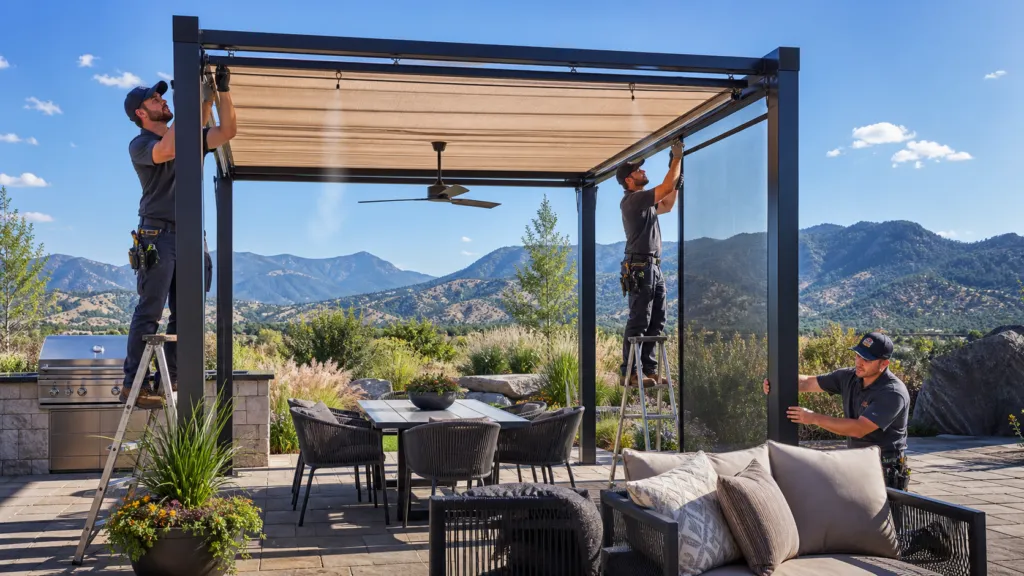
A pergola can do a lot of work here, but only if it is planned around the sun path and your views. Some key choices include:
- Orientation so the structure blocks hot western and southwestern sun
- Solid roofs near doors or sliders to keep interiors cooler
- Slatted or louvered roofs where you want some light without full exposure
- Vertical shade elements that stop low-angle evening glare
Adjustable louvers and integrated shades are especially helpful. They let you tip slats to block the harshest sun while still letting in air and light. Privacy screens, side panels, and outdoor drapery can cut heat and wind on one side while keeping the rest of the space open to the view.
Layering shade creates flexibility through the day:
- A fixed pergola or roof over the main seating area
- Retractable awnings that reach out when the sun is low
- Shade sails or trellises that protect paths or secondary seating
- Long-term shade from well-placed trees that grow into their role
Material choice matters in the foothills. Strong sun, wind, and freeze-thaw cycles are tough on wood and finishes. Powder-coated steel, heavy timber, or composite elements can stand up to the conditions and still feel clean, modern, and high-end. The goal is a structure that looks like part of your architecture, not an afterthought.
Cool the Air with Fans, Misting, and Smart Layout
Even with good shade, stone, concrete, and stucco can keep radiating heat. By late afternoon, many patios feel like a warming tray, not a retreat. To fix that, you need air movement and strategic cooling, not just more shade.
Ceiling fans are one of the most useful tools in covered outdoor living spaces. When we integrate fans into pergolas and covered patios, they:
- Keep air moving so sweat can evaporate and you feel cooler
- Help push heat up and away from seating zones
- Make it harder for flying insects to hover around you
- Add a finished, room-like feel to the space
In our dry climate, misting systems can also work well when they are carefully planned. The goal is a very fine mist that cools the air as it flashes off, not big droplets that soak furniture. Good planning usually includes:
- Low-flow nozzles that create a soft, cloud-like mist
- Lines placed away from porous stone and wood to prevent staining
- Zoning so a cooking area can stay dry while a lounge is extra cool
- Simple access for maintenance and winterization
Layout plays a big role too. Light-colored pavers and stone reflect less heat into your body. Gaps or planting strips between paving areas let heat escape from the ground. Ventilated decks can release hot air instead of trapping it under the boards.
We also like to place main seating where it can catch natural foothills breezes, rather than hiding it in the least windy corner. Thoughtful alignment with the way air actually moves across your property can make a noticeable difference.
Quiet the Wasps, Mosquitoes, and Summer Pests
Summer comfort is not only about temperature. In the foothills, paper wasps, yellowjackets, mosquitoes, and flies can quickly chase people inside. Careful design can lower pest pressure before you ever think about sprays.
Wasps love small, protected cavities. When planning pergolas and outdoor structures, we look for ways to:
- Avoid fussy trim that creates perfect little nesting pockets
- Use smooth undersides on rafters and beams
- Keep gaps minimal where posts meet roofs or walls
- Allow clear access to look for and remove early nests
Water features can draw mosquitoes if they are shallow, still, or poorly located. When they are designed with circulation and simple maintenance in mind, they can stay enjoyable without becoming a bug magnet. Helpful moves include:
- Pumps and returns that keep water moving
- Deeper zones or fish where it makes sense
- Grading and drainage that avoid small, hidden puddles
- No always-damp planting pockets right next to seating
In and around outdoor living spaces, integrated solutions can also help:
- Low-profile fans placed over dining and lounge zones
- Partially screened spaces where you want long, relaxed evenings
- Discreet traps or decoy stations planned into the layout
- warm-colored or shielded lighting that attracts fewer insects
When these features are built into the design, they do their job quietly in the background. You spend less time waving at bugs and more time relaxing.
Planting for Shade, Cooling, and Seasonal Comfort
Plants do more than look pretty. In foothills outdoor living spaces, thoughtful planting can cool the air, soften bright glare, and make late summer evenings feel more inviting.
Trees and larger shrubs provide dappled shade and help block low western sun that even a good pergola might miss. For foothills properties, we focus on:
- Drought-tolerant, deep-rooted species that handle dry spells
- Placing trees to shade patios, decks, and big windows at key times
- Framing mountain or valley views instead of covering them
- Using shrubs as wind filters without creating full walls
The right plant palette can handle intense sun and low water while still feeling lush. Good candidates often include:
- Ornamental grasses that move with the breeze and catch light
- Tough perennials that bloom through hot stretches
- Fragrant plants near seating for evening scent
- Groundcovers that cool surface temperatures and reduce glare
In the foothills, fire-wise and water-wise thinking is also important. That does not mean a bare, harsh yard. It means:
- Spacing plants so they do not form a continuous fuel carpet to the house
- Choosing mulches that are less likely to carry embers right to structures
- Grouping plants by water needs so irrigation can be efficient
- Keeping the area closest to the home a mix of hardscape and lower, greener plants
When planting works together with structures and hardscape, the whole space feels cooler, softer, and more comfortable, even in late summer.
Plan Your Next-Level Summer Retreat Before Heat Hits
Creating a summer-ready outdoor living space in the Colorado foothills takes planning. Custom shade structures, integrated fans and misting, drainage and grading changes, and thoughtful planting all need time for design, approvals, and construction.
Piecemeal fixes like a single umbrella, a box fan by the door, and a few random planters rarely solve heat and pest problems for foothills homes. A cohesive plan, built around your specific sun exposure, wind patterns, views, and HOA rules, leads to a space you actually use in the hottest part of the season.
At Couture Landscaping, our design-build team focuses on custom outdoor living spaces for foothills properties, from first concept through construction and long-term stewardship. When shade, cooling, pest control, and planting are all thought through together, your patio or deck stops being a hot slab and starts feeling like a true summer retreat.
Transform Your Backyard Into a Personalized Retreat Today
If you are ready to turn your vision into a functional, welcoming backyard, Couture Landscaping is here to help design and build customized outdoor living spaces that fit your lifestyle. We work closely with you to understand how you want to relax, entertain, and enjoy your time outside so every detail feels intentional. Tell us about your project goals and budget, and we will guide you through clear next steps. Get started today by reaching out through our contact page so we can begin planning your outdoor transformation together.