
Cooler, Cleaner Turf Zones That Actually Work in Colorado
Artificial turf installation can be a smart way to get a green, low-mud area for pets and kids, even in the Colorado foothills. High sun, afternoon storms, and clay-heavy soils can make natural grass hard to keep alive, especially in busy side yards, dog runs, and play zones. Turf gives you a tough, consistent surface that does not turn into dust or mud every week.
But the turf roll itself is only part of the story. What happens under the surface is what really matters. Base prep, drainage, and heat management are what separate a cool, clean play space from a hot, smelly problem area. In the Northern Colorado foothills, we deal with slopes, rocky soils, and strict HOAs, so small details make a big difference in how turf feels and performs.
Reading the Site: Foothills Soils, Slopes, and Microclimates
Before anyone talks products, we look at the ground. Front Range and foothills yards are rarely flat, rich soil. They are often a mix of:
- Compacted clay that holds water and turns slick
- Decomposed granite that drains fast but shifts easily
- Rocky subsoils that make even digging a challenge
Each soil type changes how deep the base needs to be and how we build in drainage. Clay may need a deeper, more open base so water can move. Loose granite, may need extra compaction and edging so the turf does not creep or ripple over time.
Slope is just as important. Even a gentle grade can push water toward:
- Home foundations
- Patios and steps
- Neighboring fences and yards
In storm season, that can mean standing water, erosion, and icy patches when temperatures drop. Under turf, we reshape the subgrade so water flows the right way, not wherever gravity happens to send it.
Sun, shade, and wind also shape the design. South and west exposures soak up strong UV and can get hot on summer afternoons, which affects turf choice and infill. Shady or north-facing areas often stay cooler but can hold moisture, so they may need extra drainage and antimicrobial strategies to keep odors down.
Traffic patterns matter too. Pet and play zones usually have predictable high-use spots:
- Narrow side yards where dogs run the fence line
- Corners near gates and doors
- Goal mouths and under swings
These areas call for thicker bases, stronger edge restraint, and thoughtful turf layout so seams do not land where the most pounding happens.
Building a Smart Base for Long-Lasting Artificial Turf
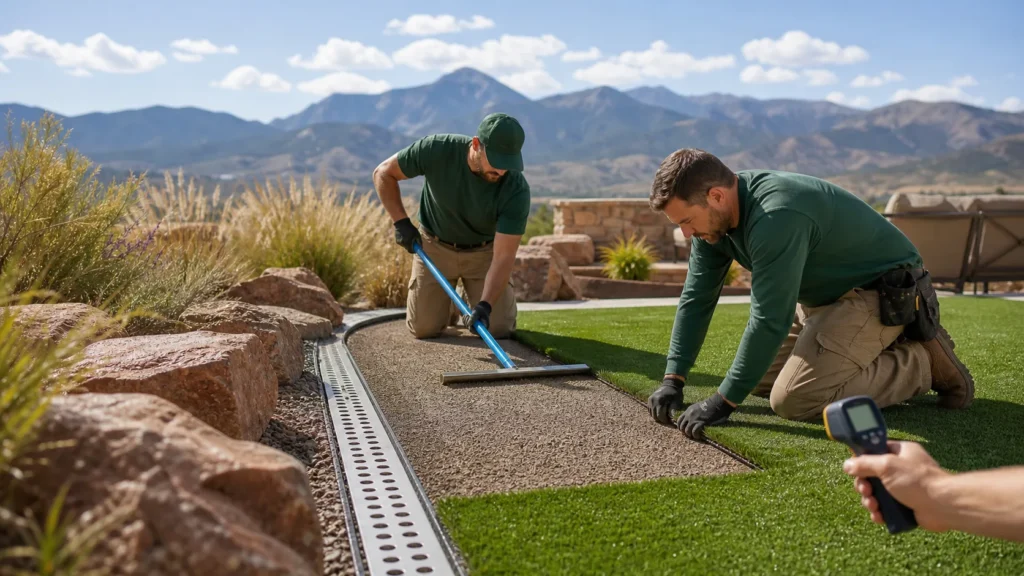
A strong, clean base is the foundation of any good artificial turf installation. We start by removing existing sod and soil to the proper depth, which often means going well below root level. Old irrigation lines are capped or re-routed, tree roots are managed, and any low spots are corrected before new material goes in.
For base materials in Colorado conditions, angular, compactable rock is usually the best choice. Options can include:
- Class 5 style road base with a mix of fines and stone
- Decomposed granite with good angular texture
- Clean angular stone under specific drainage layers
Rounded rock tends to roll and shift during freeze and thawing, which can cause dips and soft spots. Angular material locks together when compacted, creating a firmer, more stable base.
We build that base in layers, also called lifts. Each lift is spread, lightly moistened, and compacted before the next one goes on top. This helps prevent future settling and keeps the surface firm enough for play but still open enough to let water move through.
Edging is what holds everything in place. Solid options include:
- Steel edging
- Concrete curbs or mow strips
- Pavers or composite edging
Good edging keeps the base from spreading, keeps infill from drifting into beds, and gives a clean line where turf meets planting, real lawn, or hardscape. In foothills yards, we often tie turf into existing boulders, tree wells, or irregular lot lines, blending it with native plants and gathering areas so it feels like part of the whole outdoor space, not a green rug dropped in the middle.
Drainage That Handles Thunderstorms and Pet Use
Modern turf backings are made to let water pass through. Perforations help water move down into the base, so puddles do not sit on top of the grass fibers. But the real drainage performance comes from what is under that backing.
In our climate, it pays to design for big rain events. That usually means:
- A minimum slope away from the home and structures
- Extra base depth in low or flat areas
- French drains or subsurface drain lines near retaining walls or tight courtyards
Without that planning, water can collect under the turf, then freeze in winter, leading to heaving, bumps, or slick ice sheets.
Pet-friendly areas often need added drainage help. We may integrate:
- Highly permeable, antimicrobial infills
- Optional drainage grids under heavy-use dog runs
- Designated relief zones with faster-draining build-up
These steps help limit odor and bacteria buildup. A good odor and sanitation plan includes simple habits, like rinsing patterns, enzyme cleaners, and smart hose bib placement so cleanup is easy. Grading should carry rinse water away from patios and play structures, not under them.
Detail work matters too. Seams should not sit in low spots where water collects. Precise stretching and fastening keep the surface smooth so dips do not form, which makes cleaning easier and stops pet waste from lingering in hidden pockets.
Keeping Turf Cooler and Safer in High-Altitude Sun
Artificial turf can warm up in strong summer sun, especially on open foothills sites. Product choice, fiber shape, and even color can affect how much heat the surface holds. Lighter, more natural-looking tones may reflect a bit more light, while very dark greens can soak up more heat.
Infill plays a big role in comfort. Instead of traditional rubber or basic sand, many homeowners prefer:
- Cooling infill blends designed to reflect more heat
- Organic style infills that hold some moisture and release it slowly
- Lighter-colored infill that does not absorb as much sun
These options can help bring down surface temperatures, especially during peak afternoon hours.
Design choices also help. Shade features can break up large, open turf fields and protect bare feet and paws. Examples include:
- Pergolas or shade sails at the edge of play zones
- Strategically placed trees or shrubs
- Play structures set to cast shade across high-traffic spots
We also think about how families actually use the yard. After-school play often hits in late afternoon when the sun is still high but drops quickly. Orienting play zones so one side gets earlier shade can make those times more comfortable.
Ongoing care keeps turf cooler and cleaner. Regular brushing keeps fibers standing up, which lets air move through and helps the surface feel softer. Managing infill levels prevents hard, compacted spots that can heat up faster. In busy dog and kid zones, occasional deeper cleaning keeps odors in check and helps the turf perform the way it should.
From Backyard Vision to Turnkey Turf
When base prep, drainage, and heat management all come together, artificial turf installation can deliver a durable, low-mud pet and play area that stays usable through storms, dry spells, and heavy use. You get a green, clean zone that works with the foothills climate instead of constantly fighting it.
At Couture Landscaping, we focus on reading each Northern Colorado site, from Fort Collins to Loveland, Windsor, and the foothills, so turf integrates with slopes, native soils, hardscape, and planting. Thoughtful planning, from winter design to spring construction, helps families step into turf zones that are ready for long days outside when warm weather hits.
Get Started With Your Project Today
Transform your yard into a low-maintenance, beautiful space with our professional artificial turf installation services. At Couture Landscaping, we work closely with you to design and build a landscape that fits your lifestyle, budget, and long-term goals. Reach out today to discuss your project, request a quote, or schedule a consultation through our contact page.