
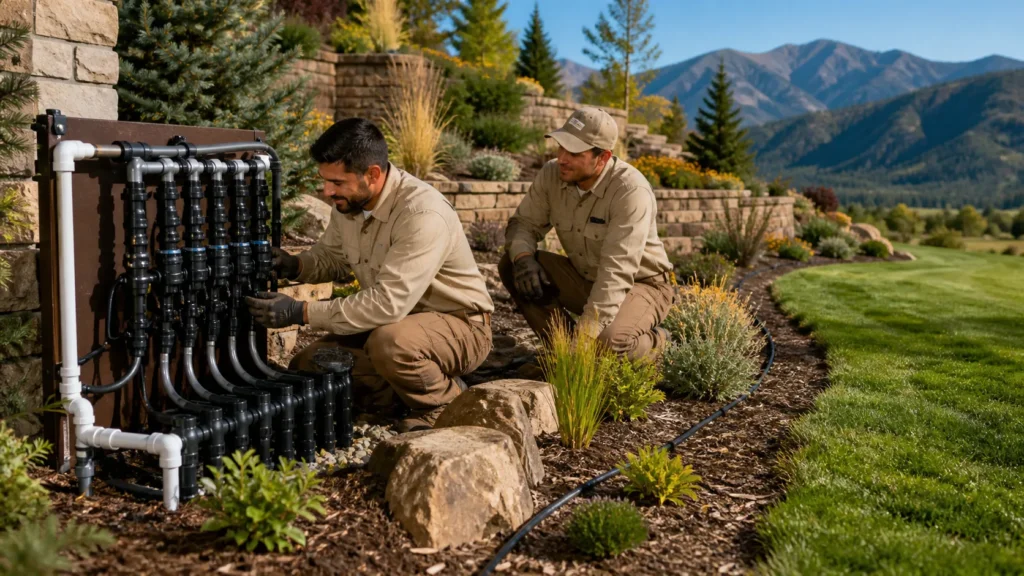
Protecting Your Hillside Investment From Water Damage
Slope planting in the Colorado foothills looks great until the first big storm or long watering cycle. Water sheets down the slope, mulch piles at the bottom, and you see plants at the top wilting while the ones near the bottom sit in a soggy mess. Over time, that water movement can wash out soil, undercut stonework, and create real problems for your home and hardscapes.
Smart irrigation controllers help with schedules, but they cannot fix poor zoning, bad hydraulics, or the wrong sprinkler heads for a slope. If the system is not designed for the grade and soil, the smartest controller will still waste water and damage your hillside.
In Northern Colorado, we also deal with thin or rocky soils, clay pockets, intense summer downpours, strong sun, and freeze and thaw cycles that shift the ground. Water restrictions add another layer of pressure to get every gallon where it counts. Our team at Couture Landscaping focuses on irrigation system installation that protects both the beauty and the stability of your slope, so you get a space that looks good and holds together.
Reading Your Colorado Slope Before Any Irrigation Work
Before any pipe is laid, a slope needs to be studied. The angle, soil, and direction it faces all decide what irrigation methods will actually work and last. A gentle swale with loamy soil can handle different equipment and run times than a steep, south-facing clay bank.
Here is what we look at during a professional assessment:
- Slope angle and length, where water can gain speed
- Soil type and depth, including rocky layers or hardpan
- Aspect, such as north vs south exposure and daily sun paths
- Existing drainage patterns, rills, and washed-out areas
Water moves very differently through foothills soils. On compacted clay, it tends to run off quickly, so we need shorter cycles, lower precipitation heads, and more drip. On sandy or decomposed granite, water sinks fast, so emitter spacing, layering of organic matter, and slightly longer but still controlled cycles matter.
Microclimates can change everything on a single slope. Windy ridges dry faster, rock outcrops reflect heat, and shade pockets under trees stay cool and moist. That means one long, uniform run time is almost never right.
A site walk, grade review, and sometimes a simple grading plan help us understand how to slow water, where to add drains, and how to tie irrigation into those features. On properties that already have erosion scars or soggy low spots, this step is key before any new irrigation system installation.
Smart Zoning Strategies for Steep and Mixed Terrain
One of the biggest mistakes on sloped properties is putting everything on one or two zones. Flat lawn, hillside shrubs, and native groundcover all get the same schedule, so something is always overwatered or underwatered.
We use zoning to separate:
- Slopes from flat areas
- Turf from shrub beds and native areas
- High-visibility focal zones from low-input background areas
Hydrozoning means grouping plants with similar water needs and root depth. Deep-rooted natives need very different watering patterns than shallow-rooted ornamental color beds. When each group is on its own zone, we can fine tune run times without wasting water elsewhere.
On slopes, good zoning also lets us use cycle and soak programming. Instead of one long 20-minute run that just sends water downhill, we might use multiple short cycles with soak periods between them. This gives water time to infiltrate instead of sliding across the surface.
We think about this during the initial irrigation system installation plan, not as an afterthought. Valve locations, pipe routing, and head layout are all chosen to support this kind of flexible zoning from day one.
Pressure Regulation, Head Selection, and Erosion Control
Elevation changes on a slope affect water pressure. Heads at the bottom can have much higher pressure than those at the top. That can cause misting down low, dry spots up high, and uneven coverage across the whole zone.
To even things out, we rely on:
- Pressure-regulating valves and heads
- Proper pipe sizing to avoid big pressure losses
- Check valves to stop lines from draining downhill after each cycle
Rotary nozzles are often better than traditional spray heads on moderate slopes, because they apply water more slowly and evenly. On steeper areas, or around boulders and retaining walls, dripline or point-source drip can place water right at the root zone and keep it off hard surfaces where it can run and carry soil with it.
Matched precipitation rate nozzles help every head in a zone put out water at the same rate. That keeps coverage balanced so we do not have wet strips that feed erosion and dry strips that stress plants.
Erosion control is built into irrigation design, not added at the end. We coordinate with grading, terracing, and drainage so that water is slowed, spread, and sunk into the slope. Subsurface drip or dripline buried in mulch can dramatically cut surface runoff compared to overhead spray on steep ground.
Soil preparation matters too. Breaking up compaction, adding organic material where it makes sense, and choosing the right mulch all help water soak in and support deeper roots. As plants establish, their roots act like rebar in the soil, holding everything together.
On new slopes, we pay special attention to that first season or two when roots are still shallow and mulch is loose. Irrigation, soil prep, plant choice, and surface protection all need to work as a team during this fragile stage.
Winterizing and Seasonal Care for Long-Term Slope Safety
Colorado freeze and thaw cycles are tough on hillside irrigation. Water left in lines or heads can expand, crack fittings, and create hidden leaks. On a slope, a slow leak is not just a water bill issue, it can soften soils, move fines out from under stonework, and destabilize retaining structures.
Seasonal care includes:
- Proper winterization to clear water from lines and heads
- Spring startups that include pressure checks and leak checks
- Adjusting run times in spring and fall when plants need less
- Watching for wet spots, sinkholes, or fresh erosion after big storms
As summer heat builds, we often shift to more aggressive cycle and soak programs on slope zones, and we may shorten turf cycles to match water restrictions while protecting deep-rooted shrubs and trees. After intense storm events, a quick inspection can catch issues early, long before they turn into washed-out paths or slumping walls.
A well-designed irrigation system, paired with seasonal adjustments and care, does more than keep plants alive. It protects your investment in stonework, walls, and outdoor living areas and helps keep your hillside safe and stable over the long term.
Planning Your Slope-Safe Irrigation System Before Next Spring
Foothills and sloped properties benefit when irrigation planning happens ahead of the growing season. Fall and winter are often the best times to think through zoning, pressure regulation, and erosion control so there is no rush when the weather warms up.
If you have runoff lines cutting through beds, mulch collecting on the sidewalk, or wet spots at the bottom of your hill, it helps to:
- Take photos after rain or watering cycles
- Note where water pools, runs, or disappears too fast
- Think about future outdoor living spaces, paths, or walls you want to add
When our team at Couture Landscaping designs irrigation for a slope, we are thinking about much more than just plant survival. We are looking at how water will move across your property in storms, drought, and freeze and thaw. The goal is a hillside that handles changing seasons, protects your home and hardscapes, and keeps its structure and beauty for years to come.
Get Started With Your Project Today
Transform your lawn into a healthier, more efficient landscape with our professional irrigation system installation services. At Couture Landscaping, we take the time to understand your property’s unique needs so your system delivers consistent coverage and smart water use. If you are ready to upgrade your outdoor space, reach out through our contact page, and we will walk you through the next steps.