
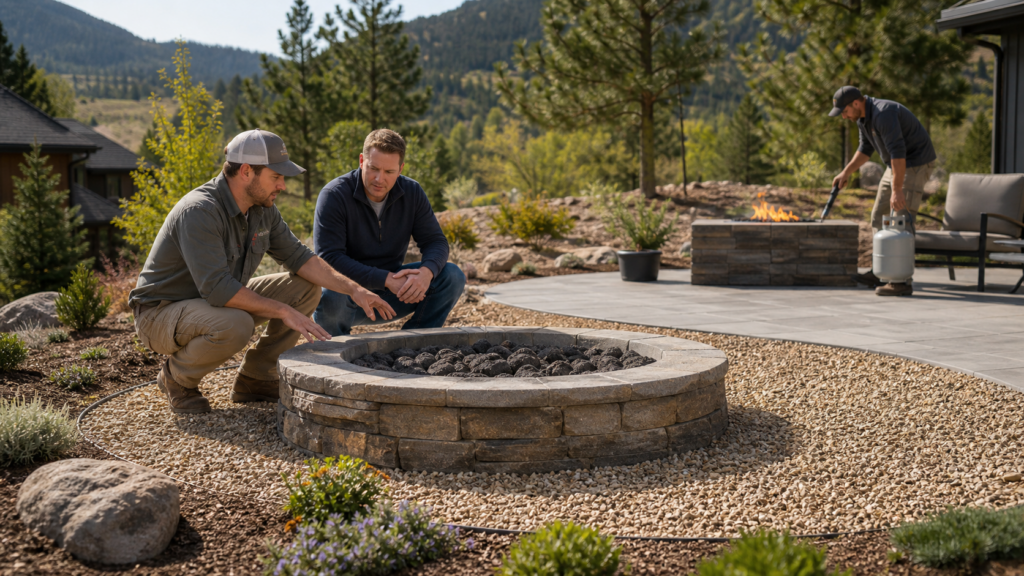
Design a Fire Pit That Passes Inspection and Frames Your View
A built-in fire pit feels at home in the Colorado foothills. Cool summer evenings, dark skies, and a clear view of the ridgeline all call for a warm flame where people can relax outside. For many homeowners, a fire pit installation is the final piece that makes an outdoor living space feel complete.
In the foothills, though, fire is never just about comfort. Local codes, wildfire risk, and insurance rules all shape what is allowed in your yard. A fire pit that ignores those rules can mean failed inspections, surprise tear-outs, or even trouble with coverage after an incident.
We design and build outdoor spaces every day in Northern Colorado, so we see how safety, code compliance, and good design fit together. The most successful fire pit projects feel natural in the yard, frame the view, and still pass inspection with room to spare.
Know Your Jurisdiction Before You Start Digging
One of the first steps is figuring out who actually has a say in your fire pit installation. In the foothills, several layers of authority usually overlap, and they do not always use the same rules.
You may need to consider:
- County rules, such as Larimer or Boulder
- City or town departments, if you are inside municipal limits
- Local fire protection districts that set wildfire and burn restrictions
- HOA or metro district guidelines for design and placement
A permanent built-in fire pit is usually treated more like a small outdoor appliance or structure than a simple backyard project. Typical permit packages often ask for:
- A site plan that shows property lines, buildings, and the fire pit location
- Gas line or utility details, if you are running fuel lines underground
- Structural plans for retaining walls, seat walls, and surrounding hardscape
- Access notes for inspections during and after construction
Timelines vary. Many offices get busy in late spring and summer when everyone wants outdoor projects finished before cooler weather. Starting early helps keep your project on track, especially if you are coordinating both city or county staff and an HOA review board.
Setbacks, Clearances, and Siting on Sloped Foothill Lots
Where you place a fire pit can be just as important as how you build it. Every jurisdiction sets its own setback rules, but common ideas show up again and again.
You will often see minimum distances from:
- Property lines and neighboring structures
- Your home, especially siding, eaves, and overhangs
- Decks, pergolas, and patio covers
- Fences, shrubs, trees, and other combustible materials
Those numbers change by location and fuel type, so they always need to be checked for your specific address. Vertical clearance also matters. Many codes call for open sky above the flame, with no overhead branches or roof structures within a certain distance.
Foothills properties add a few extra challenges:
- Slopes and terraced yards can focus heat and wind in odd ways
- Retaining walls and boulders reflect heat back toward people or structures
- Rock outcroppings and viewsheds shape where seating should go to enjoy the scenery
Wind is a big factor in the foothills. On exposed sites, embers can travel quickly. Good design often includes a non-combustible zone around the fire feature, such as stone paving, gravel, or concrete. This zone works as a buffer so sparks are less likely to land in grass or mulch.
We spend a lot of time studying how the wind moves through a yard, where people naturally gather, and how the view lines work from both the house and the seating. A well-sited fire pit feels natural and still stays well within clearances.
Wood vs Gas Fire Pits Under Colorado Wildfire Rules
Many foothills homeowners start by asking a simple question: wood or gas? From a lifestyle standpoint, both have a place. From a wildfire and code standpoint, they are very different.
Wood-burning fire pits usually mean:
- Open flame with higher ember risk
- More smoke and potential for drifting sparks
- Tighter restrictions during fire bans and red-flag conditions
Gas-burning fire pits, whether natural gas or propane, usually offer:
- A controlled fuel source with no loose embers
- Quick on and off control at a valve or switch
- Fewer limits during some fire restrictions, if local rules allow enclosed gas flames
Under many local fire bans, open wood burning is not allowed at all, even in built-in pits. Some areas still allow listed gas fire pits if there is a quick shutoff and no solid fuel involved. That can change day by day, so we always point homeowners back to their local fire district for the current rules.
Design details matter for both types. For gas, we pay close attention to:
- Venting inside the fire pit structure so gas cannot build up
- Burner sizing so the flame is the right height for the space
- Gas line sizing and routing under patios and walls
- Access panels for valves and maintenance
For wood, many areas now expect:
- Spark screens or ember guards
- Non-combustible surroundings
- Clear storage plans for firewood away from structures
Our goal is to match the fuel type to your lifestyle, then shape the design so it aligns with what your local fire officials and building staff want to see.
Ignition, Shutoff, and Smart Controls That Keep You Covered
Once you choose fuel, the next step is how you turn the fire on and off. That choice affects both convenience and code compliance.
Common options include:
- Manual ignition with a key valve and a match or lighter
- Push-button ignition that creates a spark at the burner
- Fully electronic systems with flame sensing and automatic shutoff
Many gas fire pits benefit from automatic shutoff timers or clearly visible emergency shutoff valves. Some codes require that anyone at the seating area can reach a shutoff without moving through the flame or tight spaces.
Because fire pits blend gas, stone, and sometimes electricity, they often involve several trades. Electrical and gas codes come together in one place, so we pay careful attention to:
- Bonding and grounding of metal parts, if needed
- Correct conduit and wire routing through hardscapes
- Safe separation between gas lines and electrical runs
For clients who want a high-end experience, smart controls are worth a look. Remote systems can tie into home automation, with built-in safety checks that shut the gas off if the flame goes out. Low-voltage lighting in steps, seat walls, and paths helps people move around the fire pit safely at night.
HOA Rules, Insurance, and Seasonal Use Limits
Many foothills neighborhoods have HOAs, architectural committees, or design review boards. These groups usually focus on the look of your fire pit as much as the safety.
They may set rules around:
- Location and visibility from streets or shared open space
- Height and size of the structure and seating walls
- Approved stone, brick, or metal finishes
- Allowed fuel type, especially in high-risk wildfire zones
Beyond the HOA, insurance can be a hidden part of the conversation. A fire pit built without permits or against local codes can cause problems if there is ever a fire-related claim. Some policies also expect owners to follow local fire bans and seasonal rules, even for gas systems.
Seasonal restrictions in the foothills can include:
- Required spark arrestors or ember screens on wood-burning features
- On-site water, sand, or extinguishers ready during use
- Full shutdown of all outdoor burning during peak wildfire conditions
We plan fire pit installations with these layers in mind, so the finished space is comfortable to use when conditions allow and simple to shut down when restrictions tighten.
Plan Your Fire Pit with Confidence and Local Expertise
A great fire pit installation in the Colorado foothills is never just a ring of stone. It is a careful mix of view lines, seating, structure, fuel choice, and rules from several different authorities. When all of those parts work together, the result feels calm and inviting, not stressful or risky.
At Couture Landscaping, we blend design and build work into one process, so permits, HOA approvals, and fire district expectations are part of the plan from the very beginning. We enjoy shaping outdoor living spaces that look at home in the foothills, hold up to the weather, and keep inspectors, fire marshals, and insurers satisfied for years of safe use.
Get Started With Your Project Today
If you are ready to turn your backyard into a warm, welcoming retreat, our team at Couture Landscaping is here to help. Learn how our expert fire pit installation can transform your outdoor space into a favorite gathering spot. We will guide you through design, materials, and layout so everything fits your lifestyle and budget. Have questions or want to schedule a consultation now? Simply contact us to get started.